 You don't need to be an 'investor' to invest in Singletrack: 6 days left: 95% of target - Find out more
Income loss from lower duty could be replaced by congestion charging in town centres and tolls on the motorways.
bikebouy - Member
Nope I don't think it should have a subsidy at all
Road transport isn't subsidised at all. It's "invested in".
Public transport is subsidised.
Remember: roads = investment; railway lines = subsidy.
😀
You tell me why the need to tax it in the first instance.
You tell me why the need to tax it in the first instance.
You really have to ask why tax has to be raised?
Are you Greek?
I'm hoping he's troll.
What car do you drive bikebouy?
You tell me why the need to tax it in the first instance
Well until roads are built and maintained from charitable donations, what else do you suggest?
Taxation massively restricts economic growth
why no just suspend all taxation and borrow enough money to cover [b]all[/b] government spending for the next five years and pay it back afterwards?
Basic Keynsian economics, innit 😉
You tell me why the need to tax it in the first instance.
Perhaps a more thought provoking question would be
You tell me why the need to tax it at over 100% in the first instance.
Are there any other products in the marketplace that attract such a high tax levy?
I'm not suggesting that the price / tax is right or wrong - but we do seem to have become locked in to this system with no reasonable alternative.
There was talk on the BBC website the other day about increasing taxes on electric / low emissions cars - because of the simple imperative to bolster falling tax revenues from declining fuel sales...
... Now that truly is bonkers.
I think Ocean Finance are doing some deals at the mo.
People could only take jobs in the places they work, but that would actually hurt the economy I feel. Workforce mobility is important in economic terms. It allows the right people to get the jobs they are good at, and allows people who don't have jobs to get new ones easily. That is, without having to uproot families or force one partner to quit.
It also spreads the money out a bit - all those people who live in small towns and work in big cities bring a lot of money back to that small town, which in turn generates busineses and opportunities for the local young people to make a living and a life there.
What we really need is to really focus on remote working. I've got to go to London on Thursday to start a project that might take six weeks. Hopefully they'll let me take the work off-site - but really they should, it'd save a lot of fuel being burned.
But low taxation to people who expect first-world services creates:
[img] 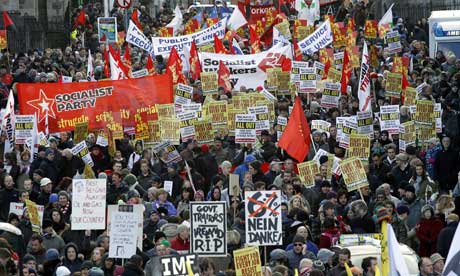 [/img]
And not bothering to pay tax at all leads to
[img] 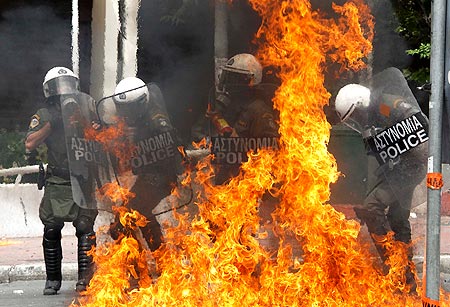 [/img]
Is this making sense?
You tell me why the need to tax it at over 100% in the first instance.
Because the whole system has evolved over time rather than been planned. Fuel tax cannot be isolated from the rest of the road/transport system (VED, VAT, Tolls etc...), but everyone thinks it can!
Are there any other products in the marketplace that attract such a high tax levy?
[img]  [/img]
No Troll, you should know me by now.
I drive a Prius, a small van and a SMART. What has that got to do with anything, really. Are you going to pick on my choice of vehicles? where I choose to drive and possibly my social life to ? I cycle to work (well no, the station actually) then catch the train in. Can't see the problem with any of that, nor should you. I've also not asked such comments about your positioning, what you drive, no need to do that and sorry but I don't really care TBH.
I see you're getting heated and frustrated by my comments. But sorry, I've seen the arguments, ran companies with fleets, seen the direct and indirect impacts of this over the years. Seen local hospitals close to fund a huge mahooosive new build hospital development for it to be underused and 2/3rds of it close yet the infirm and elderly have to drive to the hospitals, in cars that they can barely afford and to see mahooosive amounts of money chucked at integration in the NHS for it all to be shelved after muchos moolah being spent on it.
No, not a troll, far from it.
I like that I don't think like you guys.
But please, don;t attack me or belittle my opinions because thay are different to yours.
but, we've seen this situation developing for what? - 40 years? - it's not as if anyone can claim to be surprised. That they've not had time to adapt.What happens if you buy a house in a nice village which has everything you need and a regular bus service to the nearest town, but the village shops go out of business because Tesco built a superstore ten miles away, and the local council cuts the subsidy to the local bus company so they stop the service?
There are factors operating at scales beyond the control of individuals which mean adapting is not possible.
You're looking at this in a very blinkered manner.
Why, in the first place, have people been able to live far away from where they work and shop? Better transport, yes?
200-300 years ago, people travelled far less becasue it was more difficult, expensive, slow and really only for the rich.
Then, as transport improved, peole we able to commute and travel more. At first bicycles and motorbikes were cheap transport for the masses. Indeed, this cheap transport was very good for the gene pool!
As cars got cheper and fuel was plentiful, people could move further away from work and shops, transport things more easily and in a shorter time. It was cheap, it was convenient, it was fast.
But now we're seeing the price of that cheap transport starting to rise for various reasons, and it's only ever going to get worse.
Going foreward 200 years, it may be that as a race, humans will have to travel less becasue of these rising costs. It's no use sticking our heads in the sand and saying "I live 10/50/100 miles away from such-and-such, something has to be done" In the end we may be forced to work where we live or live where we work.
I don't think it'll go back to the same as 300 years ago, but the fact of the matter is that many, or even most, people will have to change their lifestyles, like it or lump it, and not live "in a nice village" anymore....
Just food for thought, like..!
It also spreads the money out a bit - all those people who live in small towns and work in big cities bring a lot of money back to that small town, which in turn generates busineses and opportunities for the local young people to make a living and a life there.
I thought we'd already established that all the shops had shut in the small town and everyone drives out of town and over to Tesco 🙂
Peyote - you'd have an argument if fuel duty was hypothedcated to the funding of the road programme, but it isn't.
In fact, fuel duty alone is a massive income generator for the state - wait out for figures.
edit -
Don't forget - the biggest argument against using fuel duty as a income generator for government is the fact that its so regressive.
Wunundred...miles per gallon? Is possible?
In the end we may be forced to work where we live or live where we work
This is like a Möbius Strip of a conundrum...
[img]  [/img]
But please, don;t attack me or belittle my opinions because thay are different to yours.
You've already told us that there is nothing that will change your mind. That tells us you're not prepared to base your opinion on evidence. Therefore, we attach very little value to your opinion.
and not live "in a nice village" anymore....
So.. you want to destroy rural economies and pack even more people in to giant conurbations?
In fact, fuel duty alone is a massive income generator for the state - wait out for figures.
Only if you exclude external costs.
Because the whole system has evolved over time rather than been planned
Exactly.
And that is why the whole system needs to be re-cast.
At some time in the next 10 years we should, must, move to a norm where independent, individual travel is still easily available, low / zero emission vehicles are the norm, and the social, environmental and economic costs are all acceptable.
The current tax system is not compatible with that future - as we need the revenue generated by fossil fuelss. Applying the same revenue take to the requried new technologies will adversely stifle their adoption.
I don't think it'll go back to the same as 300 years ago, but the fact of the matter is that many, or even most, people will have to change their lifestyles, like it or lump it.
It's also surprising how many people travel to a work place, when (in theory) they could do the same thing from home.
I mean I'm sat here in front of a PC typing. But in reality I don't even have to really get out of bed to do that.
Save's transport costs, less infrastructure, smaller company land space requirements, and a thick duvet would mean heating costs would drop too 🙂
Peyote - you'd have an argument if fuel duty was hypothedcated to the funding of the road programme, but it isn't.In fact, fuel duty alone is a massive income generator for the state - wait out for figures.
You'd have a point if I was referring to purely the road programme. As it is the transport network involves far more than just the physical infrastructure, it's about the social, environmental and (dare I say it) financial costs. The advent of private motor vehicles brought huge amounts of economic benefits, but the economic costs are onlt recently being realised. Last I heard congestion alone cost £20 billion! All these have to be paid for somewhere along the line.
It's not just about building and maintaining roads. Simplifying the whole system doesn't work.
bikebouy - MemberNope I don't think it should have a subsidy at all.
so how are you going to fund it then?
How are you going to pay for road building?
How are you going to pay for enforcement of motoring law?
How are you going to pay for all the damage that driving does to buildings and people?
you really haven't thought this thru at all have you.
So.. you want to destroy rural economies and pack even more people in to giant conurbations?
If fuel was expensive and red diesel was taxed we could go back to human labour in the countryside. Rural economies would thrive, particularly as we'd all have to buy local produce because shipping tomatoes from Israel and melons from Zambia would be too expensive! 🙂
Only if you exclude external costs.
And in turn, your argument relies on ignoring external costs, like the effect on business of being able to transport goods efficiently by road.
The advent of private motor vehicles brought huge amounts of economic benefits, but the economic costs are onlt recently being realised
Well, exactly - you have to weigh one against the other... but if you think the UK economy would be in a better state if we were still travelling by horse and cart...
for what its worth, UK government brings in a shade under thirty billion quid a year from fuel duty, plus VAT
Total transport infrastructire public spending is about 20 billion (including national roads, local roads, rail, public transport and air)
It's also surprising how many people travel to a work place, when (in theory) they could do the same thing from home.
Yep, though most don't have the choice.
I could do 90% of my job from home yet my employer will not allow it. I expect a lot of people are in this situation.
Same here. Where's the trust eh? 😀
Doesn't the rising cost of fuel duty have a serious knock on effect in terms of the prices of goods? It's not just about the cost of John Smith getting to work but everything we buy that needs to be transported. Cycling to work, using public transport or walking are all laudable aims but simply not possible in the society we have created for ourselves. I agree that more efficient cars and thoughtful use of them is a wise move however the government is stiffing the taxpayer and British transport businesses by making the cost of fuel punitive.
At the very least the govenment should tax commercial vechiles at a lower rate than private transport in order that our transport businesses can compete with those from less havily taxed countries and lower the cost of our weekly shopppng.
I've got an interesting conundrum - what has been the effect of higher fuel prices on "destination" MTB trailcentres.
Have Glentress/CYB et al seen a change in user patterns?
Will higher fuel prices end the trailcentre revolution and see a resurgence in "local" trail networks...
rural economies would improve over time with more expensive fuel. Local shops would become viable again. rural workers would be able to afford housing near their work - commuters would not be able to drive up prices as commuting became non-viable
We have a really nasty phenomenon of the two way commuter - the people who live in rural areas commute to the towns and the people who work in rural areas commute from the towns
it took us 50 years to get to this dependence on cars - it will take 25 to wean us off it.
we will have to do this sometime as the era of cheap energy is over - energy will just continue to get more and more expensive. it would be better to do it in a planned manner anticipating need rather than being forced into it withut adequate planning.
Increase fuel duty - ratchet it ahead of inflation with the aim of a £5 litre in ten years.
use the money raised to subsidise the costs of reorganising our lifestyles away from teh dependence on cars.
It will also have the effect of driving up fuel consumption. If petrol was £5 a litre how long till a 100+mpg car?
I'm not sure that's true. Total spend is 15bn, under 8 is on roads/railways
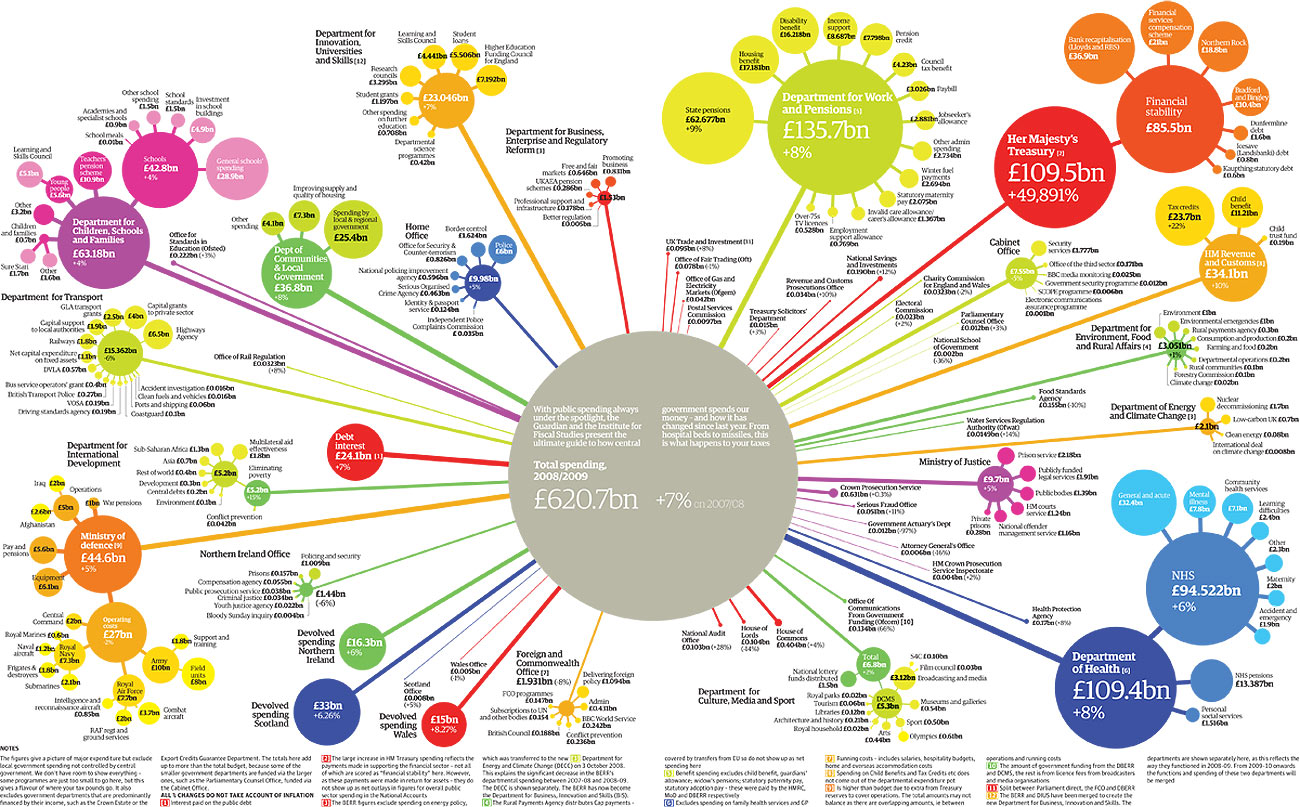
Revenue raised from motoring is much higher than that, revenue raised from railways is much lower than its share - hence roads are funded, railways are subsidised
Its given that fuel duty goes to the governments coffers, which is then used to provide us with the services we receive. So a question for all the moaners:
So without the fuel duty increase either something else will have to be taxed to replace the revenue, or government spending will have to be cut further than is already the case if this revenue is not forthcoming, so which do you chose and why? (Realistic answers only please, you might be right about MP's expenses etc, but even if they receive nowt its not enough to replace the loss from fuel duty)
It will also have the effect of driving up fuel consumption. If petrol was £5 a litre how long till a 100+mpg car?
And if the UK were the ones to implement this, what would be the economic benefits of exporting ultra-efficient technology?
And in turn, your argument relies on ignoring external costs, like the effect on business of being able to transport goods efficiently by road.
Businesses are already able to transport goods efficiently within the current system. So what's your point?
Zulu-Eleven - Memberfor what its worth, UK government brings in a shade under thirty billion quid a year from fuel duty, plus VAT
Total transport infrastructire public spending is about 20 billion (including national roads, local roads, rail, public transport and air)
And the rest of the cost of motoring? What about that. Its all estimates but the cost of the deaths, injury and ill health from cars dwarfs the tax raised from fuel. The cost of enforcing motoring law is huge, then there is the capital cost - that bit of land your car sits on at the roadside belongs to the country as a whole, is worth a fair bit of money and is monopolised by you. I'd like you to pay for it please - i don't like you cars cloggin up my roads making cycling more dangerous.
If private motoring paid its way it would be between 2 and 3 times as expensive. it carries a huge subsidy from the genral taxpayer
No Sir TJ it looks like I haven't (in your eyes) done my homework, naughty me.. Bit of an odd tone to take with me that.
Still, you are welcome to your opinion.
so bike bouy - how are you going to pay for roads then? how are you going to pay for the cost of enforcing motoring law?
I agree with you fully on one of your posts there actually TJ
Thing is, it does have to be a "linked up" programme of government that does it - for example, the effect of green belt designation restricting planning permission for rural businesses, resulting in local jobs for local people.
At the same time, how many of us want to be back in the era where our job was decided mainly by where we grew up? having to choose between job and family for example?
the additional "freedom" goven my private motoring has made some fairly deep seated changes in society, that I don't think many of us want to lose.
And in turn, your argument relies on ignoring external costs, like the effect on business of being able to transport goods efficiently by road.
I'm not arguing for anything other than the whole system is taken into account, rather than fuel duty on it's own. If you wish to create another argument on my behalf then I'm afraid you'll just be arguing with yourself!
What is required is a true cost/benefit analysis.
but if you think the UK economy would be in a better state if we were still travelling by horse and cart...
Oh dear. Suppose it was bound to happen sooner or later. Roll out the "hair shirt" and "living in caves" thing too! Hyperbole I'm afraid.
for what its worth, UK government brings in a shade under thirty billion quid a year from fuel duty, plus VATTotal transport infrastructire public spending is about 20 billion (including national roads, local roads, rail, public transport and air)
It's not worth anything I'm afraid unless you view the whole system. My point all along...
So.. you want to destroy rural economies and pack even more people in to giant conurbations?
Point missed.
I don't want anything, for a start, it's not about me.
And if you read what I wrote, it already covers your point anyway.
But the fact is, things may have to change. Countries based on transport and fossil fuels may well degrade into civil war for the last few drops of oil, or they may not.
But if running a car cost more than you earned each week, and you lived in a village, what would you do? Move, or go work on a bloody farm!!!!
The fact is, if ANY of us really cared, we'd be thinking likie this already rather than burning a gallon of fuel to go to work or go shopping
rural economies would improve over time with more expensive fuel.
it took us 50 years to get to this dependence on cars - it will take 25 to wean us off it.
Increase fuel duty - ratchet it ahead of inflation with the aim of a £5 litre in ten years.
While they might be good points individually, these three don't work together. If fuel was to increase that much in 10 years there would be no rural economy.
Out of interest how would you tax red diesel? And would farmers be allowed to use it when transporting crops/livestock when your £5 a litre was reached?
the additional "freedom" goven my private motoring has made some fairly deep seated changes in society, that I don't think many of us want to lose.
But we are going to have to. the age of cheap energy is over. Private motoring simply is not going to be possible in the same way in 25 years.
what are costs of illness created by cars?
philw - if you use that money generated to support the rural economies? Support local shops,disseminated manufacturing, subsidise public transport etc etc.
how about recreating our society then? I'm not anticar but I am against the carcentric society we have become.Cycling to work, using public transport or walking are all laudable aims but simply not possible in the society we have created for ourselves
just a thought but if railways hadn't been privatised would this still be the case?revenue raised from railways is much lower than its share
Ive said it before, but the 100mpg car existed over 10 years ago (audi a2 3L, VW Lupo 3L) nither were offered for sale in the UK.
Id say £5 a litre for fuel would be crippling, without a serious investment in alternative transport. Even if ramped up over ten years, most people would find that very hard to swallow.
5lab - Memberwhat are costs of illness created by cars?
Massive. its a part of the obesity epidemic, all the respiritory illness, to say nothing of those disabled by it from injury
And the rest of the cost of motoring? What about that. Its all estimates but the cost of the deaths, injury and ill health from cars dwarfs the tax raised from fuel. The cost of enforcing motoring law is huge, then there is the capital cost - that bit of land your car sits on at the roadside belongs to the country as a whole, is worth a fair bit of money and is monopolised by you
weighed against the cost of all the positives - wellbeing, mental health values of being able to go and see your family on a regular basis, the cost of increased travel time to businesses, etc etc - you cannot list the costs without the benefits, and I don't think there is a compuiter in the world powerful enough to calculate all the different variables.
Massive. its a part of the obesity epidemic, all the respiritory illness, to say nothing of those disabled by it from injury
And how about all the disabled people now able to get to work and carry out a fulfilling life instead of being restricted to a house, how about the depression averted by being able to go and see your parents of a weekend? all that has a financial benefit.
would that support not have to be subsidising their fuel? that of farmers and rural workers.
My opinion is that the focus should be put on business and reducing the amount of fuel they use and force their employees to use, such as encouraging working from home, less driving for meetings that could be conducted using video conferencing.
This way we could reduce the amount of fuel used while slowly pushing up the price. And it would not risk the potentially crippling results of just ramping the price up.
clong - thats the point - all that money raised goes to supporting things during the transition such as subsidy on rural transport
it is going to happen. either we prepare for it and anticipate it or we react to it.
I think longer term we do need to think about how our living arrangements are stuctured. As many have pointed out fossil fuels are a finite resource so the long term trend will be for them to get more expensive.
BUT
We really need something to stimulate growth. Fuel tax revenues have actually decreased this year due to people travelling less. Our economy relies to a large degree on consumer spending. Consumer spending relies on disposable income and free movement to go and buy the goods.
what are costs of illness created by cars?
Good question, and I suggest it is very hard to quantify. Particularly if the prevalance of cheap private motor transport has contributed to the sedentary society and the rise in obesity. If it has we can't really say until we realise the full cost of dealing with the associated illnesses.
Also, I suppose respiratory illnesses would also fall into a similar category and probably cancer too. They're all quite long term and calculating the costs at a population level is very difficult.
Edite to add - D'oh beaten to it by TJ!
philw - maybe -maybe other ways but yes money would need to be pumped in no doubt - and taxing the car driver gives you the money to do it
Would the knock on effect not be increased prices of all goods. As the transportation costs would go up and this would be passed on to the consumer.
And remember this was above inflation fuel cost increase therefore the cost of goods would also be rising at or above the rate of inflation.
Would this not lead to the creating of a new (and large) poorer class. While the rich would not feel the effects in the same way?
If anyone is interested, fuel duties brought £26.2bn into the Treasure in 09/10. That is more than council tax and business rates (£25bn and £23.4bn respectively).
"revenue raised from railways is much lower than its share"
just a thought but if railways hadn't been privatised would this still be the case?
We pay a whole lot more now it's privatised than under BR.
It's amazing the breadth of knowledge some people have. Certainty. Any subject.
i find it remarkable that people are arguing that increased fuel duty will kill rural economies. tell that to those villages in devon and cornwall whose schools and shops have closed down because 80% of the houses are holiday homes occupied for only a few weeks of the year by folk from 'that london', owners of which arrive with their cars laden with waitrose shopping.
the thing is, that many people [i]choose[/i] to live more than 10miles away from their work. they don't have to, they [i]choose[/i] to, because they can easily do that distance in 10 or 15mins in the car.
the majority of fit and healthy people could live within 3 or 4 miles of work and walk there and back every day if they chose to, but don't see that as viable. jump on a bike at that point you've barely got warm when you get in.
look at how much money is spent on fuel that could be put towards mortgage payments too.
as Petepoddy and TJ ( i feel feint ) have both said to some extent, free and easy transport has led to more people travelling further to work because they [i]can[/i]. is that how you want to spend your time? for a few reasons i used to do it - 45mins each way. making the necessary arrangements to stop doing that gave me a massive amount of additional time each day to myself, never mind the money i saved on fuel.
can't believe nobody has even brought up the issue of car-sharing yet...
Surely the 'first' change we will begin to notice as the costs of fuel increase is more people sharing journeys?
Massive savings to be made just getting people to use the extra seats in their cars, savings in space on the roads, savings on costs for the driver/owner and the passengers.
People will cling to their cars as long as they can, but obviously it will be a gradual change, with some getting rid sooner, and I reckon that will be the first noticeable thing, seeing more people in each car and the costs being shared among co-workers and friends more, not just for commuting but private use too.
tell that to those villages in devon and cornwall whose schools and shops have closed down because 80% of the houses are holiday homes occupied for only a few weeks of the year by folk from 'that london'
Most of the towns round by me are not like that.
Amedias - funny you should say that. People park on our roads to car-share. The parking situation has got loads worse lately.
Villages are maybe a bit more likely to suffer though molgrips.
Suffer from what? Holiday home ownership?
Villages are maybe a bit more likely to suffer though molgrips.
Suffer from what? Holiday home ownership?
Many villages and small town communities have been lost to the car for years, without the additional issue of holiday home ownership.
The real issue is that currently, nobody needs to do anything on their doorstep.
Nobody uses the village shop because in 15 minutes you can drive to an aircraft-hanger sized supermarket with acres of free parking, bargain prices and vast, vast choice of produce from all over the world. So the local store, 5 minutes walk down the road has become an unappealing option, and it has closed down.
People don't need to join in with the community they live amongst, because another 15 minute drive takes you across town to where your friend lives. So you don't meet your mates down at the local for an evening out, because you don't have local mates. They're scattered everywhere, so you all meet in the city centre where it's most convenient for everyone. So the local pub closes down.
We don't need to live near our families, because they're all only 15 minutes away by car.
People don't work where they live. The car has allowed for us to travel to find work. Though commute [i]times[/i] historically haven't changed much from what I've read, the ever increasing speed of modern personal transport has ensured [i]distances[/i] have. So the half hour commute that got the worker of yesterday to his job a few miles away by foot gets the worker of today 30 miles down a motorway. So our work colleagues are scattered all over, again widening the distance over which our social circle is spread.
We have the situation where kids can't afford to live in the village where they grew up as it's been bought out by people who don't work, socialise or shop there. There's more to living in a community than occupying a house in it, but that's what's happening now. People haven't got any interest in their surroundings. Not because they're ignorant or unpleasant, but because they've no need to.
A good friend of mine comes from rural Oxfordshire, where her parents still live. She's only in her mid 30s, but often returns from visiting her folks saying how the village has changed. How you never see anyone to chat to anymore because there's nobody around. How nobody knows their neighbours and how the once open gardens her friends played in have been fenced off behind electric gates beloved of rich city types who've moved to the country to escape 'people'.
When we're all driving everywhere from our front door, we need never take a single step out into the community in which we live. Our knowledge of community is just a village green or some hanging baskets we see flash by through the window of our car.
I myself live in a small semi-rural village on the outskirts of a major city. I moved here because my car made it viable.
Early this year, due to the rising costs, I decided to go car-free for the first time since I was 17. Even though I've been a cycle commuter for years, happy to leave the car on the drive most of its life, actually being car free was still a bit of a shock to the system.
Having lived here for nearly a decade, only now do I notice the lack of a local shop selling anything beyond Happy Shopper white bread, tinned spaghetti hoops and Jammy Dodgers. If I want to be able to cook a decent meal and stay ahead in the never ending battle against scurvy I need to travel further than I realistically can on foot.
Only now have I realised how hard it is to have a social life within walking distance, with the couple of remaining pubs struggling to keep their doors open as nobody goes in them anymore. I notice how pedestrian unfriendly a place it is, despite being a settlement that predates the car by centuries, with the roads having been widened to accommodate heavy through-traffic, making the crossing from one narrow pavement to the other scary at best, impossible at worst.
The public transport here isn't as bad as it could be, I discovered, once I looked for the bus stops I'd never noticed before and got my car addled head around the patchy timetables I swiftly had to teach myself how to read having never needed to look at one in my life.
Luckily I now work from home, so a commute isn't on the agenda for me. But I'm still glad of the bus sometimes as cycling or walking along the only road serving my area isn't too much fun, being a 60mph racetrack with one narrow pavement, mostly carrying traffic that's just passing through and has no interest or even acknowledgement of the community through which it travels daily.
I see parts of my surroundings now that I'd never noticed before. I now feel like I actually want, no, need to 'live' where I live - not just sleep, bathe and check my emails of an evening. But it's really hard as the facilities just aren't there right now. My friends and family are still scattered all over the place. My various clients, when I do need to visit them, are now a bus and train ride away, while potential clients near my home could well be accepting the services of people that have driven from right where my train's headed.
Only now have I realised just how far away I actually live from my daily life, and just how ridiculous and unsustainable that actually is.
I don't want to sound like some lefty, rose-tinted arse harping on about the days when everybody knew Alfred the friendly local shop keep, our door locks were made out of mulled vinegar and the only entertainment we all needed was a yearly dance around the maypole and a high-spirited jig in the church hall.
I just found that the day I got rid of my car, living where I do instantly became a whole lot less viable. And it made me realise that if the time does come where more people are forced to start getting rid of their cars, there really is going to be massive, massive social change right across our little island. Some changes will be very bad and we will hate them, and some will be a great deal better. But they will happen, because right now, what we're doing, the life we've all bought into and will defend to the death as our god given right and the only true way of life is absolutely, utterly batshit mental.
Best post in ages....
(Good post, Jackthedog...)
One partial solution, at least in the short term, would be to use GPS technology to charge drivers for the mileage they do. (Fuel duty could then be scrapped.) Charges could be adjusted according to journey, eg short city drive (where viable cycleways/public transport alternatives exist) = big bucks, rural trip into town = fewer bucks. The only potential downside I can see is the civil liberties angle, but careful regulation should sort that...
methinks its about right (the duty level that is)
but gotta laugh at the smug who think just because they don't run a car they are not effected - rising duty impacts on all, everthing we regularly consume is transported by car, van, lorry, plane, ferry and train
you want something, you contribute
or we try out this lifestyle
[img]  [/img]
but as they say, necessity is the mother of invention
but gotta laugh at the smug who think just because they don't run a car they are not effected - rising duty impacts on all, everthing we regularly consume is transported by car, van, lorry, plane, ferry and train
It's all relative. The revenue has to be raised from somewhere - if you don't run a car you're far better off with fuel duty being raised than something else which affects you more directly.
At the same time, how many of us want to be back in the era where our job was decided mainly by where we grew up? having to choose between job and family for example?the additional "freedom" goven my private motoring has made some fairly deep seated changes in society, that I don't think many of us want to lose.
But you are missing the point. TJ is planning a totalitarian utopia where you will do as you are bloody well told! Freedom of choice will not be an option.
coyote
Nope - its you that miss the point.
Private motoring will end soon. there is no more cheap energy. petrol will only keep going up and soon rapidly.
We have a choice -= we either anticipate this and get the adaptations to society done in plenty of time and with plenty of money - or we find ourselves reactiong to circumstances and that would cause great dislocation as we will not have the money to ease the transition
Private cars will be rare again in 25 years. simply too expensive for most people
THERE IS NO MORE CHEAP ENERGY!
Jackthedog - nice post.
.
...it made me realise that if the time does come where more people are forced to start getting rid of their cars, there really is going to be massive, massive social change right across our little island. Some changes will be very bad and we will hate them, and some will be a great deal better. But they will happen, because right now, what we're doing, the life we've all bought into and will defend to the death as our god given right and the only true way of life is absolutely, utterly batshit mental.
and soon there will not be the cheap energy to support it.
That is a fantastic post jtd, really does hit the spot on some key issues. I'm lucky enough to live in a small town that does have some facilities left and try hard to use them. There clearly are massive positives to the car culture but it's important to see the negatives too. I'd agree that the price of fuel is ok for now and like the idea of taxation based on usage patterns. Suspect that's a long way off and a bit of a minefield though.
At the risk of typing something stupid or irrelevant, applying I struggle with long sentences:
Tax burden at the moment needs moved onto hydrocarbons, and probably bankers (for want of a more eloquent explanation/phrase).
Same backpedaling, different day. I type as a car owner. Wont win my vote. Lazy fat bastards driving everywhere, that's my personal bug bear.
The way i look at this, if we were all to start driving electric cars tomorrow, the tax on electricity or Vat or something would go up.
Car related taxes bring in a lot of money, the government won't give them up with out putting the tax elsewhere.
As for cars, we have moved to a situation where travelling to work is normal, where local facilities no longer exist, where public transport is largely in effective. Going to a post car situation is going to hurt a lot of people.
mrmo - which is why I argue for starting the move towards the post car society now when we can make choices adn be gradual and afford to cross subsidise.
Electric cars will never be able to do what petrol ones do - simply not enough energy storage.
Private motoring will end soon. there is no more cheap energy. petrol will only keep going up and soon rapidly.
And the economy will grind to a halt. The current model is based on a mobile, flexible workforce. Take all the cars off the road, what happens to the car factories? They close. The motor factors? They close. Kwik Fit, ATS etc? They close. The small suppliers providing bling to impressionable young drivers? They close. Petrol stations who provide so much to the exchequer in tax? They close.
So we have a few people out of work there and a bit of tax not being generated. We also remove *choice* from peoples lives. "Fancy an impromptu visit to <insert random seldomly visited relative>?"
Our political views are probably not that far apart. However you have a very blinkered view on what YOU think is right and wrong and will not see that others have a valid point. I agree that fossil fuels have a limited life, however taxing the individuals "freedom to travel" to death is not the answer. Public transport is part of the answer. Alternative fuels are another.
Electric cars will never be able to do what petrol ones do - simply not enough energy storage.
Look at the developments in technology where there is a demand. I have spent the best part of 30 years working in IT (yeah, I know) and have seen amazing advances. Why? Because there is a demand and the will to supply it. In terms of motoring, there is not the will to provide an alternative? Why? Because the status quo generates a shit load of tax.
On previous threads it has been pointed out that the situation is not irreversible though. I think local government needs to invest in public transport but those funds will need to come from somewhere. If you can use a financial stick to beat people onto pt and use the cash to make pt viable that is a way forward IMO.