 You don't need to be an 'investor' to invest in Singletrack: 6 days left: 95% of target - Find out more
Not sure if we’ve done this but there was a tragic incident recently where two people on Stand Up Paddleboards (SUP) died on a river in Haverfordwest.
Can’t find a news link as I’m on my phone so my facts might not be totally accurate, but apart from questioning the judgment about being on a swollen river in this weather on a SUP, it seems they got into trouble on a weir.
I have a normal sit in kayak that I take on the canal, but I’m often eyeing up the local river. Unfortunately there are regular weirs. I understand the main danger of them regarding the boil point and being unable to escape. But what other dangers are there. Are they doable in good conditions, or is it always best to go round them. How close can you get before you have to commit? What about fish passes? They look about kayak width…
Weirs are big bad news. I've done a fair bit of reasonably interesting ww kayaking and any sort of weir still gives me the shivers.
boil point and being unable to escape.
Yep. It's the anti scour weirs thag are the big issue. They're purposely designed with a pool deep enough to stop the water flow eroding the bottom of the weir. Instead the water flows around in this circular motion which is great fir the concrete foundations, but fir swimmers caught in it not so much.
But what other dangers are there.
The other key problem with some weirs is their uniformity. Usually in a natural stopper there will be some differences in flow etc, so as you move about in it then you can often find an escape. But most man-made weirs are pretty uniform, with consequently few escape points.
Are they doable in good conditions, or is it always best to go round them.
Depends of the weir. Some of them, eg Hurley, make fabulous surf spots where you can pull some great tricks. But it sounds on the weir and the water level on the day. The same weircan be deadly at one level and benign at a higher level.
How close can you get before you have to commit?
Depends on the weir and the water level. With a lot of weirs there is a calm flat pool above it, so you can paddle up for a look. But the same weir with a bit more flow could see you dragged over against your will. There are few things more terrifying than getting to the lip of a nasty weir, seeing that it looks really bad, and concurrently realising that the flow is too strong fir you to back out and you're committed to running it.
What about fish passes? They look about kayak width…
Some are runnable, eg on the Ouse, but TBH I'd try to avoid all man-made dams and find a better river to do.
Tragic event and no doubt the full story will emerge in time.
Weirs come in all shapes and sizes, often with local issues to take into account too. And then each one changes nature with different water levels. You need ability and knowledge to go near them, let alone play on them.
They aren't always in good condition, I have seen a few crumbling ones with reinforcing steel mesh or rods sticking up.
At anything above a scrape a lot of dangers are hidden, there are some good guidebooks and forums out there but they definitely demand respect
We were out that way on Saturday and I was really surprised to see anyone was going out on a SUP with the rivers the way they were.
There had been very heavy rain and there was flooding all around West Wales - we had to ford a number of areas where the Teifi had burst its banks, and upriver it was a raging torrent.
Whilst I have every sympathy for the family of the deceased, I would question the sense/competence of anyone going out on a paddleboard in those conditions unless they were an experienced whitewater rider.
I have a normal sit in kayak that I take on the canal, but I’m often eyeing up the local river. Unfortunately there are regular weirs. I understand the main danger of them regarding the boil point and being unable to escape. But what other dangers are there.
I think you really want to find some training, and then local expertise.
Are they doable in good conditions, or is it always best to go round them. How close can you get before you have to commit?
I think if you are asking these questions the answer is go round. Once you've enough moving water experience you can start to make your own judgement call.
I don't know the circumstances of this weekend's accident, but I'll be surprised if it doesn't turn out that part of the problem was some/all of them didn't have quick release leashes on and so couldn't escape their boards. No doubt the MAIB, media etc will make a big deal of this and very many sup owners will get the wrong end of the stick and either stop using leashes as all (probably worse) or cough up for new ones they don't need - because 99% of people paddling SUPs don't do it on fast moving water. Whilst the official report will of course comment on the weather, experience and planning - any deficiencies there will be undersold because there's nothing to sell people there!
Unless of course anyone who survived was one of the planners and there's clear negligence then the media will love a show trial for manslaughter...
Yes tragic I see people paddleboarding on the lune near halton by a weir, I wouldn't go anywhere near. I was swimming yesterday in the sea by a river outflow, the water temp drops right down really quickly and a strong current started to give me the wobbles, I was only 20m out too.
We have had to cancel a few sup trips due to bad weather, it's gutting but much prefer to be safe. Things can get out of hand really quickly.
Looks like two SUPers died and a guy who tried to rescue them (who was also in the group of 9?), so 3 died.
The weir in question is a horrible one and marks where the Western Cleddau becomes tidal which means there is always a changing amount of water at the bottom of it.
In my 25 years of being a watersport instructor in Pembrokeshire I've never heard of anyone playing or paddling it in any craft.
There is a small tributary at the bottom and the fish pass makes for some very nasty eddy lines and backflowing water.
I haven't heard what has caused the accident but if a group upstream didn't realise it was there or thought the fish pass might be shootable then I can envision how people could get into difficulty very easily.
A quite horrible accident that has affected a lot of people.
Truly horrific.
A work colleague of my wifes around 20 years ago died along with her husband at a similar looking local river, right at the point it goes tidal too. The dog got in trouble, he tried to grab it and was pulled in, she tried to help him, their 6 month old baby was left parentless on the bank. 🙁
Tragic. There is always some risk in paddle sports but its a sad day when one let alone more die on a river or in the sea.
I'm a reasonable canoeist and kayaker with deep respect for weirs. Its a bit sad but I actually always have a throw bag in the back of car tucked into one of the side pockets. It lives there permanently on the hope I never have to use it to try and rescue someone (bit like the first aid kit in the other pocket).
@db, could you give a link to what a throw bag is and briefly describe how you use it?
A throw bag is used to rescue people from rivers whilst minimising risk to yourself. I use HF branded ones but there are lots available from Palm, Peak and other vendors.
If you wanted to use one you are best to go on a white water safety and rescue course. Using one with little or no knowledge can make a situation worse. There is a good book called White Water Safety & Rescue (Franco Ferrero) if you really don't want to go on a course but honestly a course is best (and this is from someone who hates going on courses for anything).
Sad to hear of this. I won't be drawing any judgements or suggesting reasons without the full facts.
Sad to say that weirs, moving water, tidal water and big open water have risks. Not all are 'visible' without prior training or experience. Very few are clear cut, there are so many variables and 'if' moments, that again a combination of training, experience and good decision making are the main way of avoiding significant issues.
Weirs specifically, as folk above are pointing out, vary massively. Some of the worst and most dangerous weirs I know look benign. Some of the easiest/safest look bloody scary.
As well as judging risk there needs to be a 'what if?' cover - *if* one of you takes a swim, how will you rescue them? Are you in place? Can you actually pull off the plan?
Sadly I think after the last two years there are a lot of people with shiny boats and boards who have a significant lack of judgement, experience and training. There will be more issues, on all sorts of water.
Our last paddle in the summer on Loch Lomond saw:
- SUP with paddler saddled with 2x expedition rucksacks, one front, one back, no B/A on and the bags had hip belts done up, sat on board as she couldn't stand up under the weight.
- SUP paddler with no BA, bikini and shorts, no bag of gear, in the middle of the south end of the loch, paddling away from Inchcailoch, and asking how far was Duck Bay on the other side...
- Kayaker with toddler in the cockpit between legs, rest of family in various other kayaks spinning circles while trying to get to one of the islands.
- Smallish open canoe loaded with family of 5, dog, pile of deckchairs and tents, no B/As on adults.
Moving water: this paddler is about to die another day - but by heck they came close. The river at the end of my road, which sees many people swimming just upstream (Allan Water in Dunblane).
longdog
Free MemberLooks like two SUP died and a guy who tried to rescue them, so 3.
Link
That's awful, RIP. Props to the brave chap who lost his life trying to save them.
Weirs give me the willies, I remember kayaking down them when I was a teenager being completely unaware of the danger.
could you give a link to what a throw bag is and briefly describe how you use it?
With training.
Without training you wrap someone up in a rope on moving water, or both of you now in the water, possibly making the situation worse.
– SUP with paddler saddled with 2x expedition rucksacks, one front, one back, no B/A on and the bags had hip belts done up, sat on board as she couldn’t stand up under the weight
As an occasional holiday paddler asking a professional outdoors instructor, while I can kind of see none of these aspects being perfectly ideal, whats the main problem/danger here?
That river video - does make it clear to me why I dont want to try this sort of thing. I could see no difference in how the first guy took it successfully, compared to the second.
Big uptake of SUP usage during lockdown enabled partly by the Lidl £199 offers, plus the 'Living your best life ' T5 crew adding it to their lifestyle vehicle of choice.
Neighbour opposite stores one for her daughter and friends. Great in a onshore F3 winds and below , not so great in a F4 offshore. As she found out, once away from the beach the windage was too great for her to return
Her mum tried to swim out and 'help' fully clothed but realised she ws getting blown away faaster than she could swim. Fortunatly my neighbour ( windsurfer and ex olympic canoeist ) realised what was happeneing and was able to instruct the lass via mime to lay flat and front crawl back in , which she did eventually
Mum and daughter have now been breifed in Offshore winds and self rescue techniques , plus told if we are out windsurfing then its most likely too windy for a SUP.
Sounds like a tragic accident which might have been avoidable but we cannot coccoon everyone from harm or there would be no climbing , mtb or surfing or windsurfing or canoeing etc . The risk factor adds to the excitement, and risk management plays a part in that for sure.
if the picture on the news story is where it happened and representative of the conditions, I can't imagine why anyone would be in the vicinity on a paddle-board.
as with matt, I'm constantly amazed at the situations that paddle-boarders seem happy to place themselves in.
whats the main problem/danger here?
There is potential for the weight of the rucksacks to pull you under - and without presence of mind to release hip belt, you are stuck with them on.
Now it may be that she had them full of thermarests, full of foam and would float, but I doubt it...
I could see no difference in how the first guy took it successfully, compared to the second.
from the limited pixels available, I would say put a decent stroke in to get away from the backtow, the 2nd guy's paddles fast but his blades barely scuff the water.
There is potential for the weight of the rucksacks to pull you under – and without presence of mind to release hip belt, you are stuck with them on.
Ah, she was wearing them, I totally misunderstood that part. I was picturing them on the front and rear deck, hipbelts somehow around the board or into the webbing/bungees.
I could see no difference in how the first guy took it successfully, compared to the second.
There is a chain of events here (and some I am proposing without full knowledge):
- did they scout the weir? I am not sure they did - there is a line of weakness in the middle river, as you can see by the line of darker water in among bubbles downstream from the weir.
- they don't have safety in place - the first paddler cannot help from the water, and someone has to run around to that parapet to help
- the first person uses deep, powerful strokes, including one right on the edge. Hits the weir with momentum and keeps going.
- The second person seems to waver, slow, and while blades while moving they are barely grabbing the water. This means they hit the edge of the weir with minimal momentum and pause paddling for about a stroke.
- there is a few seconds pause before the first paddler starts hollering "paddle!" - and again the second person isn't paddling effectively.
That is just the lead into the incident, let alone the rescue.
No doubt the MAIB, media etc will make a big deal of this
From the limited info in the article, 8 (7 plus guide/coach I assume) person SUP tour ends up in tragedy, I'd wager that this will be taught in colleges and other training courses for years to come.
Terrible, terrible tragedy.
Thoughts are with family and loved ones.
Big uptake of SUP usage during lockdown enabled partly by the Lidl £199 offers, plus the ‘Living your best life ‘ T5 crew adding it to their lifestyle vehicle of choice.
I doubt that even 1% of the paddleboard boom were bought at Lidl/Aldi. If it was driven by people who usually holiday abroad staying here then all we've done is increase the local density of silly mistakes rather than the total number.
I think the trend actually started before covid. You can say it's the T5 crew - but that just seems like wanting to put people in some sort of stereotype (I don't have a T5 but have had a paddleboard before any Lidl £199 offers). Actually, the advantage of an iSUP is that you can throw it in the boot - no van or roofrack needed. Perhaps "Instagram" has a contribution here - but people were sharing their holiday experiences and aspiring to be as good as each other since before the instamatic camera was invented.
If you want to point the finger of blame you could point it to successive governments that have underfunded outdoor education and access to adventurous activities which mean there's generations who have little appreciation that just because they saw someone else do something similar and make it look easy - it might not be*. Or to successive government policies which encouraged people to go abroad for their 2 weeks in the sun rather than holidaying here and thus feeding an industry of hire/guides to get you afloat safely.
(* actually the cautious types who won't go a walk in the country unless its on an official waymarked trail with a well finished surface are probably more of a long term problem to the country)
For those interested in some more detail and thoughts.
From BCU:
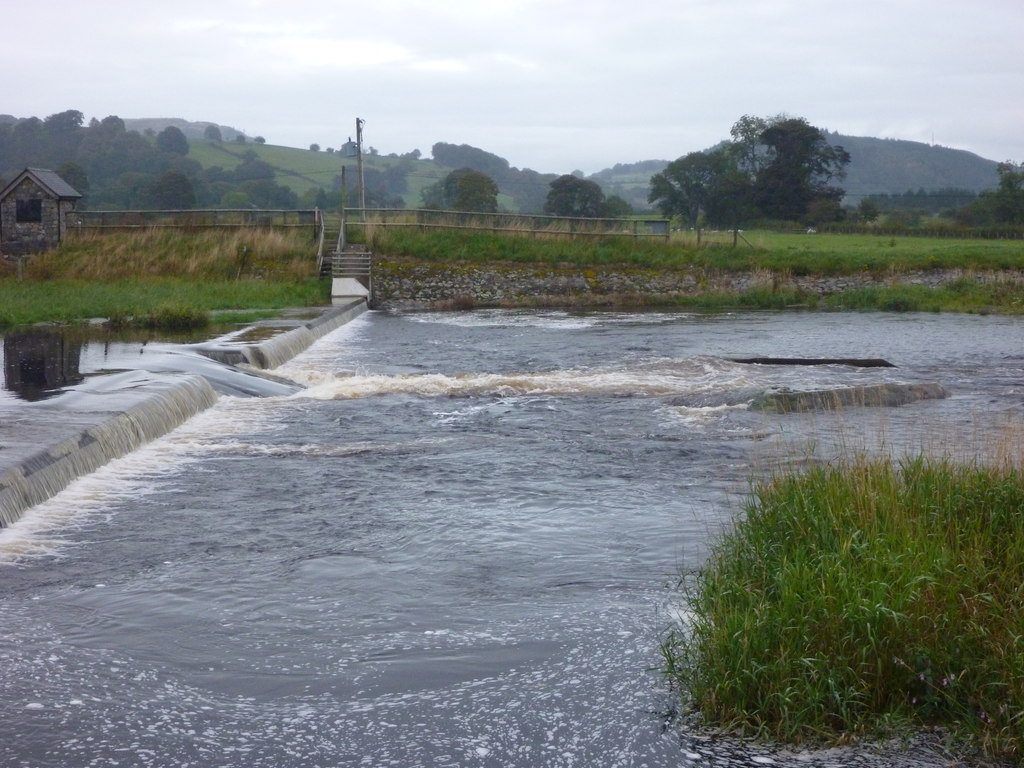
Also, to give an idea of how odd some weirs are:
A 'safe' weir, that I have led beginners down:
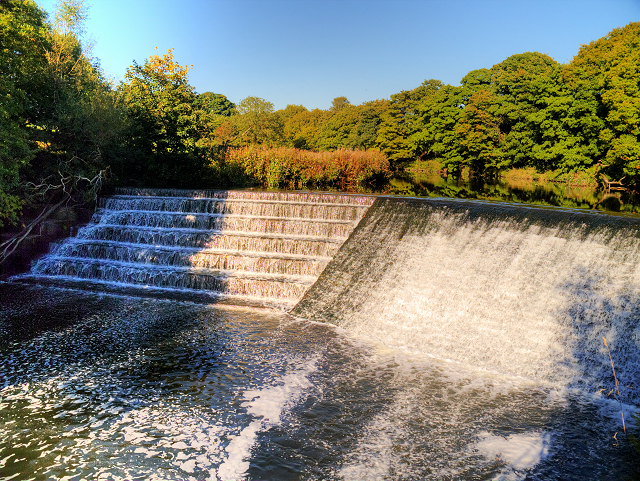
A weir that has drowned a couple of people, prior to the addition of the central 'break' and bars below to allow for free passage of canoes. One person was dog walker who waded in (shows how shallow) to rescue the dog and drowned.
matt_outandabout
Thanks for that PDF. It's fascinating. Just what I was after. As I said in my original post, I've spent some time looking at weirs trying to work out the dangers but not really understanding what I'm looking at. That explains things perfectly.
I know a lot of people say "don't speculate" but I genuinely find these types of threads to provide an interesting list of what-not-to-do from people who know a lot more than me.
Not that I ever really go in the water or have any desire to go kayaking or supping, but I might see someone in trouble.
Not that I ever really go in the water or have any desire to go kayaking or supping, but I might see someone in trouble.
Try it! Paddling down our water ways is a fantastic experience and lets you see our beautiful land from a different perspective. A little training and/or travelling with experienced people will make it a lot safer. Its never risk free but nor is riding a bike up and down hills.
The more people who travel and enjoy our water ways the more people who will value our waterways and be prepared to fight for access and water quality (see the other water companies dumping thread!)
– Kayaker with toddler in the cockpit between legs, rest of family in various other kayaks spinning circles while trying to get to one of the islands.
This made me feel weird and awkward inside.
Its never risk free but nor is riding a bike up and down hills.
Different magnitude of risk IME. more likely to damage yourself MTBing, more likely to die kayaking.
YMMV
Different magnitude of risk IME. more likely to damage yourself MTBing, more likely to die kayaking.
I think it's also to do with perception of risk. It's easy to look at a trail that's steep and rocky and, if you have little or no experience, think 'nope'! As matt_outandabout's weir pictures show above, to the uninformed water and water features are much harder to risk assess for the layman and (in my experience as an extremely lapsed sailing and windsurfing instructor) requires a lot more experience and contextual knowledge.
This made me feel weird and awkward inside.
@<span class="bbp-author-name">soundninjauk</span> - I did try to 'have a word', but as I was doing so the ferry chap came over and offered to help out. We were in the moorings still, and I think the ferry chap was more than on it so we backed out.
This made me feel weird and awkward inside.
Forgive my ignorance, I'm new to this. But struggling to see the OMG-LEVEL danger here.
Fair enough if white water, danger of crushing much like it's not a good idea to have a sprog on your lap whilst driving. Didn't the poster say a Loch? Large, flat water? Again, never really been to a loch except five minutes at Loch Lomond so maybe they're choppy?
Various family members around so not alone. Spinning? Not realised what the skeg is for? I did that on my first go and apart from looking daft, nothing bad happened.
Didn’t the poster say a Loch? Large, flat water?
Yes large and hence the water can quickly become unflat if the wind picks up.
For the spinning in circles that isnt really what the skeg is designed for unless the reason you are spinning is down purely to the wind in which case its probably time to get off the water.
The issues are:
that two of you in a cockpit = increases likelihood of capsize and difficulty in getting out if the boat capsizes. Plus how do you get back into kayak without letting go of toddler to get back in.
With multiple people rescues and tows become difficult, particularly if you have a distance back to shore or are in deepwater. They had no towing kit, so unless they know how to bulldoze a boat, they are then accompanying a swimmer or two, a long way in cold water.
Getting a kayak back upright takes some skill and a clear cockpit - as that is where the rescued boat lands and drains. The toddler would have a kayak on their head.
Having a few boats out of control (spinning) shows a real lack of fundamental skill, let alone ability to self rescue.
Lomond is big, often areas where wind and wave are much larger than it appears from the shore, and therefore conditions change rapidly. Without knowing how to respond, you could find a very long and cold float...
Not all boats have skegs.
That makes sense. Thanks.
Forgive my ignorance, I’m new to this. But struggling to see the OMG-LEVEL danger here.
. Didn’t the poster say a Loch? Large, flat water?
I've been sailing since before I could walk. Often early and late season, crossed the North Sea and racked up thousands of miles on Scotland's west coast, sometimes in pretty boisterous conditions.
Without a doubt the sketchiest, closest to hypothermia and actual harm I've been was in Loch Lommond in mid summer and wearing a 3mm wetsuit with a blue sky. Regatta was very blowy - we capsized 3 times getting to the start line. By the end of the first beat and got to the first mark we had capsized 10 times in the gusts. We were frozen with blue lips. Each righting of the dinghy (enterprise) taking more and more effort.
Called it at the mark and headed back to the shore and spent the rest of the afternoon in the warm sunshine having a bbq.
Point is, to the uninformed it looked a really nice day - bit breezy but so what, it's Scotland. Reality is that Loch Lommond is bloody cold year round. A few capsizes and you quickly get exhausted and very cold. If you're not even wearing a wetsuit, you'll get into danger much quicker.
If you’re not even wearing a wetsuit, you’ll get into danger much quicker.
And this seems a thing with SUP's at the moment - Insta bangers look better in a bikini, not a wetsuit. So folk are not wearing them, not expecting to fall in even once....
Forgive my ignorance, I’m new to this. But struggling to see the OMG-LEVEL danger here.
Once again matt_outandabout's done a much better job than me explaining things here, but I think this just reinforces my supposition that in general, it's much harder to risk assess and make an informed judgement about water sports than something where the risks and problems can more obviously be seen (like mountain biking).
A few videos that give insight into rescuing yourself or a group you are with. SUP and SOT are much easier - but arguably as tiring to keep righting and climbing back on.
Watch these and imagine 30cm waves, a panicking family, cold deep water and someone who has not practised...
Kayaks in pool:
Similar technique in most boats, right up to canoe:
https://www.youtube.com/watch?v=XJJKlN_Q95E
https://www.youtube.com/watch?v=4a5xTX-OBfQ
it’s much harder to risk assess and make an informed judgement about water sports than something where the risks and problems can more obviously be seen (like mountain biking)
Yep, couldn’t agree more. People will also see big wide rivers as “dangerous” and smaller rivers as “safer” but some of the most technical rivers to paddle in the UK from my brief white water career were small rocky rivers in the Lakes and Wales which people think they can wade out of (you can’t) and because of the rocks you’re much more likely to get pinned or break your ankles on a drop.
The risk assessment point also has some analogies for me to off piste skiing and snowboarding. Pristine open slope, no tracks (or worse a few tracks), bluebird day and the Insta shot of a pow shot is tempting. But tracks are no sign of intelligent life and unless you’ve done your homework on snow conditions and slope aspect and wind you’re basically flying blind.
jambourgie
Free MemberForgive my ignorance, I’m new to this. But struggling to see the OMG-LEVEL danger here.
Which is actually really useful, because, you're not daft and it gives a perfect example of how dangerous things can look safer when you need to know a bit to understand the danger. That's pretty much exactly how people get drowned.
I found it pretty interesting and also a bit sobering that when I started doing a wee bit of kayaking the first one was all fun and games and then about the 4th time I started to get informed enough to realise the first one was actually dodgy af. And at the same time, was exactly the way a lot of people will first go on the water- a cheap hire from a campsite with ropey illfitting safety gear, not very suitable kayaks and no safety brief at all, just "have any of you done this before? This guy has, right, you'll be fine. You want to leave your phones here to keep them dry? Don't worry if you're late back, I'm here til 6pm tonight anyway".

On my way in to work today I went to have look at the River Findhorn in spate (around Randolf's Leap for those that know it). A river I've got to know pretty well in the last 18 months. Awe inspiring and scary in equal measure. Full sized trees 30 foot long spiralling in a massive stopper. But one look at it today and all but the very very highest of skilled people would be staying well away. And I guess that's the problem - when these waterways are dangerous and don't look it.
A real tragedy. I hope extra details and conclusions are not too long coming as the guessing, suppositioning and hand wringing is never good. We've all had it with MTB, non bikers thinking what we do is dangerous based ill informed knee jerk pieces in press after an accident that bears little resemblance to what you are doing. I'm sure lots of better practice could come on the back of this for groups and clubs (see Lyme Bay disaster) but let's hope it does not lead to blanket bans by authorities too.
The weir in question is Haverfordwest Town weir. I used to live 2 minutes from it and worked in flood risk just down the road and know the river well.
The mhws is just upstream and I have seen seals downstream of the weir. The weir becomes totally submerged on larger tides. Cartlett Brook, a tributary enters the cleddau immediately downstream of the weir and is culverted for a significant length before the weir. There were flood alerts out Friday and Saturday, but that aside, the cleddau isn't a flashy river, so the reported sudden storm seems strange. Its possible that a sudden rise on the Cartlett Brook caused a strong left bank to right bank current downstream of the weir.
As has been said, weirs with downstream whitewater are generally safer (although they look worse) whereas the weirs that appear calm with boiling water are the most dangerous.
A terrible tragedy. My parents were in. Haverfordwest today and said all was very subdued.
Watch these and imagine 30cm waves, a panicking family, cold deep water and someone who has not practised…
The kayak one does make it look rather easy especially the emptying of the boat. Pool plus playboat plus careful exit minimising the water in it plus I would expect there would be a good chance for the family outing that they dont have airbags in there makes it a rather different affair.
shudder when I see people heading out to sea in a bikini top and a pair of board shorts. Least I would go out in would be 3/2 short arm with smoothskin top half. I dont intend to spend much time immersed , but if a jump or loop goes wrong and I have to kick away the kit mid flight it can be a frantic dash to get to it before it heads off down wind .
If you spend any time on the coast you will know exactly what I mean when I say the T5 crew. OK so its not always a T5 but mostly a VW van . I thik its great that people can get out and exercise in the fresh air, in relative safety. Im all for people having fun on the water but a degree of caution has to be exercised. RNLI are fab but it can be 30 mins till they rock up. I see people in cotton t shirts and shorts , be a long cold paddle back if a squall blows through.
My only contribution to this thread (apart from agreeing how tragic the story is) is to say how interesting its been hearing from experts on the subject. It makes me realise that although I have been quite careful when solo kayaking in mallorca over the past few years.....Ive not been careful enough!
I was taught at a very young age when in the Scouts the danger of weirs, but this thread has reminded me that there are a lot of other dangers out on the water that you really don't consider.
MOAB has answered himself why it made him uneasy - and why any toddler in the cockpit is dangerous, and he touched on this bit but I don't think it can be expressed enough:
Didn’t the poster say a Loch? Large, flat water? Again, never really been to a loch except five minutes at Loch Lomond so maybe they’re choppy?
Loch Lomond (which you've briefly been on yourself) is not just any old lock - but surface area is the largest inland water in Britain. It's a bit over 22 miles long (that's slightly longer than the width of the Channel at the dover straight). In places, it's 150m deep (I think I am right in saying that's deeper than the channel at Dover also!), filled with snowmelt water so it's cold - usually colder than the sea on the west coast of Scotland. The wind funnels between the hills that make up the loch sides and if blowing in the right direction can build up quite large waves - I've seen 2m waves (in fact I've been out in waves enough to make me turn round and go home, on days when just down the clyde coast my friend was happily waterskiing!). I suspect if people were out in bikinis it wasn't that bad that day - but conditions change quickly, it got a lot more "traffic" than most Scottish lochs, not all of it driven by competent people so big wakes close to small boats are not unusual. Anyone paddle boarding on the loch should expect to fall in; and cold shock, unfortunately, kills people on the loch even in summer.
It's easy to think - well at least it is enclosed on all sides so I can't get blown out to sea - but its very sparsely populated - the west side has a main road running up it so if blown ashore there you probably can get help, but in many places only if you can actually get from the water up a steep slope, small cliff, scramble through undergrowth etc. The east side is more remote, in places there your best chance of help is someone who happens to be walking the west highland way and happens to come across you. At the wide bit - where MOAB saw some of his people - its about 5 miles from side to side. If there's a strong breeze against you - there's no way a novice will paddle a SUP for miles, and they may end up with a 30 mile trip by land to get back where they started! This does seem to be worse for people with SUPs who jump on one with no training so don't have any idea how to either reduce their wind cross section or use islands etc to provide shelter and help them get where they want to go, and sometimes even how to hold the paddle to get efficient strokes.
There is a ranger service, but they aren't on the water most of the time and obviously can't be everywhere at once, even at busy periods they pretty much are 9-5. There is a lifeboat (always a sign that an inshore waterway is a bit treacherous!) - realistically from someone dialing 999 with an accurate location - you are probably looking at ~20-30 minutes for them to reach you in good weather. Extra help is more likely to take about an hour to muster and get afloat. There's lots of traffic on busy days, but can be none at all on bleak days. Even on busy days many of the other water users will be hoping a mobile phone rather than VHF will get them out of trouble yet the coverage is patchy, and they probably don't know who to call (as its inland water, not the sea - you call the police not the CG - although of course the CG will take your call and pass the details on). Other bits of freshwater (except Loch Ness where you do call the CG!) in Scotland you should call the fire service!
The problem with Loch Lomond, and indeed some of the other Scottish Lochs, is they look relatively safe - they are just big "flat" bits of water with no tide... the reality is different; I don't want to put people off but it's not a Cornish beach with Lifeguard Patrols. There's lots of fun to be had, but as your might gather from this message I really do feel that too many people turn up at the loch thinking it's really just a huge pond. The issues are not unique to L. Lomond - indeed at least it has rangers and rescue boat etc.
Loch Lomond (which you’ve briefly been on yourself) is not just any old lock
Sorry, I didn't mean to give the impression that I'd been on Loch Lomond. Merely that I had been there. Drove from Glasgow, stood on a pier looking out for five minutes, before proclaiming "it's bloody cold" and disappearing into a nearby pub 🙂
My water experience began this spring and consists of a weekly bimble up a city centre canal. Which is why I'm asking so many questions. And not forgetting the sad context of the thread, some of the responses on here from Matt etc have been fascinating. So thanks.
Spinning? Not realised what the skeg is for?
A skeg is not for stopping the boat spinning. If there's not much wind, it will work, but that's not what it's for, and if there's any wind, using the skeg can cause a problem. The purpose of a skeg is to adjust the balance of the boat for the direction, relative to the wind, that you want to go in. Nearly all kayaks will turn into wind, which is generally safe, but awkward if you want to go downwind, or even crosswind. So the skeg 'anchors' the stern and the boat turns downwind. I've seen people spin in a kayak, put the skeg down in the belief that that will stop it spinning, and disappear downwind, out of control.
You're welcome.
I know there's many on here with even more experience and skills than I have. And perhaps a lifetime in outdoor learning career makes me too cautious at times.
I hope you all know - I'm hugely pro-adventure. Massively understanding of how nature and adventure benefit us all. And I hope I'm realistic about the risks - which are far lower than many other things in life, and the benefits physically, mentally and socially, let alone connection to our environment, outweigh the risks.
A bit of knowledge, bit of thought, touch of caution around your skills, and we can enjoy these things safely.
When something does go wrong, I'm more interested in learning why and how than any blame. Blame gets us no-where, learning through the real detail (not what you read in the papers for the next few days) will help us all.
Today I had a bit of a disagreement with a canoe instructor on Facebook in response to some nervous and inexperienced SUPers having been scared by the news, he was telling them rivers don't become killing monsters just because of some flood water, just check the water levels for flow. One section of local river is controlled to regulate the head for a hydro generater, so the level there has very little correlation to flow unless it has overwhelmed the sluices. So just checking the level was actually poor advice without having basic knowledge of the local water. It's quite worrying that someone who is a qualified paddle instructor could actually give such advice to people that can only just stand on a board about going in to water that would be too fast for them to deal with.
Local rag link to the story..
https://www.westerntelegraph.co.uk/news/19685038.haverfordwest-incident-ex-soldier-dad-paul-odwyer-lost-life-trying-save-paddleboarders/?fbclid=IwAR1z82lu-uLNP4hCeX2jQoGWTKIgOp1PSeB00POb4ccGodUz3Nl43h3lJ1c
There was a big downpour earlier that morning.. but the weather was mild, sunny.
We were about 5 miles downstream (the river widens massively into an estuary) where my daughter was sail training when we heard the story break
MOAB - wow those pictures you put up of the safe and dangerous weirs - I would never have thought that the second one was so bad. Thanks.
FWIW I am super scared of water due to bad experiences as a teenager and I can’t even swim so I am very glad to keep away from water - as a Geographer I know too much about the power of water too.
The picture of the weir in the article above paints a grim picture, a real killer. Swimming through it would be bad enough but attached to iSUP with a leash.... Urrgh
I dont want to comment amnymore on the incident but as MOAB has above even a little knowledge is key. Whilst paddling the Spey in fairly high water in the summer in canoes we were passed by 2 sup paddlers with ankle leashes, no BA, no helmet and no wetsuits, the were using the boards like kayaks with kayak paddles. We followed after and caught up and I (with 25 years WW kayak experience) explained some of the dangers and what they should do in future. I recommended they got off but they weren't interested.
The Loch Lomond incidents over the summer as Matt has pointed out (also look up "calamity kayaking" on facebook) really show naïve folk are to the risks of even what appears to be a safe environment (through no fault of there own) but also how much folk hate being told what to do even if the recommendations could save their or their families lives.
This video is a good example of getting caught in a hydraulic:
<iframe width="560" height="315" src="https://www.youtube.com/embed/EYI67uZkNvQ" title="YouTube video player" frameborder="0" allow="accelerometer; autoplay; clipboard-write; encrypted-media; gyroscope; picture-in-picture" allowfullscreen></iframe>
And this seems a thing with SUP’s at the moment – Insta bangers look better in a bikini, not a wetsuit. So folk are not wearing them, not expecting to fall in even once….
Not all of them look better in a bikini - some would definitely be more flattering with neoprene! However, whilst I'm sure the "photo" is part of the reason, a recent conversation with a highly educated friend who has nothing to do with social media, who saw pictures of my neoprene clad whale-like physique highlighted an issue - she's only paddleboarded in the med before, a bikini seems to be normal there. She thought I looked massively overdressed for paddleboarding! If we have med like air temps here as we do for a few days/weeks then its easy to see how someone who normally holidays overseas and associates those temps with warm waters could be mistaken.
If you spend any time on the coast you will know exactly what I mean when I say the T5 crew. OK so its not always a T5 but mostly a VW van .
I spend lots of time at the coast, and scenic Scottish lochs. The #van-lifers aren't the ones who concern me. There are a disproportionate number of them (especially the T5/VW types) with too much cash and not enough brains - but actually most of the clueless people I see are more likely to turn up in an fake-by-four or an Audi A1, or some bangernomics Citroen Xara.
And perhaps a lifetime in outdoor learning career makes me
too cautious at times.naturally adverse to things that will result in more paperwork
FIFY
That video is truly frightnening.
fake-by-four
Faux-by-four?
This video is a good example of getting caught in a hydraulic:
LOLs. As soon as the poster above asked what makes weirs so dangerous I was thinking of this Corsica video to make the point that it's the homogeneity of the weir that makes it worse. Most natural waterfalls have irregularities but this particular one doesn't, which I why this infamous video does the rounds every few years. ( that and the fact that it's one of the few older vids where the cameraman doesn't put the camera down to help with the rescue)
can build up quite large waves – I’ve seen 2m waves (in fact I’ve been out in waves enough to make me turn round and go
2 metre waves? I don't believe you...
Another example of a nasty hydraulic/stopper/recirculation beating. Watch right to the end...
(We hosted Erik Boomer, the paddler in the vid, for a talk a few years ago and he showed this as part of the talk to deliberately dispel the 'always perfect' editing myth). I'm a kayaker and coach, but I've nothing to add to the conversation other than another voice saying 'it's tragic'. Sounds like it's been similar to the deaths at Wylam on the Tyne a few years ago, people underestimating or not understanding how vicious a fairly innocuous looking weir can be. I was out with our club (a University canoe club) on Sunday and none of the freshers realised why I was sat guard downstream from them at the getout while someone else helped them out of the water - it's because we were not too far above this:

As soon as the poster above asked what makes weirs so dangerous I was thinking of this video to make the point that it’s the homogeneity of the weir that makes it worse. Most natural waterfalls have irregularities but this particular one doesn’t
This is the big takeaway for me. In a game of ‘rate my water obstruction’ me and I guess most of the population would lose badly.
I already watched this guy on YouTube as he has a lot of interesting technical videos normal folk can understand - this is a good one about hydraulic jumps becoming dangerous as levels increase:
This is the big takeaway for me.
I would say the big takeaway is to avoid weirs unless you are with someone who knows whether that weir is runnable or not and to have a rescue plan.
Some weirs are great fun in the right water conditions but some are always lethal and some vary.
Well this summer I bought an inflatable kayak and a SUP, now I'm not so sure it was a good idea. Paddling up and down a beach is a bit boring, and anything else seems to come with a lot of risk management. Googling for safe locations where we were seemed only to throw up hire places rather than actual location information, so we ended up not really exploring much.
Well this summer I bought an inflatable kayak and a SUP, now I’m not so sure it was a good idea. Paddling up and down a beach is a bit boring, and anything else seems to come with a lot of risk management
Get a fishing rod 😉
Googling for safe locations where we were seemed only to throw up hire places rather than actual location information, so we ended up not really exploring much.
Whereabouts are you?
You can look at gopaddling.info (from British Canoeing) and the canal and rivers trust for places to paddle. If the south of England then the Pub paddles book is great.
Whilst there is a certain amount of risk just like mountain biking it can be effectively managed with a bit of knowledge and erring on the side of caution.
That last video is excellent. Weird how a long drop from a weir could “look” more dangerous than a short drop but be far less so. Hadn’t thought about how the “boil” introduces more air into the water and thus making a struggling swimmer even less buoyant.
SUP do appear to be a bit too easily available to the middle classes, which makes them dangerous.
Sitting from my armchair observations, I see people posting about their newly bought SUP on Facebook. People taking them to very remote lakes/reservoirs near where I live, even the local stagnant canal where there are not people about to help if it goes wrong, and also them not having had any prior experience, but thats ok because they can swim.
Also from my armchair, the RNLI have seen a massive increase in calls to SUP's, in fact it could be there biggest call out group now.
People know its not safe to go out in these places in a £20 blow up dinghy, but why is a SUP any different?
and its not just weirs that are killers.
Take the Strid in the Dales for example of how an apparent innocuous looking stretch of water can hide a multitude of below water hazards.
Hadn’t thought about how the “boil” introduces more air into the water and thus making a struggling swimmer even less buoyant.
As a slight divergence, but still apt, In my working life I have spent a chunk of time working in Sewage works. Part of the treatment process is to aerate large tanks of sewage - imagine pipes of air at the bottom of an olympic swimming pool full of sewage with thousands of mini jets of air. above the tanks are walkways with various instruments.
Part of the safety briefing is pointing out crystal clearly that the fluid is so well aerated that it would be impossible to swim in. Fall in and you're going straight to the bottom of the tank without a hope to be able to tread water or self rescue. It would be a horrific way to die.
The same aeration process happens at weirs too, although less "perfectly designed" in an engineering sense.
Googling for safe locations
Not a criticism, molgrips, but 'safe location' is completely time, situation, conditions and context dependant, as Matt and other's posts have highlighted. Knowing when a location is 'safe' is completely training and experience-based: it's not something that you can look up, it's something you have to learn - in some cases by making a few hopefully non-catastrophic mistakes.
As an example: we paddled a pretty boring section on Sunday, Collingham to Wetherby on the Wharfe, no real rapids, nothing really of interest, pretty but dull.
We'd originally proposed doing one of the higher sections which is still good fun, has more interesting rapids and would push our novices a little harder. Unfortunately, there'd been a massive amount of rain in the upper reaches of the river that would generate a spike in the levels. The worst thing that could happen is the river rising significantly in the 2-3hrs we're on the water, turning a fairly innocuous bimble into, well, something very problematic. Based on that, we opted to go lower down the river where there's 6-8hrs lag on any surge. We had a good day - only one of our freshers swam once, messed up crossing an eddy line and flipped, pretty standard, other than that, all clear. We got every one out safely at Wetherby, got changed and went to the chippy.
The section we'd originally proposed running rose half a metre in the time period we were on - doesn't sound like a lot, but in the shallow upper reaches of the Wharfe that's very significant. That extra 50cm turns the weir above the last rapid (at Linton, near Grassington) from a really fun slide that I can chuck an almost-complete-novice down safely to something that I, with 30 years of boating under my belt, pause and have a good think about. The section we ran, the boring bit, lagged behind by 8+ hours as we'd predicted, and went up from 1.15m on the nearest gauge to over 3m.
As I said above - at 1.15m on the gauge, I could sit just below the get-out while someone else got our freshers into the get-out ramp one at a time and helped them out, with me as a backup in case they fell out of their boat and ended up swimming: At 3m I wouldn't be able to paddle against the current for long enough to do that. That weir I posted a picture of is 20m below the get-out, and there's no eddy above it to safely get someone out. Even at 1.15m, all I'd be doing if someone swam is slowing their descent down for enough time for someone to be able to get a rope to us from above: at 3m both they and I would be getting flushed over the weir and the outcome likely wouldn't be good.
Well this summer I bought an inflatable kayak, a SUP and a ...........
must resist......
throw up hire places
Local place to us that hires SUPs lets you pay an annual fee to use their jetty to launch from if you have your own SUP- might be worth checking if those places you see do similar.
https://gopaddling.info/paddlepoints/
Inspiration for trips:
https://www.songofthepaddle.co.uk/blogg-f4/ and https://www.songofthepaddle.co.uk/places-reference-threads-f49/
Not a criticism, molgrips, but ‘safe location’ is completely time, situation, conditions and context dependant, as Matt and other’s posts have highlighted.
Yes, of course. But this could be rolled into some sort of directory like it is for surfing. If I want to go surfing I can find beaches that say 'good for beginners' or 'expert only' or something, and it will list the possible hazards under what conditions. If there are hazards listed then I, as a beginner, will steer clear.
I didn't find any such sites for paddling. Maybe it's because there are so many potential sites on the coast, I don't know.
i'm sure haverfordwest is perfectly safe 99% of the time.
but there were extensive and active rain and flood warnings in place. the comment about an 'out of the blue' downpour doesn't make any sense.
its easy to judge though, i'm sure I'm not alone in having made decisions that I've looked back at and thought that was lucky. sometimes even the most experienced people get it wrong. I was on the dart further down on the day chris wheeler died. he was super experienced and had run it hundreds of times.