 You don't need to be an 'investor' to invest in Singletrack: 6 days left: 95% of target - Find out more
They are not cash buyers.
in that case I’m surprised their lender was willing to fund it if the situation is so bad. In their shoes I’d certainly be investigating fixing and moving if the market will support selling without being in negative equity. The problem is not going to get better. BUT whatever features attracted them to the property that would not have persuaded you or I, may still mean they love the house more than the downsides (some folk are weird too and seem to revel in living in a crisis so whilst it sounds awful to us, they quite like some drama!)
Bear in mind that plenty of people have always been happy to "buy" leasehold property, where all they are getting is the right to live there for sometimes as little as 70 years or less.
Stuff that is decades away can easily be brushed aside. So what if the property is lost in 100 years? It's the same issue as climate change itself, future harms are easily discounted away to not really matter much.
(Yeah I know the leasehold stuff is finally getting reformed, possibly already has been in England, but it wasn't long ago that it was like that.)
FWIW I don't see my house lasting 100y without a major rebuild, in some countries like Japan properties are routinely rebuilt on a much shorter time scale, it's routine for a house just a few decades old to be worth less than a bare plot would be.
I'm surpised the OP's inlaws got a mortage when the flood risk was well known and highlighted. Saw this house on a bike tour. I was enjoying a few days of flat riding. The Missouri flood plain. I wonder whether bulding on stilts would add much to the cost of a new house. Or garages/basements with high electrics. Not much help for existing homes but going forward.

Maybe it isn’t all such doom and gloom in this case though.
There is a plan for Bridge of Allan to improve the flood resilience of that area of the town, they are well aware that the current walls are inadequate. If you search for SEPA’s top priority schemes you could be forgiven for thinking they were very close to starting work on this. It is also ranked as Stirling council’s number 1 priority. It would also explain why they aren’t improving sump pumps etc at this time - no point if they are planned to be replaced.
The problem is of course money and the council is clearly dragging its feet.
If the work is eventually completed then the house may not be impossible to live in/sell.
Loads of people ignore the advice of experts because they think that they know better. Especially when it’s something as emotionally charged as global heating and climate change.
Especially when you see it on a nice sunny day in August. "That little stream... Pffft" then Boscastle happens.
It is also ranked as Stirling council’s number 1 priority. It would also explain why they aren’t improving sump pumps etc at this time – no point if they are planned to be replaced.
The problem is of course money and the council is clearly dragging its feet.
If the work is eventually completed then the house may not be impossible to live in/sell.
While this is true, it means living there is totally reliant on a sump only a few cm lower than the house and a pump which has failed on them (first inundation). The council I believe has kicked the plan on another year at a meeting a free weeks ago apparently.
Aye, I was trying to look for the positives. That is the situation they are in now though isn’t it. They need to work with the council no matter how infuriating that may be.
They are not cash buyers.
I did wonder where that assumption had crept in.
The assumption was they wouldn't get a mortgage on such a huge risk. But so long as they can pay, the bank doesn't really care.
Or the deposit was large enough to reduce the risk to an acceptable level for the loanee.
One problem with a sump pump is where to pump the water away to. Yes you could build a wall out of 7n structural blocks ,, laid sideways with piers that will hold back enough water for a pump to be viable. What if there is a power cut , you are going to also need a generator. And I doubt a single phase 3kw pump would be sufficient.
As mentioned water will ingress up the poo pipes , and any other point of entry like sink wastes , cellars etc .
Then you still have air bricks , doorways, garage door as points of entry.
I'm looking to blank off 3/4 of the lower airbricks on my place . They are below the door frame and dpc . Living 2mtr above sea level comes with a risk . Unfortunately for me it's more likely cock wombles in 2004 land rover discovery equipped with snorkels who are determined to drive through floods at 30mph to justify the fitting of said snorkels creating large bow waves that will be the problem ,not the sea as it has a huge area to run into, along the road but some people are just dickheads
Your certainties give me more cause for concern, not less, Tasha and Kona. I used to work for Welsh Water in a role that was handed to the EA when it was created. I ran the rainwater sampling network and published my work on lake liming. Working on the effects of atmospheric pollution I was up to date with climatic change research back then. As a geologist who learned about the atmophere of the planets and the compostion of the earth's atmophere through I perhaps found it easier than many to visualise the climate correspsonding to different levels of CO2 through the sediments along with their flora and fauna I'd observed. I turned down a PhD to go off and become a beach bum because I worked out that what I was doing was futile.
As a geologist I was quite happy to go along with the idea of peak oil. Then one evening I dined with a group of geologists from Total. One American totally dissed the idea we were close to peak oil and made some fairly extravagant predictions about reserves. At the time I was confused by his optimism or pessimism depending on whose side you are one but took note. This was just before the fracking boom, a technological change which made a mockery of any peak oil predictions up until then. That and the fact he clearly knew what Total's real reserve portfollio was not the one made public.
Peak oil for my generation was supposed to be just after 2000, by 2005 this was the graph my American encounter laughed at: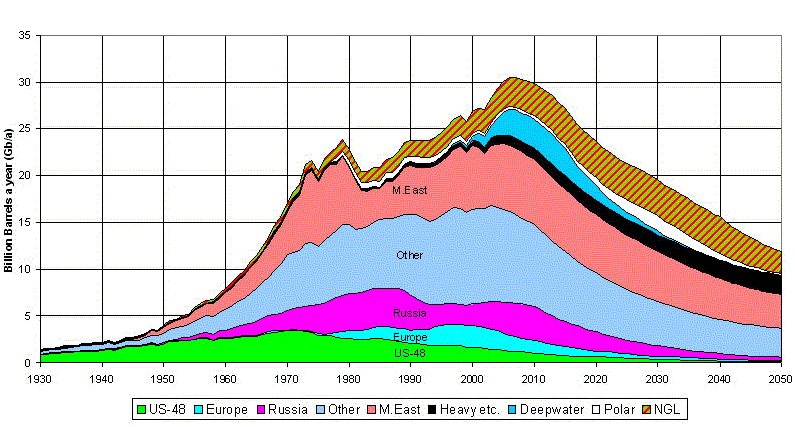
and this is what really happened
https://yearbook.enerdata.net/crude-oil/world-production-statistics.html
Models are only as good as the assumptions you make and the data you feed in. Climate scientists have for years been cautious about their predictions. Their claims have been under the scrutiny of a few well-funded climatic sceptic scientists and they've played safe. Safe for their reputations but not safe for the planet; we shouldn't publishing what will definitely happen (in a best-case scenario) we should be concentrating on the most likely and worst case scenarios.
Have a look at the 2015 Paris COP targets and predictions. Just 8 years on they are laughable (if this were a laughing matter). In 2015 the idea was that global warming could be limited to +1.5°C by aiming for net zero carbon emissions by 2030 and 2050.
Well we're already there, we first made it in June 2023:
https://climate.copernicus.eu/tracking-breaches-150c-global-warming-threshold
Keep up the good work but please throw caution to the wind. Consider the worst that could happen because it probably will.
Unfortunately for me it’s more likely cock wombles in 2004 land rover discovery equipped with snorkels who are determined to drive through floods at 30mph to justify the fitting of said snorkels creating large bow waves that will be the problem ,not the sea as it has a huge area to run into, along the road but some people are just dickheads
Yep big part of not making things worse is the action plans. Shutting roads etc (it might not stop them but it will mean they are committing an offence passing the sign).
One problem with property levels stuff is there is a risk attached. Once they are flooded in the risk goes up for rescue if things get worse. Walking around in flooded streets is straight up dangerous disappearing down a popped manhole is a real risk, even jamming your foot into a gulley pot and snagging debris isn't clever. What you want is the defences put in place and people to get out taking all their cars and pets with them.
One of the first things Peebles fire station has to do in a flood warning is to evacuated itself as it on the flood plain.
Seems the SNP have been slow at handing out cash for flood defences. That isn't likely to improve given the recent budget problems..
https://www.scottishdailyexpress.co.uk/news/politics/snp-legacy-failure-sees-only-31775201
My in-laws are somewhat ‘complex’ at times and won’t answer that question. I do know the flooding risk was clear on the homebuyers
It would be interesting to know the insurance history, if the previous occupants didn't hold, or didn't claim on their insurance for previous flooding events, would that effectively mean it's not recorded as having recently flooded? It's a bit like neighbour disputes and burglaries...if it's not reported/official...it didn't happen!
Just reread alot of the thread and this jumped out.
Seen it through my life, lived in Perth when the ‘great flood’ hit, and seen flood defences basically just push the problem further downstream, literally
This certainly was the case previously but now SEPA requires proof that any scheme won't negatively impact other people in the catchment either by backing upstream or by accelerating it downstream to spill further down. We build hydraulic models to prove it and if you can't it's really unlikely to get the permissions required.
One of the first things Peebles fire station has to do in a flood warning is to evacuated itself as it on the flood plain.
When I worked for Welsh Water one of the first buildings to get its feet wet when the Aeron flooded was our office. 🙂
There's a field behind me which floods, where it doesn't flood it's marsh at best, you can't walk on about half of it. A developer has been refused planning permission but has just resubmitted the application on appeal.
In the v unlikely event of it been granted I can only assume the buyers would not be local.
Developers aren't bothered, they 've been and gone by the time the houses are sold.
When I worked for Welsh Water one of the first buildings to get its feet wet when the Aeron flooded was our office. 🙂
We made the map that showed our old office was first to go in tidal flooding.
It was a brilliant office though.
There’s a field behind me which floods, where it doesn’t flood it’s marsh at best, you can’t walk on about half of it.
I remember a tale about a new housing estate being built in the NW (maybe Preston) area. The builders were supplied with liferings during construction due to the risk of flood and consequent risk to life. 🤔
In some countries like Japan properties are routinely rebuilt on a much shorter time scale, it’s routine for a house just a few decades old to be worth less than a bare plot would be
Japan is an odd one. More architects per capita than anywhere else in the world. It's speculated that the current approach stems from poor housing thrown up after the second world war combined with earthquake and tsunami worries. They don't have DIY stores like we do. Home improvement isn't a thing. Houses depreciate because they're bought, knocked down, new ones built and nothing done to them while they're lived in. It's thought it might be a contributor to the stagnation of their economy because they're just rinsing assets down the drain.
OP… unless there are public works planned in the next five years to reduce the problem/risk in their area… they should sell, and sell now. If that’s advice they won’t take… basement sump pumps, door and drain barriers… and then leave them to it. Their lives.
Give a good chunk of money to the Dutch to make the floodwater someone else's problem.
That looks like they are over pumping blocked culverts? If it's pumped at or less than the culvert capacity then that would be a pretty normal thing to do.
Flooding is everybodies problem. If it can be over pumped and make use of flood plain storage without flooding homes then it's a much better solution than it sitting in people's homes doing nothing because there is no exit route.
Not a blocked culvert, just not enough gradient for gravity to evacuate the water quickly enough (usually). I think / believe I know where that is.
The Internal Drainage Board has to manage the water levels in these extremely flat places, and the EA are involved when 'in flood'. There are threshold levels that each of the moors can get to before it starts to affect houses / properties. We observe the rain and flow/water levels in the rivers coming in to those areas and, ahead of the peaks, the floodwater from one channel or flood storage area is redirected to the next area with capacity, on the way to the sea. Since that video was made there has been lots of investment and a new system to use gravity more by redirecting water down different channels, to be less reliant on over pumping to protect properties. But there will continue to be pumps on the levels / moors / fens (not just Somerset and not just for floods) because those landscapes only exist because they are artificially drained.
Ah good point. Didn't really register it was a flat bit. Not such a problem up here 😁
Man builds own defence wall around property to protect against flooding
https://www.bbc.co.uk/news/av/uk-67888641
A few years ago someone who lived close to the beach did something similar, built a wall to divert water as the high tide was coming in. IIRC he avoided damage to his own place (which would have been insured anyway) but ended up getting sued for damage to nearby properties which argued that what he did caused them to suffer more damage than they otherwise would have. Of course this case is different.
A significant issue with the Somerset Levels flooding, where those pumps were brought in, was due to the boss of the EA having an obsession with basically allowing the Levels to return to the marshlands they were around 1000 years ago when the monks from Glastonbury started digging the rines to drain them. He deliberately shut down the local Water Board who arranged dredging on a regular basis, so allowing the river to silt up, causing flooding on the farms that had been there for generations. <br />I remember posting up a photo of a road bridge over the river which had been designed with large holes through the buttresses to allow water to flow through, preventing it from backing up at the sides when the river filled up. The silt build-up at the sides had filled the holes and reduced the capacity of the river by two-thirds.
He refused to accept that his (in)action was responsible, and that it was the environmentally sound course of action. He suddenly left the job, and dredging started almost immediately - I’ve heard nothing about flooding of that extent during this period of repeated heavy rain.
There was a Points West news report from Castle Combe the other evening about the cottages alongside the road towards the A420, which have the Bybrook running on the opposite side. They were badly flooded some years ago, the very last cottage was completely stripped out and a lot of remedial work carried out; they had dehumidifiers running for some time, and flood gates were fitted to the front doors. They have limestone flag floors, so generally pretty waterproof. Except one cottage had a spring bubbling up between a couple of flags, looking like one of those drinking fountains! <br />I would guess that once things dry out, the flags might need to be carefully lifted and a thick waterproof membrane laid underneath. The elderly lady owner did seem to have a fairly relaxed attitude to it, she had a pump drawing the water out over her flood gate.
When I see probably intelligent, rational , educated adults using leaf blowers to clear their block paved driveway, out into the road it makes me think that they are idiots
The detritus will find it's way into the probably now undersized road drains. And why is this not fly tipping? If was a stack of branches that you cut down and removed from your property and out into the road I imagine someone would be having words, but 100kg wet leaves apparently is ok.
It's a big f u to cycling as well ,as a raft of leaf mulch is not very grippy at all.
Built a french drain yesterday to stop ingress into the garage, it worked but the soak away needs to be massive. Probably around a cu meter!
The agency's executive flood director, Caroline Douglass, told BBC Breakfast more than 1,000 properties had been flooded this week in England, including hundreds overnight into Friday.
https://www.bbc.co.uk/news/uk-67888959
It may be our modern news sharing these things faster, it may be we are more aware. But are any of our esteemed experts able to say if there are more properties flooding now then before?
But are any of our esteemed experts able to say if there are more properties flooding now then before?
Not an expert, but I guess the Environment Agency and/or Association of British Insurers would have the data.
Anecdotally, floods have always occurred. I worked in insurance back in the 80s/90s and remember horrendous floods in Perth and Tywyn (sp?). I guess defences may have been built after that and the problem goes downstream.
A riding buddy is a flood expert, and has worked on some of the local flood protection schemes in the Midlands, and is talking this week about flood plains along the Erewash doing their job, not aware any properties locally flooded this week as they have done in the 20 years we've been up here. Not aware recent housing developments have flooded, but again, may be pushing the problem downstream.
River levels peaked last night in Nottingham just below the peak of the 2000 floods, which was the week before we moved up here. There are markers on a bridge on the Trent, and a bridge on the Derwent at Matlock, showing much higher flood levels in the 60s and 30s.
I suspect the number of houses flooding may not have increased, but they seem to be flooding more often.
My village 100 years ago. Bloke is leaning out of what's now our upstairs window. There's clearly a history of flooding here - the house was built next to what was a causeway across a tidal floodplain/marsh in the 15th century so the fabric of it has stood the test of time (and water).<br /><br />I'm not going to say we don't have concerns after lots of heavy rain and when there's a spring tide but we're reconciled to the risk level and it's not stopping us sleeping. I suspect that the impact of climate change at a global level (loss of crops, human migration, political upheaval) will be of more significance in my lifetime than that of localised flooding which can often be mitigated against at a property and community level. I'm not sure on sea level rise, tbh but I can't see a rapid loss of populated areas on flood plains/coastal regions as a thing for some time.<br /><br />Re: FloodRe - it is a time limited program and only applies to homes built before a certain date, a few homes in the village have been built post that cutoff but have sacrificial ground floors that are not living spaces, on the whole.<br /><br />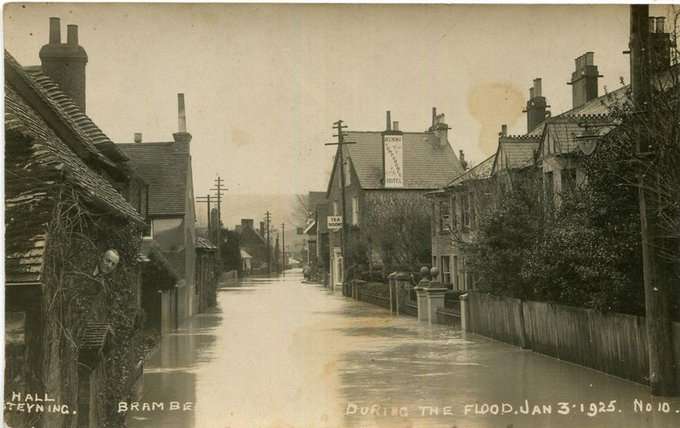
It's complicated, and political and societal too... a narrative can take hold in a community and it makes the discussion about long-term planning very difficult. As CountZero's post suggests, many in the Somerset L&M area believe that dredging the rivers stops flooding, and that assertion on its own just isn't true. There will need to be a combination of different approaches, from the natural flood management and potential for paludiculture and alternative farming, as well as dredging, pumping and building higher and higher defences, and mitigation and resilience measures to recover more quickly. I get that change is incredibly difficult to discuss, people have a strong sense of place, but at the end of the day if we are to keep defending (rather than migitating) flood risk it will need more and more money with climate change and increasing development - so like the NHS thread - who is going to pay? It needs a big, societal and evidenced discussion without the politicking.
"more properties flooding now then before?"
Every rainfall event and subsequent river flow time series is unique, due to how intensely and where the rain falls, and how that rain reaches the rivers. We try to gauge how rare these events are with statistical analysis of the observations and at some stage the Met Office, EA and others might publicly discuss a 'probability' of this event occurring, which can then be compared with previous observed events. I think what you are asking is can we say climate change has changed rainfall patterns? Or has development put more homes / properties into flood risk areas? I'll be honest I expect the EA don't have that information to hand. For the question of "climate change attribution", for rainfall, the answer is it's currently very difficult: https://www.metoffice.gov.uk/research/climate/understanding-climate/attributing-extreme-weather-to-climate-change
What we can say with certaintly when comparing with historical flooding is that the base line, sea level, is rising, especially in the south east; say 15cm since that photo was taken and the rate of change is increasing. When comparing with what the monks did 1000 years ago you have to consider what has happened since. A Little Ice Age to lower sea levels then an insustrial revolution to kick off the current rise.
many in the Somerset L&M area believe that dredging the rivers stops flooding, and that assertion on its own just isn’t true.
Any thoughts on whether and how this applies to natural rivers vs. man-made drainage ditches (or man-made bridges on natural rivers).
It appears to me that once humans have started interfering, then we have to keep interfering until we decide it's too much work to be worth it. So say if a bridge was once upon a time built over a river, and now it's half blocked up with gravel and silt, you really have to clear it. Or if we claimed land by draining it, then we better keep the drainage ditches we built clear of weeds or land and property will be flooded. The bridges/ditches aren't natural so letting them be "natural" by not maintaining them will have consequences. Although usually (and conveniently) not for the stretched authorities who'd have to pay for the maintenance.
Somerset Levels are interesting. I understand a lot of work has been done in the upstream catchment areas to try + hold back rainfall and smooth out the intensity of extreme events which happen (regularly). This includes large 'ponds' which can fill, semi-permeable dams etc etc.
This has been co-ordinated by a regional organisation, Somerset Rivers authority:
https://www.somersetriversauthority.org.uk/
Personally, I think having an organisation for each catchment area is a great idea . We currently have two separate companies responsible for the River Severn, just because it crosses from England to Wales. Makes it much harder to co-ordinate a strategy.
This seems to be a pretty good solution. It probably won't work on every property, but seems to be doing the trick here.
https://www.tiktok.com/@bbcnews/video/7320635487939530016?_t=8imzUQzn8KW&_r=1
Apologies for the tiktok link, it came from my wife. She's younger than me, but still not young enough to be on tiktok!
their block paved driveway
If I had to guess, I’d say things like this and plastic grass really don’t help with flood mitigation?
Personally, I think having an organisation for each catchment area is a great idea
That's what the Internal Drainage Boards (IDB) Konagirl alluded to earlier are.
This includes large ‘ponds’ which can fill, semi-permeable dams etc etc.
Natural Flood Management (NFM) is my favourite work. You get to do crazy things like make river wiggly again, plant trees (native) and let the system get on with it. This included like removing weird and redundant infrastructure. It's ace when you see it done and you hear about the ecology that's been missing for a century or more returning.
Any thoughts on whether and how this applies to natural rivers vs. man-made drainage ditches (or man-made bridges on natural rivers).
It appears to me that once humans have started interfering, then we have to keep interfering until we decide it’s too much work to be worth it. So say if a bridge was once upon a time built over a river, and now it’s half blocked up with gravel and silt, you really have to clear it. Or if we claimed land by draining it, then we better keep the drainage ditches we built clear of weeds or land and property will be flooded. The bridges/ditches aren’t natural so letting them be “natural” by not maintaining them will have consequences. Although usually (and conveniently) not for the stretched authorities who’d have to pay for the maintenance.
When we look at a new project we do a test. We compare any options identified against all the other options and a few additional ones.
1. Do nothing, everything that's currently done stops. You don't clear the screens you don't clear spans you let things do what the want.
2. Do minimum, you don't build anything new but you maintain the stus quo.
All these options are compared against potential losses and we build a picture of what might work.
And by test I mean we build hydraulic models that represent river and the catchment. We have hydrologists who determine the flows. We run them with these options modelled and we look at the outputs, the flood mapping and the waterlevels and see what's going on.
As Konagirl said in her previous post these aren't "pick one option" decision, what has been done previously might be identified as the best solution. Historic significance, importance of transport connections etc are taken into account. And sometimes that means clearing bridges. We have guidance for questions like this so much of what has been built historically is completely redundant, culverts and weirs etc that no longer in use would be be considered for removal.
Btw if the catchments are steeper it's normally more of a problem keeping the sediment under the bridge rather than trying to get rid of it. Bridge scour can be quite spectacular.
Indeed
Right of way through my mates land has a river bridge that had bank side erosion and was being undercut. ROW office deemed it unsafe and rebuilt it really well.
What they didn't do was protect the bank upstream enough.
Sandbags staked in to the river bed with rebar. Impregnated with grass seed to form a natural, bonded mat . This bit of river ( Lod ) goes up by 4ft regularly and due to the substrates erodes quickly
The mass of sandbags are now on the river bed, and the new bridge is causing bankside erosion that will make it unsafe again within 2 or 3 years. Also putting a high voltage cable pole at risk as they had to go over the river rather than under it and the river has moved.
Ah that's a pity. Vegetated bag wall can work really well*. But they a re massively depended on detailing and that detailing being carried out on site. Personal opinion but rebar has no place in a natural solution like that it's a single point trying to hold back a very flexible and "fluid" material.
*Did it fail immediately as they are pretty vulnerable until the actual vegetation is established.
There are other options aswell. Root wads, faggots and coir products willow spilling etc that may have been more suitable even rock armour if a harder solution is needed. Never gabions though they are a bad word within a watercourse.
This is the go to for natural solutions. It's free and quite readable.
There was a thing on the news last night about somewhere using discarded Christmas trees to reinforce banks, presumably to form a framework until natural vegetation grows in?

There was a thing on the news last night about somewhere using discarded Christmas trees to reinforce banks, presumably to form a framework until natural vegetation grows in?
Also used to reinforce dunes after years of over-enthusiastic beach cleaning. Takes decades but they get there eventually.
Skimming this thread I'm detecting a slight air of smugness from some posters lucky enough to live on higher ground, but I'm sure that's not the intention...
We have some friends round the corner who've been in their home for about 20 odd years, they were flooded out a decade ago, the remediation took a full year and basically rendered their home unsalable, they've since cleared off the mortgage and had been starting to think about selling up once their last kid goes off to uni in a couple more years. Last night they were flooded again. So these "once every 100-200 year events seem to be hitting them once a decade, just as they start to get back on an even keel.
They had no way of knowing when they bought that house, it wasn't on the EAs flood risk list then, and there was no prior history of flooding, it's on the outskirts of a ~70s built housing estate in a big town, with lots of flood plain in the area, the river that's taken up residence in their lounge is normally about half a mile away.
Similarly I spent three hours bailing out the bottom of an outside stairwell for our house's (half basement) annexe. a separate drain was backing up thanks to local flooding hitting a new high. The basement is tanked and has a sump with a pump, the one chink in its armour is an external drain right next to the door. We kept it away by a literal inch, and it seems the water levels are now subsiding.
We've been here nearly seven years and the house hasn't been subject to water coming this close before. The main house is fine it's a good meter above and sitting on a monstrous chunk of concrete, give it another hundred years though and it's probably worthless too.
Flooding in our area was staggered by 12-18 hours with rains across the south as run off from hills in the surrounding hundred odd miles joined rivers and came our way, so what happens around Bath and Oxford ends up impacting us, I'm starting to question just how joined up the plans really are between LAs and the EA again...
In the decade since our friends were first flooded they've pushed for work to be done to defend the whole area from flooding and frankly sweet FA has been done, schemes have been published, but don't seem to have been implemented...
I'm circumspect, Other parts of the country have been hit much harder with rivers 7+ meters above their normal level, and some people flooded for the second or even third time this year.
I'm off out for a wander to see what our area is like now, and then I'll probably click buy on all the various pumps, drain plugs and flood barriers in various tabs on my phone...
Town where my mother lives (Ayr) has been doing the Christmas tree thing on the beach for a few years to re-establish/build up dunes. I'm no longer local and don't know the full details but from the occasional glances the transformation appears to have been spectacular and rapid.
(Flooding isn't a particular issue there, I think it's more for the general environmental benefits and perhaps to reduce wind-blown sand and debris that's a nuisance locally. There is still a fair chunk of traditional bare sandy beach.)
All these options are compared against potential losses and we build a picture of what might work.
Presumably you have limited funds to implement options, so sometimes you'll be making decisions about which people/houses/land get flooded and which don't. That's sounds like a political decision, do you have to seek input from elected people and do you get lobbied? It feels like there should be some feedback loop in place back to you for the consequences of these decisions.
Town where my mother lives (Ayr) has been doing the Christmas tree thing on the beach for a few years to re-establish/build up dunes. I’m no longer local and don’t know the full details but from the occasional glances the transformation appears to have been spectacular and rapid.
(Flooding isn’t a particular issue there, I think it’s more for the general environmental benefits and perhaps to reduce wind-blown sand and debris that’s a nuisance locally. There is still a fair chunk of traditional bare sandy beach.)
@thecaptain I'm from Troon and it was the south beach dunes I was referring to. Under the old Kyle and Carrick district council it was deemed a good idea to mechanically clean the beach with tractors which eventually led to the collapse of the dunes since they were no longer receiving the nutrients they should have. This was around the late 80s and the collapse was fairly rapid. The back path along the dunes was pretty much impassable at the time and still had loads of bogged down bits 10 years later.
I have no doubt Ayr shared a similar fate but the dunes there are a heck of a lot smaller, I have no idea if they were ever bigger, I'll ask my mum (a Prestwick girl).
'Once in 100 years' doesn't mean the flood will happen once every hundred years.
It means a flood of that size has a 1/100 chance of happening every year.
Smaller floods, have a higher probability. A 1/100 flood is generally absolutely huge.
Given the difficulty of assessing risks that are changing, it doesn’t even mean that. Though I agree in theory it ought to.
Loads of new houses planned round my town, roughly in the flood plain. However having looked at the plan it does seem they are going to be a few meters above the valley bottom and therefore presumably not directly at risk (we don’t get massive floods being quite high up the catchment anyway). I know that some downstream (who do get regularly flooded) are concerned at the additional drainage load.
Given the difficulty of assessing risks that are changing, it doesn’t even mean that. Though I agree in theory it ought to.
Yes it does? It's literally what pictonroad, Konagirl, ashat and I work to.
Ok, you can win a pedantry point if you want, but if you define the 100 year flood to be a flood that in reality has a 1 in 100 year chance of occurring next year, then you don't know what level this is, so good luck working to it.
(Because both the climate, and the built environment, is changing, which was my point.)
If, on the other hand, you use some numerical value for the 1 in 100 year flood level, perhaps arising from a statistical analysis of historical data or other modelling, then you've only actually got an estimate of this level, and it may be a rather poor one.