 You don't need to be an 'investor' to invest in Singletrack: 6 days left: 95% of target - Find out more
Reading the manual did nothing but confuse me, but I guess it's a personal thing.
What a lot of the books do is show a photo with a particular effect and then tell you all about why the settings are what they are. That was the most helpful thing for me.
Yup, I certainly did. I'd go further than "horrendous," I'd say it's deliberately misleading.
I wouldn't go that far.
[b]MOST[/b] people don't go into a camera shop saying I want a camera which must have an 18mm equivalent wide angle.
They just want a camera that has the ability to take pics of the lovely sunset on holiday and also be able to zoom in so they can get a close up of the latest addition to the lion enclosure at the zoo.
They don't really care that the 28mm wide end of X camera means they won't be able to get quite so much of a view in compared to Y camera with it's 24mm wide end.
To that end, it is useful as it [b]generally[/b] allows people to compare the zoom range of equivalent cameras - ooooh, this ones got a 3x zoom, but this one is only £20 more and has a 5x. Yeah, but Uncle Terry's got a 10x zoom on his new camera and he can see the old lady over the road in the shower really clearly now.
Yes, the actual wide & zoom may vary, but they are gonna be in the same ballpark.
I guess this is why the terminology hasn't filtered through to commonplace on SLR equipment.
Where I was going with that was,
You can compare an advertised 8x and a 10x zoom compact, and they might actually turn out to have identical magification capabilities, with the 10x having a longer range at the wide-angle end.
I think, anyway.
Reading the manual did nothing but confuse me, but I guess it's a personal thing.
What a lot of the books do is show a photo with a particular effect and then tell you all about why the settings are what they are. That was the most helpful thing for me.
Still need to know how to achieve those settings and where the controls are on the camera. When the opportunity for a great shot arises you want to know straight away how best to capture it and what combination of settings you require
That isn't the time to wonder where on the camera those controls are or how to alter them, so get to know your photographic tools is still my advice
You need to know both things. Reading my manual tells me how to activate spot metering. Knowing what spot metering is and how to use it to get a particular shot is something else, and manuals often don't explain that.
(Although my Oly one does a fairly good job of that actually)
It took me many months of sitting there reading the manual fiddling with the camera to learn all the options and settings. And that's with knowing most of the non-digital specific stuff to begin with. I had to read one bit every week or two, then spend time fiddling with it to assimilate the knowledge.
You can compare an advertised 8x and a 10x zoom compact, and they might actually turn out to have identical magification capabilities, with the 10x having a longer range at the wide-angle end.
Yeah, I guess you might end up with that scenario. I haven't really comapred the wide end of various compact cameras. I can't see you getting that much of a variation. Could be wrong though.
I love camera/photography threads me.
don simon - Member
I love camera/photography threads me.
You're just saying that.
gah...we almost had an argument brewing then...come on, a few insults and we can completely change the topic of the thread!
[url= http://en.wikipedia.org/wiki/Zoom_lens ]Zoom Lens Wiki[/url]
Can't be arsed to read it...it probably explains something vaguely related.
Here's a question.
If I fit a lens designed for a full-frame camera onto my APS-C dSLR, I have to take into account the crop factor to ascertain the 'real' zoom level (so a 50mm EF lens is effectively an 80mm lens in 35mm flim terms).
Are all lenses labelled consistently like this, or am I likely to encounter lenses specifically for the APS-C frame which are labelled with the 'correct' equivalent length?
To that end, it is useful as it generally allows people to compare the zoom range of equivalent cameras - ooooh, this ones got a 3x zoom, but this one is only £20 more and has a 5x. Yeah, but Uncle Terry's got a 10x zoom on his new camera and he can see the old lady over the road in the shower really clearly now.
That implies 10x is better than 5x. Actually 1x is best for image quality. 5x may well be a good compromise. Who knows? It's a very dodgy metric.
It's misleading even if you understand what it means (which I'm sure most people won't).
Are all lenses labelled consistently like this, or am I likely to encounter lenses specifically for the APS-C frame which are labelled with the 'correct' equivalent length?
Focal length is focal length regardless of what camera it is on and is always quoted as such.
If you want to figure out what field of view that's equivalent to on a full frame camera you have to do the maths yourself.
<nods> good, that's what I thought / hoped. Ta.
You should also apply the crop factor to the aperture too if you want to compare depth of field.
So... a 17mm f2.8 on a m4/3 camera behaves like a 34mm f5.6 would on a full frame camera in regards to field-of-view and depth-of-field.
Are all lenses labelled consistently like this
Yes. They are labelled with their actual focal length. This has different effects on a different camera so as you say a 30mm lens will look like a 50mm lens would on a 35mm film camera. The blurb almost always gives you both numbers anyway - Olympus do.
Sigma make the same lenses with different fittings, so they behave correspondingly different.
And whilst the crop factor does affect the DoF 5e says, it does NOT affect light gathering capability. So a f1.4 would give you a deeper DoF than on a 35mm camera but it would still allow the same shutter speed/iso combination.
And whilst the crop factor does affect the DoF 5e says, it does NOT affect light gathering capability.
It does. 😯 But the camera automatically compensates, so as you say the same shutter speed/iso combination are still valid.
Have a look at DXO, you'll find that the noise and dynamic range performance is much lower on smaller sensor cameras. By a factor equivalent to the crop factor.
Of course you (as in I) don't normally think of it that way. You just accept the noise and dynamic range capabilities of the camera for what they are rather than [i]why[/i] they are.
That implies 10x is better than 5x. Actually 1x is best for image quality. 5x may well be a good compromise. Who knows? It's a very dodgy metric.
It's misleading even if you understand what it means (which I'm sure most people won't).
Not as I see it.
The 1x, 3x, 5x, 10x makes no reference to image quality. It gives an indication of the amount of zoom you can expect with a particular camera. It doesn't imply that a 10x zoom will give better quality pictures than a 5x one or that it will be worse. It just tells you that is has a bigger zoom range.
It's not like it says '10x better pics with this camera'; it just says '10x optical zoom'. Whether the image quality is any good is down to many other qualities of the camera.
I would have thought that 'megapixels' would be of more concern when talking about misleading information for consumers. People automatically assume that more megapixels will give you sharper pictures and better detail, where quite often the opposite is true when manufacturers cram high megapixel sensors into small, cheap cameras.
Yeah, any assumption of a bigger number must be better, which is certainly how those numbers are used in marketing is very dodgy. Applies to ISO too. I notice the new canons have far higher ISO settings available but don't actually have better ISO performance.
1) Fill the frame - For example, with a portrait make sure the person is large in the frame. Even if it means cutting the tops of people's heads off. The emotion is in the eyes/face, not the top of the head.
That's an interesting one, I'll have to give it a try. I find it really irritating in images of people when bits are missing and unless it's a formal portrait I usually try to include some of the background (even OOF) to contextualise them, but looking back at some of my photos some of my faves are as you say!
Canon cameras are ace irrespective of the ISO claims.
Coffeeking, take the photo how you want. It's your idea, your image. To hell with following convention- experiment- it's not like you're paying for film...
It does. But the camera automatically compensates, so as you say the same shutter speed/iso combination are still valid.
Mmm? So if I take an Oly OM lens on my camera and take a picture at say 1/320, f4.0 and ISO 400, then dig out an old film camera and put the same lens on it, will I still be able to use ISO400 film and those settings and a get a picture exposed the same?
Yeah, any assumption of a bigger number must be better, which is certainly how those numbers are used in marketing is very dodgy.
Yep - same as all those folk in PC world humming and hahing over two laptops with 1.8GHz or 2.2GHz CPU, when they are only going to surf, email and use MS word. Yes the higher number is faster, but not so as YOU would notice.
it's not like you're paying for film
This is the best thing about digital cameras. I've rattled off hundreds and hundreds of images of a chair with different settings, to see what happens. No way would I ever have done this with film - too expensive and a total waste of time to get picture sof a chair back from the developers.
Not just me though, loads of amateur photographers do the same thing. So I reckon digital cameras have done an enormous amount to advance photography as a hobby.
Not just me though, loads of amateur photographers do the same thing. So I reckon digital cameras have done an enormous amount to advance photography as a hobby.
If you ever frequent any photography forums where you can post your images and get feedback (gfxartist or deviantart etc), you'll get certain people who say the opposite is true for photography as an art form.
The award winning images in film would be the result of lots of work to make sure the resulting image is good...first time. With digital, anyone can take hundreds of images of something that looks nice...at least one of them would look nice.
IMHO...The new photographer should aim to be in the position where you don't need to take hundreds of images to get a nice photograph.
My point is about the learning curve.
And experimentation. Many pros acknowledge that some of their best pictures are shot from the hip. For a pro this is fine, they got through a lot of film and developed it themselves. For an amateur you might be reluctant to shoot all over the place to conserve film.
And personally I don't care how many other pictures someone had to take to get a good one. A good one is just that, a good one. I expect the same people pour scorn on impressionism because it's just slapping paint on a canvas without technical skill.
And there's more to it than producing photos. You have to practise a lot first. And digital is brilliant for that.
The new photographer should aim to be in the position where you don't need to take hundreds of images to get a nice photograph
Why? Who cares? Shoot as much as you can. There's no reason why I shouldn't try absolutely everything that takes my fancy and seeing if it works, is there?
Mmm? So if I take an Oly OM lens on my camera and take a picture at say 1/320, f4.0 and ISO 400, then dig out an old film camera and put the same lens on it, will I still be able to use ISO400 film and those settings and a get a picture exposed the same?
Interesting question. Yes, they'd be the same. ISO is just a film equivalent and should really be called gain. The camera is calibrated so that the base ISO (i.e. default gain) to be the equivalent to film. It doesn't mean much as the amount of gain applied depend on the sensor which depends on how much surface area there is to collect light.
But as smaller sensor cameras show more noise (due to less 'volume' of light) you need to compensate by letting more light in - i.e. a bigger aperture if you want the equivalent noise and dynamic range of a larger sensor. So if you want to equalise all aspects of a photo to be a 35mm equivalent then the crop factor applies everywhere.
But as smaller sensor cameras show more noise (due to less 'volume' of light) you need to compensate by letting more light in
Well perhaps, but if it's bright then you could still be using ISO200 where you'd have used ISO200 film...? I'm talking about exposure here not ultimate picture quality.
Sure, when you're learning about photography taking as many photographs as you can is good for your learning curve. But it's mostly pointless if you don't look at the crap ones and try to work out why they didn't work. If you're not interested in working out what settings work, you may as well stick to auto.
Eventually, the utopia is getting to the position where you can look at a scene/object/person, make the appropriate settings on your camera and take a handful of images to get the image you want.
If you always need to take hundreds to get one good image, I'm not sure you've learnt how to use a camera or how to 'make' a good image.
[i]When I say you/you're I mean generally, not a specific person on this thread.[/i]
You might not NEED to take hundreds, but you might CHOOSE to take hundreds just in case. I mean why not?
[img]  [/img]
Well perhaps, but if it's bright then you could still be using ISO200 where you'd have used ISO200 film...? I'm talking about exposure here not ultimate picture quality.
Yeah, I said in my first post that I agreed the camera compensated and the exposure is unchanged.
Same applies to field of view too though. You zoom until you get the field of view you want, you don't have to think "I need 14 not 28 here" and adjust accordingly.
Crop factors are just theoretical exercises (actually they're a marketing tool), they're not something you need to be aware of when you take a photo.
I should probably point out that I am not experienced enough to be able to take only a handful of images...when I'm out with my camera I fill up my memory cards like everyone else.
My goal though is to only need to take a handful.
But as you say, I'll probably still take hundreds.
they're not something you need to be aware of when you take a photo
No - just when you buy a lens 🙂
No - just when you buy a lens
Only if you own (or have owned) a full frame camera as well!
My last film camera was an aps format Canon slr. My last 35mm film camera was 20 years ago. So it's taken me ages to stop thinking in aps crop terms.
With digital, anyone can take hundreds of images of something that looks nice...at least one of them would look nice.
If that's true, why isn't everyone doing it?
Anyone have an infinite number of monkeys to hand?
Anyone have an infinite number of monkeys to hand?
Given the wierd stuff that arty types like I wouldn't be surprised if photos taken by monkeys was a money spinner!
If that's true, why isn't everyone doing it?
Maybe they are...'amateur' photographers enter and win photography competitions all the time...there's no reason why those entries weren't one of hundreds of pictures taken.
Im not sure I agree with the constantly take photos and one will be right.
However, sometimes you have to take hundreds of photos in order to get one, but thats when theyre merged...
[url= http://farm5.static.flickr.com/4055/4242753834_caf2f39b0f_m.jp g" target="_blank">
I don't mean randomly snap away like an idiot.
I mean you can sit there taking photos and experimenting very easily to learn.
In the field you can snap away more freely than you would with film. I saw a bee the other day on my Sister's lawn on a fairly cold day so it was in a bit of a torpor and staying obligingly still. So I got out the macro and took a load of pictures, from different angles and with different apertures to see what it would look like. Also, I was hand holding very close range so axial camera shake meant I missed focus very easily. I took lots of pics until I got something reasonably sharp. Must've taken 30 pics in all - most to be discarded of course. No way would I have burned through a whole roll of film like this.
Was I wrong?
My brother had football training Tuesday night and last night - took about 100 photos on the tuesday, epically failed because I was on auto and it was getting dark so it lengthened the shutter speed, last night was much more successful, it was a bit lighter and varied the shutter speed myself (as well as not relying on the manual focus), so got a few good shots - practise is definitely needed though!
Definitely need a lens with more zoom though, I've been (unsuccessfully) bidding on some on ebay, was hoping to not spend much more than £100 on an entry level second hand one, a quick look on the web found this, http://www.comet.co.uk/p/Camera-Lenses/buy-SIGMA-70-300MM-CANON-Camera-Lense/512338 similar to what I've been looking at but brand new, worth it?
This is one I had been bidding on - as an actua, canon lens, seems quite cheap at this price? http://cgi.ebay.co.uk/ws/eBayISAPI.dll?ViewItem&item=250815731551&ssPageName=STRK:MEBIDX:IT
That'll be fine for daylight but not very good under floodlights. You'd need an f2.8 for that really.
For football try shutter priority 1/640, centre weighted exposure and continuous auto-focus. If your lens isn't brilliant wide open adjust the iso until it stops down a bit (i.e. iso800 should force it to f8-f11 on a cloudy day). The extra depth of field will help with slight focus errors too. As it gets darker once the aperture maxes out just keep winding up the ISO.
epically failed because I was on auto and it was getting dark so it lengthened the shutter speed
For football try shutter priority 1/640, centre weighted exposure and continuous auto-focus
Or you could just select 'sport' mode which does all those things 🙂 (on my camera at least).
If your lens isn't brilliant wide open
Not sure I'd worry about that for now, personally...
Or you could just select 'sport' mode which does all those things (on my camera at least).
Good point. I don't have an scene modes so I didn't think of that!
Just stick it on sport and up the ISO as it gets darker.
As an aisde, on my camera it displays all the settings on the back when you're not in live view, I think most do this. So when you select sport mode you can see what it actually does which helps you learn. For example I discovered last winter that when I select 'snow' scene mode it sets the white balance to cloudy and underexposes 0.7EV. The underexposure I get but I am still a bit unclear on why it would change the white balance. I mean I know what it does, but I'm not so hot on how to use it to get around problems in the picture.
You mean over expose 0.7EV don't you? That's what you'd expect as the auto-exposure assumes all the white is a bright scene and exposes accordingly so everything comes out dull, unless you dial in some positive EV.
Changing the white balance to cloudy makes the snow 'creamy'. A sunny white balance makes the snow blue.
Or you could just select 'sport' mode which does all those things (on my camera at least).
Or better, continue what you're doing. Why do you consider learning to be a fail?
Umm.. I thought under but I might be wrong. I will check.
Or better, continue what you're doing. Why do you consider learning to be a fail?
I used sport mode when I was starting out. It was easier, fewer things to concentrate on all at once.
Guess that makes me stupid eh? 🙂 (If sport mode does the same things as suggested, then it could be considered a shortcut to save button pressing, that is all)
Seems a weird old snow setting, I usually go for +1 EV when taking snow shots, under exposing would be less than helpful.
Easy way to remember is LADS, light=add and dark=subtract
Something to note RE shutter speeds.
As a general rule, around 1/125 can be handheld.
If you're using a zoom lens keep it twice the focal length, i.e. if you're zoomed all the way in using a 200mm lens, then the shutter speed should be around 1/400.
If you have vibration reduction on your lens then go 1.5x the focal length.
On most cameras you can increase the ISO setting to around 400 without adding too much noise, so only go higher if you really must.
If you're not really interested in learning how to use and get the most out of your camera then just go for the preset auto modes.
As a general rule, around 1/125 can be handheld
I was told 1/60. I can hold 1/30 with a good stance.
With IS and a very good stance (sitting down) I can do 1/8 or 1/4 even with a long zoom. Unlikely to be useful in the real world tho 🙂
As a general rule, around 1/125 can be handheld.
I'd stick to the 1/focal length as a worst case (i.e. that's more than enough) assuming you have image stabilisation. I'll happily shoot at 1/10 with a short lens.
On most cameras you can increase the ISO setting to around 400 without adding too much noise, so only go higher if you really must
Not with most new cameras. I'll shoot up to 1600 without thinking about noise.
(If sport mode does the same things as suggested, then it could be considered a shortcut to save button pressing, that is all)
Dunno if your 'Limpy is the same, but on the Canon a key difference between selecting "Sport mode" and dialing in the settings yourself is that the Sport etc presets lock out all the other controls. Ie, if you wanted to select Sport but then wanted to lower the EV, you can't.
I think if you choose 'auto' then it locks it all out; if you choose a 'scene mode' like snow, fireworks etc then it also does; but if you choose something off the main dial (which is sport, macro, portrait, night and something else I think) then you can still change them. Having said that exposure compensation might be one of the things that always works, not sure.
I started off using 'auto' but then I realised that it was insisting I used flash when it thought it wanted to, and I could not over-ride. So I switched to using P mode which meters for flash if you pop it up, but not if you don't.
Yeah. Far as I can see, "P" equates to "auto without the controls all locked out."
So that's our camera modes covered. There must be something else camera-related we can talk about?
[img]  [/img]
[img] 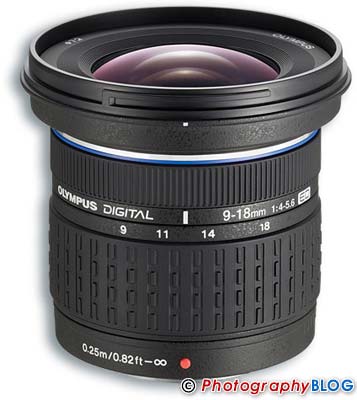 [/img]
[img]  [/img]
[img] 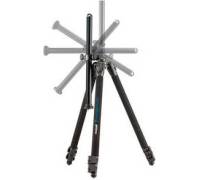 [/img]
[img] [/img]
Is that some kind of ninja robot?
Yes, you put your camera on it then it stamps around taking photos and kicking ass.