 You don't need to be an 'investor' to invest in Singletrack: 6 days left: 95% of target - Find out more
Images made quickly and at little cost ... are worth less than ones where some one really took the time to create it.
Well now, that's a bold statement. How much an image is worth is entirely down to the viewer.
And something else just popped into my head.
If you want to see photography change the world and the way we see it... Pretty obvious that phone cameras have already done that, just possibly not in the way some people want them to? Democratisation of art is a bitch huh?
Well now, that’s a bold statement. How much an image is worth is entirely down to the viewer.
Does that mean though, that when I spend ages processing my lofi phone images (which I do) they are worth more than someone with a 'professional' setup who throws their images through a paid for Lightroom preset?
This turned into a very interesting debate and I’m glad it went this direction but it’s late now and I will stop replying.
If you couldn’t afford a fancy camera, would you give up photography? Or would the urge to capture what you see still be there?
I sold fancy cameras and now just use my phone, selling last DSLR at the moment.
For me it is about what I am taking a photograph, the composition, the interest around it and the way it is taken.
My phone gives me what I need but then I am not into sports photography, landscape photography etc,. where speed (quick and slow) are essential and better with a DSLR.
A good example is looking at the images in the thread "Photos you have taken in the last month of which you are proud?"
Majority of those could be taken on an phone and whilst critically most of them do absolutely nothing for me the people who took them are pleased with them. The camera used is completely irrelevant. Yes you wouldn't get the kingfisher photos on a phone but they are uninspired displays of what a good camera and lens and lots of shots and processing gets you so while not my bag a lot of people will love them and want the tools that gives them that.
Calum Maclean in his series Dealbh is Slighe (on Iplayer) has a great attitude to this. Takes all kinds of pictures on all kinds of kit, whatever does the job for the environment and situation he is in.
Phone manufacturers use software to enhance the performance of small lenses and imaging sensors. Why don’t camera manufacturers use similar software that to make their products with big lenses and sensors absolutely incredible?
As I understand it the camera makers have a problem. The phone I’m typing on has a really powerful processor on board. It has software that was genuinely hard to develop. The software behind Phone cameras was developed by 2 of the planets biggest and richest companies
So although cameras can do some basic image stacking they are miles behind. I think specifically the phone is ahead in dealing with movement between frames when stacking images and intelligently processing photos by region. My phone lets me and hold at night for 10 seconds. I would love it if my camera could do that
So where am I on the phone real camera debate
Well I kind of love both.
I love that I shear always have a camera with me. I love that I can put the photos on the web or in a photo book and the quality is fine
But I also love my real camera for the viewfinder, zoom range and ergonomics
If you couldn’t afford a fancy camera, would you give up photography?
I don't have a fancy camera though; the equipment i use - a Mamiya RB67 - tends to be very inexpensive, certainly one of the cheapest 6x7 cameras still around today. To give you an idea you can pick these up for maybe £500 in reasonable shape. A more interesting question would be how would I feel if I could no longer shoot film and the answer to that would be that I would go back to shooting digital (I did for a long time anyway).
How much an image is worth is entirely down to the viewer.
Yes indeed; my use of the word 'worth' here is deliberately ambiguous however and probably needs several entire threads to resolve the meaning of. I think you understood I didn't the term monetarily.
Democratisation of art is a bitch huh?
It's a good point and one I would say 'yes and no' to. I think that what the rise of digital cameras in phones has shown is that it's never been more important to be good at what you do (as a photographer); when the world is saturated with really poor images (and it is) then the ones that are really good stand out and become more valuable as a means to offering us insight into our (human) condition. I, like most people of a certain age, lament the lapsing of our culture into something trite, superficial and, in many ways, hypocritical but ironically, it's not just popular culture that has headed that way. The world of fine art photography has disappeared so far down a particular political avenue that it's hard to take seriously any more. Even though I've had some success in this area (in terms of recognition and validation), i have to say it sometimes makes me feel uncomfrotable being associated with it. At the very least I am extremely careful not to voice what I really feel in response to some of the work I see. Instead I have adopted a very strict 'the person in front of my camera' approach to my work and now steer away from anything overtly political.
Does that mean though, that when I spend ages processing my lofi phone images (which I do) they are worth more than someone with a ‘professional’ setup who throws their images through a paid for Lightroom preset?
I can't answer that question but I was referring more to the process right up to the point you expose the frame more than the post processing part. There's no right or wrong answer to this question but when I've looked at your images I have found myself trying to understand what it is you're trying to say; what dialogue do you want to have with me as a viewer of your work? And there doesn't even have to be an answer to that question either - certainly not one that validates what you're doing, but since you and I are both here, and you're showing me your work, then the question becomes implied. We could sit down over dinner with a good bottle of Amarone and within the first few minutes conclude that whilst there was much in our experience of the world that we can enjoy exploring, none of it is related to your image making and that wouldn't make the conversation less joyous. But it might go the other way; you might articulate some profound thought process I hadn't seen or recognised.
And yes, all of this could easily be me 'over thinking' things and for this I am resolutely and entirely unapologetic. 👍😆
exactly, of course “proper” camera manufacturers would love to give you the option of a camera with all the processing power of an iPhone - it’s nothing to do with cost or battery life, they simply don’t have access to the technology.As I understand it the camera makers have a problem. The phone I’m typing on has a really powerful processor on board. It has software that was genuinely hard to develop. The software behind Phone cameras was developed by 2 of the planets biggest and richest companies
Of course photographers with phones small cameras win Pulitzer Prizes, because Pulitzer photography prizes aren’t awarded for ‘best exploration of the deepest recesses of the ultra-crafted large-format mahogany man-cave’ - and neither (afaik?) expressly for film. They are awarded for ‘distinguished examples’ (and ‘unmanipulated’) images of feature photography in journalism 😉
Take for example these 2016 Pulitzer winners:

Syrian migrants cross under a fence as they enter Hungary at the border with Serbia, near Roszke (Bernadett Szabo, Thomson Reuters – August 27, 2015).

Hungarian policemen stand over a family of immigrants who threw themselves onto the track before they were detained at a railway station in the town of Bicske, Hungary (Laszlo Balogh, Thomson Reuters – September 3, 2015)
Isn’t it apparent when looking back at former winning images that standards are falling? They’re not even in black and white anymore, so how can that be authentic? And where is the film-grain? No grit - no dice, right?
Now we could argue all day and night that the prizes should be given instead to that entrant who lugged an 8 x 10 camera across the Alps barefoot while smoking a camel cigarette-butt to arrive in timely fashion and better capture the plight of their subject? better impress the judges judes? I jest 😉
it’s just a camera.
The phone I’m typing on has a really powerful processor on board.
Thanks, that's a good point. So the camera manufactures equivalent is to give you a mode for taking images that can be stacked, and saved in RAW, and you can do the processing on a computer.
My interest at the moment is the possibility of a kayak trip to a remote place with spectacular wildlife. I will be getting a new point and shoot waterproof camera, and have a TZ-90, and am wondering whether a DSLR would also be a good investment, given that it will be an expensive trip and I'll never go there again.
exactly, of course “proper” camera manufacturers would love to give you the option of a camera with all the processing power of an iPhone – it’s nothing to do with cost or battery life, they simply don’t have access to the technology.
Sony?
I much prefer using a camera over a phone but I cant stand lugging a big camera about.
I’m not sure about them not having access to the tech - lots of phones use 3rd party chips. I’d imagine the cost for a camera manufacturer to use that instead of their existing platform would be high, but might be viable for companies like Sony that already make phones.
Digital cameras already do a significant amount of processing on their images but it’s aimed towards capturing a detailed raw file from a large sensor - I think it’s still a challenge to do that as well as all the stacking and whatever else phones do. My camera takes a noticeably long time to catch up after shooting a burst or a long exposure as it is (maybe a bad example, it’s from 2014).
exactly, of course “proper” camera manufacturers would love to give you the option of a camera with all the processing power of an iPhone – it’s nothing to do with cost or battery life, they simply don’t have access to the technology.
I'm not so sure they would.
I mean Sony in particular have access to tech that none of the smartphones have with their MXF format. What Sony manages in camera on a chip takes a fair amount of PC power to achieve and isn't possible on a smartphone.
They're doing entirely different jobs though. A Smartphone might have a "portrait" mode that blacks out the background, a DSLR has as many portrait modes as you can think of.
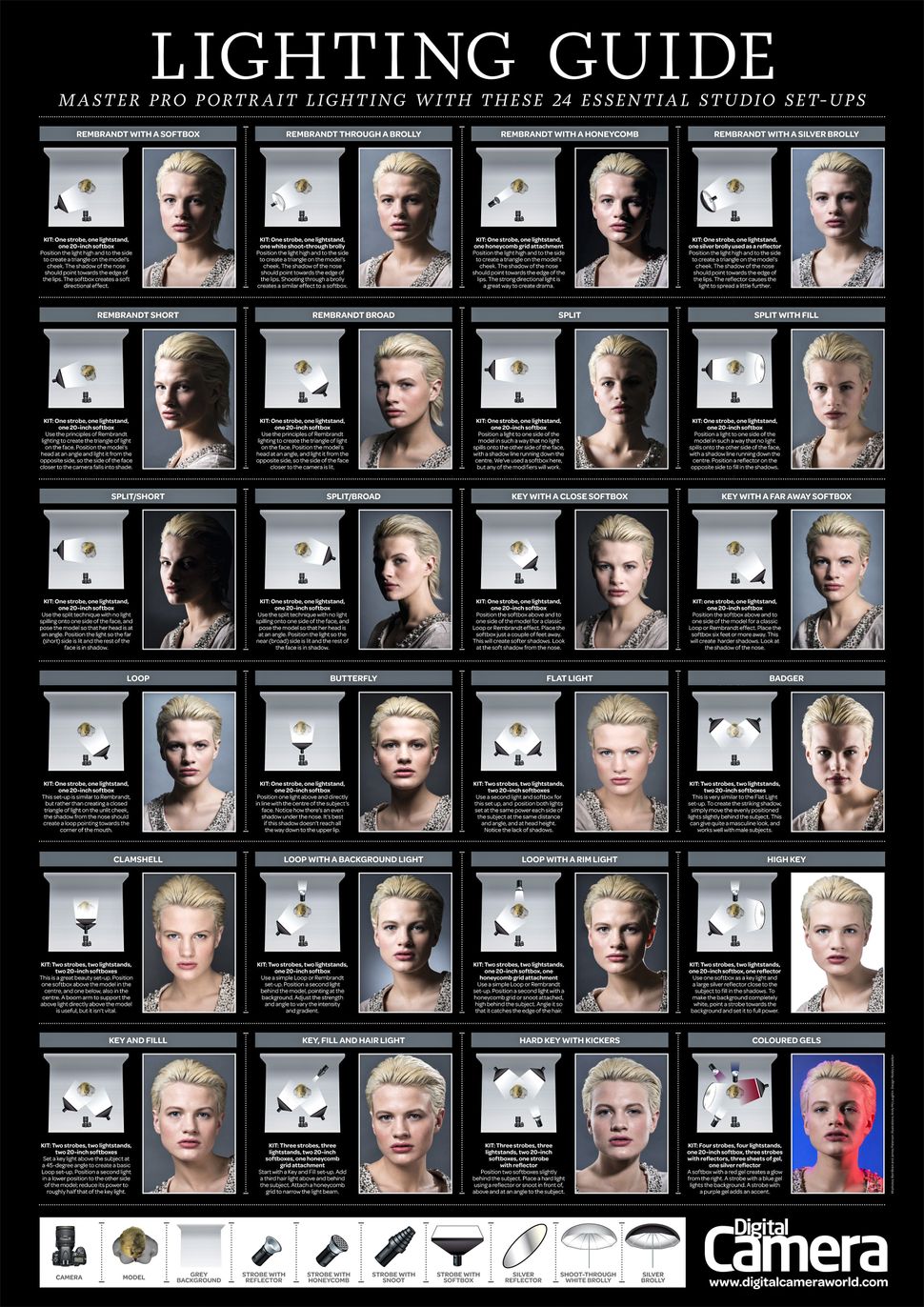
^ If including external equipment/technique then any camera (regardless of its size) has as many ‘portrait modes’ you can think of.
Studio-lighting is one external technique available to any photographer who can afford it/access it (regardless if they own the smallest or biggest camera)
In early days when struggling to afford gear (nothing changes there!) I’d always wear a jet-black oversized hoodie so could drape it over a barbed wire fence (or something) so as to contrast/isolate flora/botanical subjects to be photographed as ‘portraits’.
^ If including external equipment/technique then any camera (regardless of its size) has as many ‘portrait modes’ you can think of.
True, but then you can't trigger an external flash from your smartphone without significant bodgery.
My point was that a smartphone you can take out into the middle of a field on a sunny day and make it look like a studio portrait if you want because someone's programmed that mode/filter into the software so anyone can do it.
A camera takes more work to get that look, but you can get any other look you can imagine for relatively equal effort too. The fact that it takes more effort is a feature not a bug. It's what let's the user get any style of shot they want.
A big camera isn't any more obsolete than paintbrushes just because a smartphone app can draw a picture that looks like it was painted too.
A big camera isn’t any more obsolete than paintbrushes just because a smartphone app can draw a picture that looks like it was painted too.
Straw-men defeated right there.
you can’t trigger an external flash from your smartphone without significant bodgery.
Which camera/software/flash are you using/did you use?
To sync an external flash to an iPhone camera using the Profoto camera app is (apparently):
1. Turn iPhone and external flash on
2. Select ‘sync>YES’ when the flash asks you.
My point was that a smartphone you can take out into the middle of a field on a sunny day and make it look like a studio portrait if you want because someone’s programmed that mode/filter into the software so anyone can do it.
Again, a smartphone has a camera on it. A decent smartphone has the option to bypass casual-user buttons (and filters, effects etc)
They can be turned off and you still have a camera.
A camera takes more work to get that look
Again, you still have a camera. You can still do flash photography. You can still work as hard as you like.
I’m still to grips with an iPhone 11. I favour natural light and will (for instance) indulge hours attempting to capture a candle flame and wax which looks close as is humanly possible using what tools I have to hand.
Straight away using the native iPhone Camera app the results were very disappointing. Sad face time. I switched over to ProCamera and chose to work simple at first with HEIC (will use RAW next). I’m going with f1.8 and 1/600s @ ISO 32 (thirty freaking two!) and 52mm equivalent.
Even before doing any simple post-processing/tidying you can see the results are night and day (no pun intended). 500% improvement on the native/dumb app.
nope, every word of that is bollocks! 😂I mean Sony in particular have access to tech that none of the smartphones have with their MXF format. What Sony manages in camera on a chip takes a fair amount of PC power to achieve and isn’t possible on a smartphone.
when I’ve looked at your images I have found myself trying to understand what it is you’re trying to say; what dialogue do you want to have with me as a viewer of your work? And there doesn’t even have to be an answer to that question either – certainly not one that validates what you’re doing, but since you and I are both here, and you’re showing me your work, then the question becomes implied
As always, your contributions to these debates are thoughtful and thought-provoking, but this one particularly jumped out at me...
As ever, I think we are on opposite ends of ideas about what art is and how it works! I have no real interest in a 'dialogue' with the viewer - this can never really happen as the image is dumb and it therefore becomes an internal monologue for the viewer anyway. The viewers' question 'what are you showing me?' can be inferred but not implied. I have no issues with a viewer taking whatever meaning they want (or no meaning at all), but in that any intention I may or may not have is pretty much irrelevant - in Art Theory terms, I'm kind of a simple-minded structuralist I guess.
I'm (un?)lucky not to have to worry about that stuff too much though - while I earn my living indirectly through photography, I don't have to rely directly on images for an income so have the luxury of it being a sandpit for me. That's not to say I don't think quite a lot about the 'why' as well as the 'what' and 'how'.
(entirely skippable arty farty bollocks follows) I'm primarily interested in the visual rather than the conceptual (hence the lack of concern about messaging or meaning). As a painter I was/am concerned with texture, tonal contrast, colour, distortion, and the abstract impact of those elements within mostly representational images - and those things have carried through into my photography. If there's a theme underlying what I do though, it's about the artificiality of images - I want it to be obvious that there's something I've inserted between the real world and the viewer (whether that's a cheap, low quality camera, heavy-handed processing, or whatever) - I perceive that quite a lot of photographers want to make the camera conceptually invisible to remove as many barriers between the viewer and that 'reality' as possible. I find this a bit dishonest. Photographs are no more an accurate representation of the world than a 1920s Picasso portrait is but most people seem happy to accept them as a surrogate for reality? David Hockney is easily dismissable by some but he's said some interesting stuff about the nature of seeing that has resonated with me and lodged in my head over the last 30 years or so - mix in some Saul Leiter, Weegee and a vague idea about what if 'Lomography' was as enamoured with digital as it is with film and you've maybe kind of got a vague direction of where I'm coming from.
I have got more thoughts on the ongoing democratisation of photography, but I've probably waffled on enough for one post - if the thread lives a bit longer I'll come back with those...
And yes, all of this could easily be me ‘over thinking’ things and for this I am resolutely and entirely unapologetic. 👍😆
Now, that's something I think we do share, I'm not much one for apologising for it though... For me, if you (over)think about it it means it's probably important to you and you care (whatever others may think).
@colournoise what you said about texture, colour etc - I enjoyed messing around with this with my camera. Trying to take photos that are just shapes and colours and forms, but I found that I had to actually make something that couldn't be recognised as a real scene. So I'd take hugely out of focus pictures or long exposures. I tried taking long exposure defocused pictures of colourful fish in a tank swimming about, for example. It was only partly successful as I ended up focusing on the back of the tank so you could see all the grimy glass and screws holding the MDF up behind it in perfect detail 🙂
For me I think that the visual content of your sea-scape actually detracts from the visual textures by evoking the actual seaside. That said, I've got a bunch of pictures taken in the Netherlands that fulfil this brief but still contain real things in focus, let me see if I can find them.
For me I think that the visual content of your sea-scape actually detracts from the visual textures by evoking the actual seaside.
And that's the tension I really like TBH. It's easy to go full abstract with ICM, playing with focus, post-processing, etc. but I like trying to find the balance between those elements and the ability to actually recognise stuff. For me (and to use another painting analogy), it's the way that Rothko (as brilliant as he was) can alienate people or leave them cold versus the way they will more easily engage with Warhol, even though in some ways they're playing the same visual games (although their conceptual aims couldn't be further apart).
I guess more obvious examples might have been...
OP here very interesting discussion I take photo to capture memories rather than create art so was convinced not to get any of the cameras in my original post as I have a good enough camera on my phone. However I did put my order in today.
I bought some mid range binoculars and a mid range spotting scope as I plan to do more birdwatching. I bought some Olympus bins last Christmas but they are too heavy so never left the house.
I bought £200 worth of wine only 13 bottles so should be good for the wife’s 50th party.
Finally I bought a FZ82 super zoom. I was still on hols last week and played with both my iPhone and my go pro hero 7 (the photos are great the user experience dreadful) and was mostly happy with the results. But what i was missing with this combo was the zoom so I went all out and got the camera with the 60x zoom. I know it’s image quality won’t be as good as the iPhone or maybe even the go pro but at the end of the zoom range it’s going to look better than a 30 or 60 fold crop from either.
I was taking photo and videos of the boys playing on the the SUP boards and the close up photos look great but when they went far enough out to dive in they were too far out to get a good video from the phone. I did wade it to get closer but it would have been nice to stay dry.
I suppose the killer question is will I ever have it with me when I want to use it.