 You don't need to be an 'investor' to invest in Singletrack: 6 days left: 95% of target - Find out more
If you weren't aware. Large restaurant chains have to print calories on their menus.
It will almost invariably end up with these sorts of articles which do little to nothing to help fight rising obesity. This sort of measure has been in place since 2008 in some US states, and it's had precisely zero effect.
Tackling food poverty, ignorance, healthy diets, exercise? Nope all too difficult, let's just pretend getting other people to print a random number on a menu is the best we can achieve.
Another slow handclap for 12 years of Tories.
Correction, 12 years of globalist Blairite government.
Agree that it's not going to have a huge effect, but it's going to help some people make a more informed choice, so it's definitely a good thing IMO.
FWIW, I get the occasional McD. I do try to eat healthily generally, and obviously I [I]know[/I] the large option/double burgers etc are worse for you but without seeing it quantified in the past I've just supersized it. Now (they've been voluntarily doing this for some time) I can easily see just how many more calories are in e.g. the double ¼lb vs the regular ¼lb, it's easier for me to show restraint and order the latter (unless I'm [I]really[I/] hungry 🤣)
I don't necessarily view this as a bad thing having heard both sides argued. It's just additional information which will help some people to decide what to eat. People are free to ignore it if they aren't interested.
That above article is quite interesting.
but it’s going to help some people make a more informed choice, so it’s definitely a good thing IMO.
Yeah. No. Every study that's ever been done on this sort of thing shows that it has zero effect on people's choices, and can in fact perversely have the opposite effect. If you've already made the decision to have the 750Kcal burger, why not have the more tasty 900Kcal one? It's the same price and who cares about the extra 150Kcals...etc etc.
It's stupid, and it's exactly the sort of "did something, but haven't really" policy that let's ministers off the hook of doing their actual jobs.
except, I've LITERALLY JUST TOLD YOU it's been helpful for me, and has (positively) affected my choices. 🙄 Your entire post is just armchair conjecture, with no evidence.Yeah. No. Every study that’s ever been done on this sort of thing shows that it has zero effect on people’s choices
Utterly and completely pointless and absolutely typical of this governments 'lets pretend that we're doing something' approach to everything.
I'm sure that even the densest of Spoons customers know that a dirty great big cheeseburger with chips is probably pretty heavy on the calories
Your entire post is just armchair conjecture, with no evidence.
As far as I am aware they are correct about the studies showing no benefit at a population level.
Will it help some people. Sure
Will it help enough people to make it worthwhile. That doesnt seem to be supported.
Will it harm some people. Sure. No just some people going slightly higher in calories but also those going significantly lower (there have been concerns raised by various eating disorder groups).
except, I’ve LITERALLY JUST TOLD YOU it’s been helpful for me
Good for you
This study basically says the thing that most of these studies say
"Across all these studies, there is a trend toward calorie labeling having no effect on calories purchased at fast food restaurants. In nine of 12 studies conducted in localities where calorie labeling was implemented, the policy did not lead to a significant decrease in total mean calories or unhealthy items purchased"
Sometimes the studies show a average reduction of about 50Kcals per serving but not one study has demonstrated that's because of menu labelling, and in any case if the study goes on long enough they all show the effect wears off over time, and the average consumption goes back to where it was before .
The policy is just designed to enable ministers to say that they've "done something at no cost to the taxpayer" when in fact they're probably been made aware by the studies available and by campaigners who long said; it has no effect at all.
I’m sure that even the densest of Spoons customers know that a dirty great big cheeseburger with chips is probably pretty heavy on the calories
As daft as it sounds though the densest of folk probably don't know, don't care or can't afford to care.
Personally I think they'd have been significantly better off giving the data in another format, so "4mi walk" "5mi walk" that people can actually quantify and identify with.
1000kcal, pft thats fine. 10mile walk? Yeah I might go for the small instead then.
Spoons as a point in case though, the legislation would have been hugely better if it included drinks. Burger and chips they might know is full of calories, that the pint of beer they are having is half the burger, probably not.
Nutritional information and the traffic light labels have been around for a while on packaged food, I personally find that useful. It doesn't stop me eating crisps but it puts me off some items.
It’s stupid, and it’s exactly the sort of “did something, but haven’t really” policy that let’s ministers off the hook of doing their actual jobs.
Indeed.
If only I could think of a suitable punishment to inflict...?
A clamp down on advertising from the like of Just Eat, Deliveroo etc would have a much bigger impact. Every form of media is swamped by adverts for these services and the promotions they push.
They'll just claim they offer a delivery service and aren't responsible for the product though.
Heard an interesting point on the radio about it; while its seen as a good thing for people trying to reduce or maintain weight, it can be a bad thing for people with other eating disorders such as anorexia, bulimia, etc as it 'could' add additional guilt for calories consumed.
It's not going to solve the obesity crisis but what is? Are there any signs we're going in the right direction? I can't see it getting any better with the cost of living crisis.
Agree that it’s not going to have a huge effect, but it’s going to help some people make a more informed choice, so it’s definitely a good thing IMO.
Beat me to it.
“Across all these studies, there is a trend toward calorie labeling having no effect on calories purchased at fast food restaurants. In nine of 12 studies conducted in localities where calorie labeling was implemented, the policy did not lead to a significant decrease in total mean calories or unhealthy items purchased”
This may well be true, but does it analyse why? It may be that for one person on a calorie-controlled diet to lose weight there's another deliberately wanting to bulk up as part of their weight training regime. It could well be that the vast majority of diners simply don't care.
I'm not seeing how providing consumers with more information can be anything other than a positive thing. Sure, they make make stupid choices, but that's their choice to make. You could say the same of strength labelling on alcohol or cigarettes, sure some people might choose the 6% beer over the 3.5% one but are we really arguing that not providing that information would be a good idea?
Humans are inherently weak, I don't think you can rely upon 'informed restraint' to stop people doing inherently self destructive things. Remove the product or tax the bejesus out of it or provide a better alternative etc. etc.
My knowledge of the sickening number of calories in a jumbo empire biscuit (600kCal I think, not easy to figure out from the packaging) makes precisely sod all difference to my decision to scarf two of them in one sitting if I'm having a bad day.
Had to look up empire biscuits. Yeah they look nice.
Every study that’s ever been done on this sort of thing shows that it has zero effect on people’s choices, and can in fact perversely have the opposite effect. If you’ve already made the decision to have the 750Kcal burger, why not have the more tasty 900Kcal one? It’s the same price and who cares about the extra 150Kcals…etc etc.
I guess one thing that's hard to measure is what people do outside of the restaurant. For example, someone might order that 900Kcal burger for lunch, see the calorie count, and then decide to go easy on whatever they have for dinner later based on the info they now have about what they've just eaten. Or they might have a salad the following day to balance their calorie intake. Or that same info might convince them that it's a good idea to only buy that burger once a month instead of once a week.
In each these cases, there is an effect on choice - it's just harder to quantify.
This is also probably exactly how I would use this info. If I want to smash a massive burger, it's not going to stop me from doing it... but I would likely make an adjustment elsewhere.
Of course, there's all kinds of ways to address the problem of obesity, but surely having this info in front of you can only be a positive step.
It’s not going to solve the obesity crisis but what is?
People eat too much yummy (heavily calorific) things for many reasons. They broadly fall into 3 categories.
Temptation/Availability
Association (positive or negative)
Lack of Accountability (either to others or yourself)
tackling any of those will do more to cut the numbers of people who are becoming increasingly overweight. Only one of them is really within the domain of public health. Do something towards that, and teach people about the other two.
It is hard.
Labeling food is going to amount to the square sum of **** all.
But is easy
Remove the product or tax the bejesus out of it or provide a better alternative etc. etc.
Problem here is sugar, fat and salt are about the only way to make a lot of really cheap nasty stuff edible, taxing the bejesus out of calories would largely make food inaccessible to huge % of the population who are stuck eating supervalue turkey testicle patties because enough to feed a family of four costs the same as four apples.
Then of course you're into how do we tackle poverty and the generally accepted answer to that from governments of every colour and nationality is to change how we measure it.
there is a trend toward calorie labeling having no effect on calories purchased at fast food restaurants.
Just a wild stab in the dark, but can I suggest that people who head to a fast food place are not looking to have their choices influenced by a calorie count.
It could well be that the vast majority of diners simply don’t care.
That would be my assumption. Those who are calorie counting would be less likely to go to a fast food place.
but are we really arguing that not providing that information would be a good idea?
Quite possibly, yes.
What are the downsides of providing it.
One that has been listed is the potential impact on people with eating disorders.
Another is simply the cost of coming up with it.
What is it actually solving and could the time and cost be better invested in other ways?
but surely having this info in front of you can only be a positive step.
I don't know how many times this needs saying really. Every study that's been done on this says the same thing. It has a teeny effect that soon wears off, or has no effect whatsoever.
It isn't a step; positive or negative, it has no effect.
I guess one thing that’s hard to measure is what people do outside of the restaurant. For example, someone might order that 900Kcal burger for lunch, see the calorie count, and then decide to go easy on whatever they have for dinner later based on the info they now have about what they’ve just eaten.
That's a good point also. How many people on this forum have gone for a strenuous bike ride and then gone for the lump of cake and pint that they'd just earned?
Labeling food is going to amount to the square sum of **** all.
But is easy
But is it bad?
Nutritional information and the traffic light labels have been around for a while on packaged food, I personally find that useful. It doesn’t stop me eating crisps but it puts me off some items.
This. My local pub/resto has printed calories on the menu for a long while, and that info has been enough on more than a few occasions for me opt for a less calorific plate.
OK sometimes I do opt for the mega stack or whatever, but not much.
I'd rather have the information than not, personally, especially if you're looking at a tasty dish and it weighs in at 1500 calories or something daft, it deffinatley makes me reconsider.
But is it bad?
It is pointless, and in this case; Yes that's bad. It allows ministers who should have people's health in mind to say that they've "done something, and if it doesn't work, well then that's not their fault, is it?"
Policies to reverse growing obesity will have to at some point tackle the fact that we have surrounded ourselves by food that is, not to put too fine a point on it: Killing people. I'm guessing telling people that we can't go on like this isn't going to be a vote winner.
How many people on this forum have gone for a strenuous bike ride and then gone for the lump of cake and pint that they’d just earned?
I'll make a bet with you that even on here where more than average are clued up about the relationship between their food intake and their waist size, cannot accurately gauge the amount of exercise needed to offset their food intake. (see for instance Chubb club)
How many people on this forum have gone for a strenuous bike ride [s] and then gone for the lump of cake and pint that they’d just earned? [/s]
Is probably a better question
I don’t know how many times this needs saying really.
Because you're right and everyone else is wrong?
Every study that’s been done on this says the same thing. It has a teeny effect that soon wears off, or has no effect whatsoever.
It isn’t a step; positive or negative, it has no effect.
It may not have a measurable effect overall - I haven't looked at the studies - but some people may find it useful. I know my partner would, she would absolutely take it into account when choosing a meal.
What a croc of shit.
With knowledge of close others with eating disorders, I maintain that food should not be reduced to numbers or anything that negatively impacts on mental health.
So for the foreseeable I now won't go to anywhere that is required to display calories.
Luckily the local pizza place is an indy so I am hoping they keep all the numbers off the menu.
Across all these studies, there is a trend toward calorie labeling having no effect on calories purchased at fast food restaurants.
Maybe in that specific restaurant. But I wonder if there are any deeper effects, like for example, when deciding where to go out to eat does the perception of the healthiness of a restaurant affect the decision? If a restaurant has lots of lower calorie or 'perceived healthy' options on the menu then it might poach a few customers from some other place. and no, I haven't read the study 🙂
It is pointless, and in this case; Yes that’s bad. It allows ministers who should have people’s health in mind to say that they’ve “done something, and if it doesn’t work, well then that’s not their fault, is it?”
It is pointless in your opinion.
I agree wholeheartedly that it is (yet another) dead cat politically and we should be addressing obesity and general health in a more grown-up manner. This policy may well be playing lip service to that as you say, but food companies absolutely should be telling customers what they're eating.
It is pointless in your opinion.
Not my opinion, the opinion of all the scientists of all the numerous studies that have been done on this very policy. They say it's pointless.
If its point is to inform people, then it succeeds. Whether it will nudge people to make healthier choices is another matter. I'm sure there will be some UK studies so we'll find out in a few years.
They say it’s pointless.
Do they? Or do they say something like it's ineffective in reducing obesity? "Pointless" doesn't sound like a particularly scientific term.
@nickc didn't take me long to find a meta-analysis showing that some studies have found positive effects from publishing nutritional information https://link.springer.com/article/10.1007/s13679-016-0193-z and yes, some studies have not, or found null values.
"I don’t know how many times this needs saying really." - Until your biases are confirmed?
Printing Nutrional information is one tiny part of a solution to a problem that needs to be addressed from multiple angles.
The press release
It allows ministers who should have people’s health in mind to say that they’ve “done something
I'm not usually one to stick up for ministers, but in this case what would you have them do? They can hardly ban fast food or sit down meals over a certain level?
They can prise my (occasional)donner meat with chilli, mayo and cheesy chips out of my cold dead fingers!
Across all these studies, there is a trend toward calorie labeling having no effect on calories purchased at fast food restaurants.
I don’t know how many times this needs saying really. Every study that’s been done on this says the same thing.
That's not even what I was arguing. But whatever. You seem to have some (loaded) chips on your shoulder about this.
All I'm saying is that I think, as part of a wider piece of education, it will likely have a net positive effect. It might not necessarily persuade someone to buy a 'healthier' meal in a particular restaurant, especially if they've gone in already knowing what they want to order, but that info might prompt them to subsequently adjust what they eat for the rest of the day, or even week.
Show me the studies that disprove that.
You've also just said this yourself:
I’ll make a bet with you that even on here where more than average are clued up about the relationship between their food intake and their waist size, cannot accurately gauge the amount of exercise needed to offset their food intake. (see for instance Chubb club)
So, surely you can agree that something that educates people (us?!) about our relationship with food in general (not *just* food from the restaurant we're in right now) can potentially be a good thing?
Printing Nutrional information is one tiny part of a solution to a problem that needs to be addressed from multiple angles.
Also this. Will it have a huge impact? I highly doubt it, however I can't logically see how this can be a bad thing, overall. Fringe cases like eating disorders aside.... in fact I'd hypothesise that people with such disorders are already acutley aware of and able to hunt out lower calorie options without needing a lable to tell them, so probably a minimal or null impact there also.
in fact I’d hypothesise that people with such disorders are already acutley aware of and able to hunt out lower calorie options without needing a lable to tell them, so probably a minimal or null impact there also.
It's not whether individuals with eating disorders are able to pick low calorie options or not. It's about keeping eating out as an occasion, away from numbers or triggers that allow mental health issues to resurface.
They can hardly ban fast food
why?
You seem to have some (loaded) chips on your shoulder about this.
I'm the PM of a inner city GP surgery, try to guess how many type 2 diabetics we see on a boring Thursday morning.
The random use of "calories" when they mean K calories is going to drive me up the wall.
CÔTE burger – 1,456 kcal
A burger from Côte contains 1,456 calories,
I’m not usually one to stick up for ministers, but in this case what would you have them do?
Starting at nursery school, children will have to visually estimate the energy content of various common plates of food, and convert that figure into exercise equivalents.
There will be a compulsory salary sacrifice in exchange for (healthy) foodstuffs. Some luxury items will be available in shops but to achieve them you must prove that you have done enough exercise in the preceding month.
Alcohol will be banned.
Only Government licensed take-aways will be allowed - baked potatoes or hot chestnuts.
Commonly used recreational drugs that provide a thinning effect will be offered gratis. Tobacco smoking will be compulsory for that reason.
A government app will monitor how much energy each individual uses. There will be penalties if not used.
Exclusion licences will be available at £1,000 per month plus VAT.
They can hardly ban fast food
why?
Well, you'd have to define it for a start, where do you draw the line? burgers over 400kcals illegal? 500?
Limit them to one per customer?
What about salt and sugar content, what should the legal maximum on that be?
They don't like the 'nanny state' so I'm surprised they've gone this far. Though they did introduce the sugar tax which is arguably a more severe intervention.
why?
This is a country which called 999 when KFC ran out of chicken.
The random use of “calories” when they mean K calories is going to drive me up the wall.
Indeed. It's what people understand though.
We're heading for the demolition man society, where you can only get rat burgers and beer if you live in the sewers with the savages and salt/booze are illegal.
It allows ministers who should have people’s health in mind to say that they’ve “done something, and if it doesn’t work, well then that’s not their fault, is it?”
It allows them to make small gradual changes which are (a) likely to receive wide support across parties, (b) unlikely to be significantly unpopular with the electorate (c) likely to have high compliance (d) when they do fail are likely to have been seen to do so because they didn't go far enough.
It allows them to do similar again when it fails to work ad infinitum, and, in several decades or so to reach the significant changes you wanted whilst maintaining all those things.
This is the nature of a democracy.
If you try to make those major changes in one step it fails on at least one of the things above, at best achieves zero but at worst is counterproductive.
It's why we've not banned cars and fossil fuels despite the fact it would save huge numbers of lives.
Its why some of the first things Trump did, some of his biggest pledges were to get rid of Obama care and roll back on green policies.
I’m the PM of a inner city GP surgery, try to guess how many type 2 diabetics we see on a boring Thursday morning.
Fair enough.
Restaurants are not going to drastically change their menus any time soon, so why not start doing everything we can to educate people on calories in general, and everything we can to make those conversations about food and health part of everyday life?
We could begin with a relatively easy win like printing calorie info on restaurant menus, and then take it from there. By itself, it's not going to solve the problem, but even the process of doing it, and the PR it has generated, has sparked lots of conversation and awareness about it - including on this forum.
We've got to start somewhere, right?
I don't know @mattyfez, I'm not an expert, i just see the results of a environment that people are free to make themselves wildly unhealthy (that is going to cost all us increasingly more and more if left untackled) via the medium of food on a staggeringly routine day to day level.
We (as a nation) increasingly cannot cope with the level of illness that environment is causing. Arguably we're already there. It is unsustainable.
https://www.bmj.com/content/367/bmj.l5837
In this sample of 104 fast food restaurants in the southern US, calorie labeling was associated with a small decrease in mean calories per transaction after implementation, but this was followed by a gradual weekly increase that partially attenuated this association over the next year. These results imply that calorie labeling alone may not be enough to make sustainable reductions in calorie intake in fast food restaurants.
Is the most positive study I'm aware of: small and probably temporary decrease. People get used to things fast. The chance of this having impact on overall calorie consumption, let alone local population levels of obesity are pretty much zero, chance of negative impact on people whose mental health has a food aspect - not zero.
Me, I find it a minor but definite annoyance. Found myself in a Bistro Pierre the other day. Small chain of non-fast food, already got this on the menu. Steaks were okay.
It's the pointlessness of it - this is not an effective public health measure - whilst giving the appearance government wants do something. I would withhold their puddings in no uncertain terms.
i just see the results of a environment that people are free to make themselves wildly unhealthy (that is going to cost all us increasingly more and more if left untackled) via the medium of food on a staggeringly routine day to day level.
The only bit there which is relevant is the bit in bold. That's the bit you want to change.
The only bit there which is relevant is the bit in bold
the term is 'obesogenic environment' and theoretical freedom aside, in practice people tend to make the easiest choices. If you're on a low income in a fast food joint part of town the easiest choices are more likely to make you fat.
But their freedom to make themselves very poorly is going to affect your ability to access healthcare, and increasingly it will make larger and larger demands on it. Nothing happens in society in a vacuum.
But their freedom to make themselves very poorly is going to affect your ability to access healthcare, and increasingly it will make larger and larger demands on it. Nothing happens in society in a vacuum.
Will it? I thought pensions were a bigger part of public finance, anything that lowers life expectancy is probably a net saving.
That above article is quite interesting
I'm intrigued, I was just about to post the absolute opposite. It was just a bunch of numbers with absolutely no context.
I think the key thing is that I haven't got a scooby what a kcalorie actually is and how many of them I need.
You are probably better informed and so could make conclusions.
I have a vague recollection of someone mentioning 8,000 kc in a day, but have a sneaky suspicion that was in response to my WHW picnic post, so not a normal daily target:-)
But their freedom to make themselves very poorly is going to affect your ability to access healthcare, and increasingly it will make larger and larger demands on it. Nothing happens in society in a vacuum.
Of course, but my freedom and my life is no more or less important than theirs.
I've fallen off my bike and broken bones, and ruptured my spleen, being on my bike was a choice and put requirements on the health system. Should I be allowed to make that choice?
My ability to access healthcare (and multitudes of other things) could be vastly improved by for example, ceasing to prescribe life extending (as distinct from curative) medications. Should we do that?
I have a vague recollection of someone mentioning 8,000 kc in a day, but have a sneaky suspicion that was in response to my WHW picnic post, so not a normal daily target:-)
Hahaha, for a rugby player maybe 😉
But for example if you aiming for a more normal 2500kcal or 3000kcal per day, and your lunch weighs in at 1500, or 2000, not uncommon, then add a beer or a coke... it's not hard to think twice and give me a nudge get the pasta rather than the all day breakfast.
anything that lowers life expectancy is probably a net saving.
quite aside from being a teensy bit cynical, they do take up quite a bit of care while they're still alive.
you’ve interpreted this statement in one way though (a negative one, that aligns with your bias). Another, entirely reasonable interpretation, might be “calorie labelling works but it’s important that it’s implemented alongside other measures”These results imply that calorie labeling alone may not be enough to make sustainable reductions in calorie intake in fast food restaurants.
Too many posts to read, but I worked in a McD's 20 years ago and calories were on the menu then! Even the Wetherspoons menus have had this info for donkeys years.
I did a calorie restricted diet many years ago and found the info helped me make more informed choices.
With knowledge of close others with eating disorders, I maintain that food should not be reduced to numbers or anything that negatively impacts on mental health.
I disagree, this argument conflates the issues here, those people have mental health issues for which adding or removing info on a menu wont make much difference!
Should I be allowed to make that choice?
Probably. the benefits to your health of cycling probably outweigh the demands placed on healthcare service by your accident. Plus although it may seem quite expensive, the cost of putting you back together again to continue with your otherwise healthy activity aren't that much in the scheme of things, and certainly less than the ongoing care involved in managing a disease like type 2 diabetes.
This will be very helpful for those who are already monitoring their calorie intake. Previously eating out was often largely guess work in that respect. But if you're not already doing that, then I can't see it making much difference.
Might be useful when folk are ordering a skinny choca mokka with syrup and marshmallows.
Some of the stuff that pretends to be coffee is a whole meal+.
"As the only festive drink on all coffee shop Christmas menus to break the 600 calorie mark, a large sized cup comes in at 660 calories – more than a quarter of your recommended daily allowance (RDA), just in a drink. The sugar content is also shockingly high: at 78.9g of sugar a cup, that’s nearly your whole 90g RDA in one go, equivalent to 3.3 Mars bars."
quite aside form being a teensy bit cynical, they do take up quite a bit of care while they’re still alive.
Just a "teensy bit"? 🙂
What would you actually have the government do then Nick?
Bear in mind that poor diet and obesity are closely linked to income.
Directly targeting the food people eat with taxation is likely to result in poorer diets not better because they don't have the money to make better choices.
Education isn't likely to work because knowing you're being forced to eat rubbish isn't going to make you more likely to choose not to eat. See also better labeling etc.
As much as we might like to think people eating crap do so out of choice, most don't, it's out of necessity. Obesity isn't a result of a McDonalds on every street corner it's a result of a "chicken pie" being cheaper in aldi than enough chicken to make one.
Actually here is a bit of fun* for you. Go to tescos Website and put a healthy basket together for a family of four for under £5 for the day. Now ditch the healthy requirement and see if you can manage it. (it's much easier for a day than a week because one day of eggs, beans and rice doesn't seem that bad, 7 days of that, not so much)
Now bear in mind that low income families are much more likely to have to shop in an expensive shop such as the corner co-op or spa because large, cheap supermarkets are not where they live.
*it won't be fun, it'll be thoroughly depressing.
the benefits to your health of cycling probably outweigh the demands placed on healthcare service by your accident.
Eating junk food makes people happy (or they wouldn't do it). Do the benefits to their mental health of a cheeky Big Mac not then outweigh the demands placed on healthcare service by their weight?
You're cherry-picking. (Which at least is probably quite low-cal.)
Just a “teensy bit”?
perhaps. 🙂
What would you actually have them do then Nick?
See my OP. Address food poverty, education about healthy food choices, easier access to activities. We've pretty much educated people on the dangers of fags after all. (I know we've not stopped it, but i doubt many don't understand the health risks) It's a long slog, but addressing the availability, the cost, the ingredients, and how it's advertised would top of my list if i had a magic wand.
Obesity isn’t a result of a McDonalds on every street corner it’s a result of a “chicken pie” being cheaper in aldi than enough chicken to make one.
There's a broader issue here too. It's not just cheaper, it's easier. And it's not just easier, it's faster. How many [warning: rash generalisation incoming] poorer families do we think would turn out a chicken pie if given fresh chicken and ingredients for pastry?
Do we teach people how to cook? Back when I was at high school the extent of my cookery lessons was over six weeks where we learned whether it was faster to boil water in a kettle or the oven, and how to make chocolate rice krispies. Life skills, I'm sure.
It's another tax on the poor for sure, but we've created a society where those who most need to have neither the ability not the willingness to cook.
Eating junk food makes people happy (or they wouldn’t do it)
yes, as i said on page one, there's three areas that broadly speaking are why folks over-indulge.
Availability
Association (good and bad)
Accountability (to oneself or others)
We have to devise programs that are free to all, about why they feel the need to eat a bag of donuts, why that makes them happy (or sad or self loathing) and how to break the association.
We’ve pretty much educated people on the dangers of fags after all. (I know we’ve not stopped it, but i doubt many don’t understand the health risks) It’s a long slog, but addressing the availability, the cost, the ingredients, and how it’s advertised would top of my list if i had a magic wand
But fags is by comparison very easy. You don't need fags to live. You can't give up food.
You can’t give up food.
Although weirdly; the food that's cheap, easily available, and yummy will mostly give you a disease that's going to make you wish you could...
this seems to be another move for the government to shift the responsibility of fixing social problems on to individuals rather than actually doing something about it.
about why they feel the need to eat a bag of donuts, and how to break the association.
So I'm going to go out on a limb here and guess you've never been broke?
I've been there, where food shopping went on CC because there was no money. I'll tell you exactly why I felt the need to eat a bag of donuts, because they were 60p and I needed to eat. I'd frankly have eaten a turd at that point if I thought it was a better option than not.
But fags is by comparison very easy. You don’t need fags to live.
Also: most people gave up fags with the aid of vaping. You get basically the same thing without the bad bits that kill you
Unfortunately theres no calorie free version of a pie. You have to have something else completely different instead and sadly pies are ace and salads are rubbish!
We need the vape equivalent of a sausage roll. Why aren't the government developing them then, eh? WHY?!!
quite aside from being a teensy bit cynical, they do take up quite a bit of care while they’re still alive.
The 'Should I go to my GP' thread today would suggest that it's not as much care as it could be. 😀
We’ve pretty much educated people on the dangers of fags after all. (I know we’ve not stopped it, but i doubt many don’t understand the health risks)
And yet, people still smoke. So education didn't work. And demonstrably also:
addressing... the cost
didn't work.
the ingredients...
didn't work.
and how it’s advertised...
didn't work.
A pack of fags is, what, ten quid? We banned advertising forever ago. We banned smoking pretty much everywhere. The packaging is essentially a warning going [THIS SHIT WILL LITERALLY KILL YOU TO DEATH!] and a photo of a diseased lung. And if I were to go down to ASDA right now I guarantee there will be someone at the concessions counter buying 100 Lambert and twenty quid's worth of scratchcards.
I don't know what the solution is, but if we can't manage to get people looking at cigarettes and going "**** that, are you mad?" then we've got zero chance of dragging anyone away from their lardburger and chips.
We need the vape equivalent of a sausage roll. Why aren’t the government developing them then, eh? WHY?!!
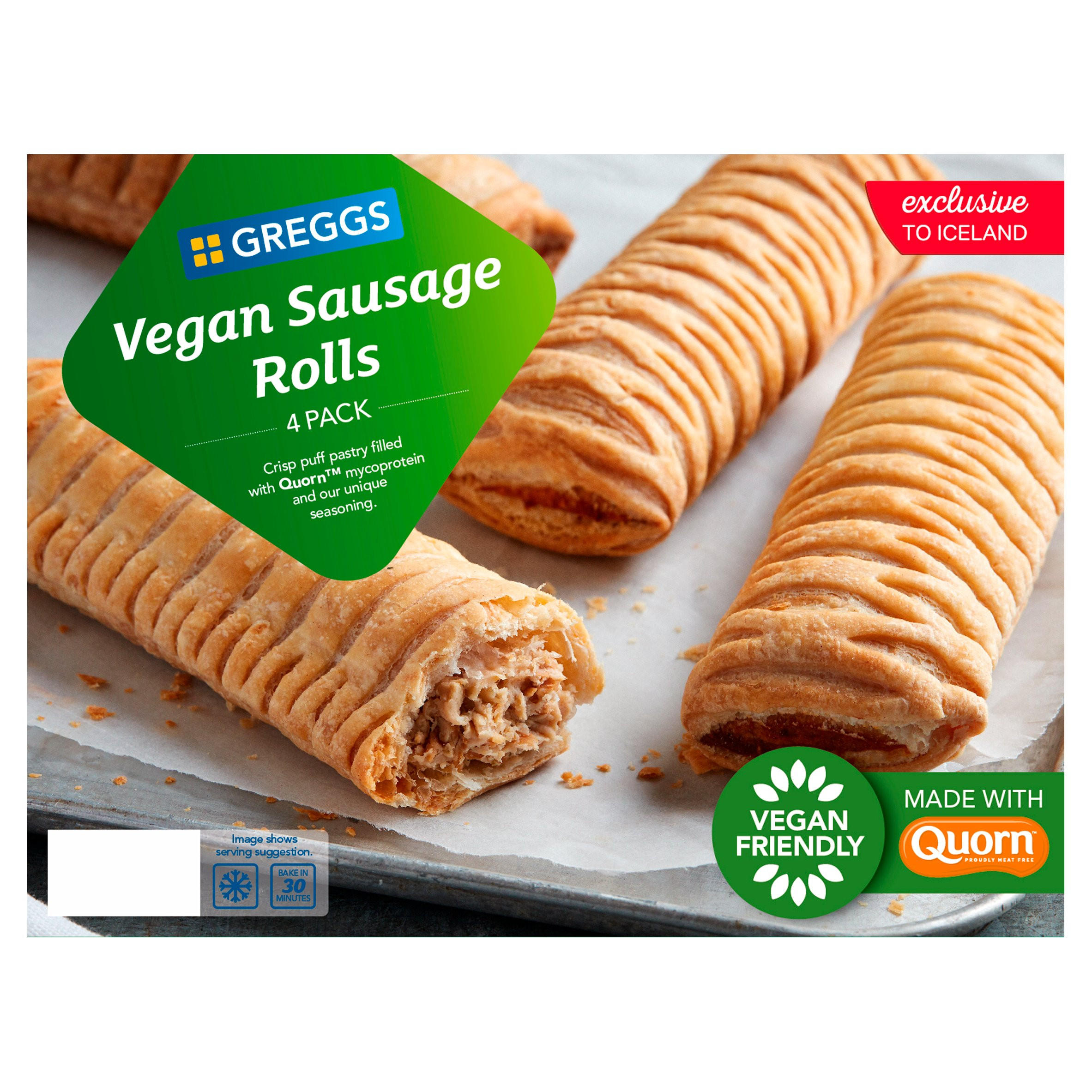
Open goal there, Binners. 😁
So I’m going to go out on a limb here and guess you’ve never been broke?
On the contrary I've been very very poor during my life. Granted I rented a flat and ran a car, but often had to choose between heat and food. Cold showers, weeks of beans etc etc. And yeah I understand the point your making, and yep donuts seemed like manna and was dirt cheap and I often went to MaccyD just to sit and eat chips (I'm veggie) and be warm for a bit
It isn't easy I understand that, I would have more respect for a government that said they had decided to engage with food charities, or not dropped the £20.00 extra, or chosen not to penalise larger families through child benefits. This...This is just cynical, there's enough information out there to show it has limited to no impact, and yet here we are doing none of things govt know work, and doing the thing that we know doesn't.