 You don't need to be an 'investor' to invest in Singletrack: 6 days left: 95% of target - Find out more
We all like them...so long as they're somewhere else...
https://www.theguardian.com/environment/2023/may/28/ukraine-built-more-onshore-wind-turbines-last-year-than-england
I am not an engineer: would it ever be possible for these to be located in cities? Is there a reason why you couldn't have a couple in every supermarket car park?
I am not an engineer: would it ever be possible for these to be located in cities? Is there a reason why you couldn’t have a couple in every supermarket car park?
The need for wind.
Reading has one on the South West outskirts and it's apparently the least efficient turbine in the UK.
Fundamentally to be cost effective they need to be either high up, miles from anything, or both.
Which is why the onshore 'ban' kinda makes sense. If you've got a spare few million in your pocket you'll produce more megawatts putting it offshore than anywhere else.
I think the area required would take too much space in a city, but there's nothing stopping smaller systems being adopted.
The whole dropping of the 'green crap' by Osbourne and Piggy was another fine mess the two ****s got us in to. Whilst not a calamitous as their brexit folly in the long term could have equally as dreadful consequences...
Fundamentally to be cost effective they need to be either high up, miles from anything, or both.
Ohhh, I see...
A quick look on windy.com and you get to see quite how much more wind there is off shore.
Then look at the awesome size of the offshore farms (the area they cover, the number of turbines and their incredible size).
When you look at the amount of offshore power generation still to come online, it's pretty incredible.
That's the bit under the water
Which give you an idea how big the bit above the water is:-
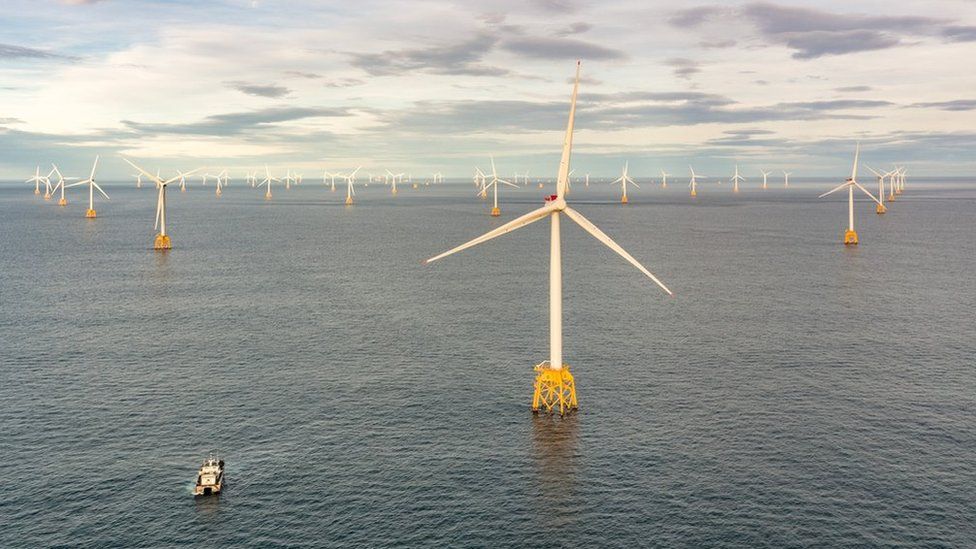
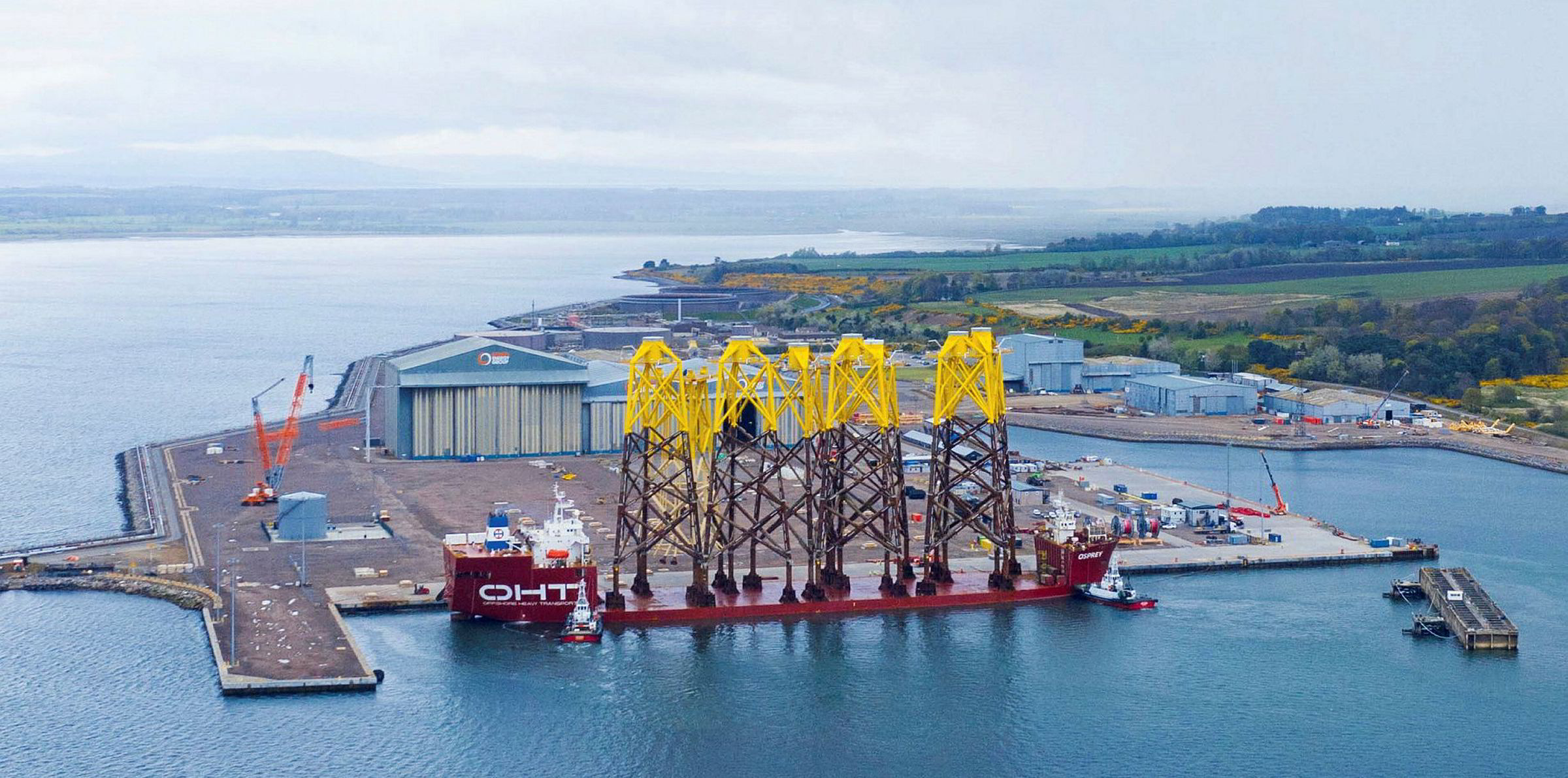
I’m guessing we built more offshore than Ukraine?
Cheaper per MWh on shore as I understand it, but more MWh available offshore.
I live near Goole Fields 1 (16) & 2 (17) can I have £180 please
It’s simply mind-boggling that Ukraine, while it fights for its survival, has built more onshore wind capacity than England.
I don't see how there is anything "mind-boggling" about a country which doesn't have a ban on onshore wind turbines installing more onshore wind turbines than a country which has a ban.
What would surely be mind-boggling would be if a country with a ban had built more than a country without a ban.
Because of the British landscape, all sorts of things can change wind direction, so it’s far more efficient to put huge turbines out at sea, where wind is more consistent, plus the infrastructure is far less environmentally sensitive. Solar, on the other hand, can be put anywhere - big warehouses can have their roofs covered, less useful or productive farmland can have solar farms built, and sheep can happily graze underneath them, which keeps the sheep sheltered and happy, and controls weeds.
Then there’s land that can’t be used for anything else, like waste tips; once they’re at the end of their life, and capped, what better than to cover them with solar panels. The nature reserve I was walking around earlier today has a great view for many miles, as far as the Cotswolds and, on a clear day, Bannau Brycheiniog and Y Mynnydd Du, and a couple of miles or so away a former tip is being gradually covered with solar panels, and to the naked eye they’re barely noticeable, so the ideal use for that sort of environment.
There’s a new development in solar technology that’s far more efficient, and is transparent, so it can be used to replace windows on buildings, so high rise apartments, offices and such will ultimately be able to generate huge amounts of energy, probably more than they need for themselves.
I'm in favour of wind turbines but I think £180 a head is great value to have Rampion wind farm off the South Coast rather than dotted along 100 miles of the South Downs (as the chalk ridge is undoubtedly prime for turbines)
We're going to have to make some very difficult decisions about our energy future.
As I understand it, storage and delivery of energy is a real issue.
I also understand that while very challenging and currently costly, tidal has huge potential. Currently mired in post brexit and UK government politics.
E.g.
https://www.bbc.com/news/uk-scotland-highlands-islands-65015217
Any live in Belgium on here? I'm sure I've driven down some motorways there that have turbines sited along the edge of the roads. Seems like a good solution to me as the roads themselves have already cut a big chunk out of any natural beauty in the immediate area, and grid connections etc could be incorporated into the road system?
Also less noise problems.
I don't think that'll be a difficult decision at all Matt. The folk consuming most of the energy will simply choose to have it produced and stored where they can neither see, not be impacted by it.
It’s simply mind-boggling that Ukraine, while it fights for its survival, has built more onshore wind capacity than England.
Only if you ignore the fact it’s practically landlocked.
I don’t think that’ll be a difficult decision at all Matt. The folk consuming most of the energy will simply choose to have it produced and stored where they can neither see, not be impacted by it.
Indeed. The proposed routes for the SSEN Beauly-Blackhillock transmission line (used to link all these new sources of power up and boot it down south) are currently in consultation. Biggest pylons in Europe - yay! The preferred route passes 2km from our house. One of the alternatives is 300m away straight out of the front window doglegging around the house, then directly across the local loch. Hard not to be a nimby about it, but I'm kind of hoping the preferred route gets the go ahead! What seems very unfair is that one of the reasons the preferred route is the preferred route is because it follows an existing pylon line put in a generation ago, with the theory being it's spoilt anyway so another one is not so bad........unless you were the poor sod living next to it who took one for the team the first time around who gets another much bigger one because you loved the first one so much!
Not all bad - the local wind farm has just paid £70K to refurbish the village hall and paid for all our smoke alarms after the change in legislation last year. Can't beat a bit of appeasement cash! And windfarms = (slightly boring) gravel trails, so happy days.
LOL - I will admit to being a bit conflicted about windfarms on account of the tracks required. In some areas they link up with existing estate tracks to create a great network.
As for appeasement money, you only have to look at Tomatin or Farr to see how useful community facilities suddenly become possible. Mind you, I'm sure the residents of both would like to have cheaper electricity given it's being generated in their doorsteps.
Fundamentally to be cost effective they need to be either high up, miles from anything, or both.
Or near the coast, which opens up many more potential sites.
The lack of a ban on onshore here has recently (last 4-5 years) cleared the last of the loans on my exes uncles farm, and cleared enough extra cash to pay for a fully loaded Taycan.
And to refurbish the two big barns the pigs stay in and a couple of the other buildings.
And paid (cash) for two new tractors and a massive logging machine.
So he's happy. And retired.
Though, despite owning all that generating capacity, he still has to pay his electricity bills!
Needs to be a balance. There's plenty of upland areas where they can be sited without destroying the landscape. I live north of Manchester, we already have turbines, big ones, but we have space for a lot more. There were plans but they got blocked. Across the valley behind my house we have two power transmission lines and five very big turbines. I'd happily see more (turbines). The land, although high altitude moorland (1500ft) is brownfield, various mines, coal, stone and others as well as opencast workings wrecked the landscape well before the turbines.
so it’s far more efficient to put huge turbines out at sea, where wind is more consistent, plus the infrastructure is far less environmentally sensitive.
Environmentally it's got to be a lot worse putting them at sea, way more emissions, more materials needed and any spillage spreads fast. It's got to be way more difficult to completely remove all traces as well compared to a land based turbine. Plus many locations at sea are highly environmental sensitive.
Land vs sea… a bogus argument anyway. Build both. Fast. Stop looking for more oil and gas.
How much offshore capacity was installed in England or the UK last year?
Only if you ignore the fact it’s practically landlocked.
Ukraine is not landlocked, or anything close to it. Offshore installations would have been vulnerable to attack this past year, but there is a huge chunk of the Black Sea that is Ukrainian territory.
Almost all energy in Scotland in generated from local green sources and yet we pay the highest energy prices in the UK. We could have more local, micro-generation schemes but government policy in Westminster is biased in favour of the big-6 generators plus an energy price pegged to the price of gas. I think more people would be in favour of onshore wind if they were to get a greater share of the benefits like a reduction in their bills.
There is no ban. Current planning law allows any objections to prevent a development. So, one person can stop an entire onshore windfarm. It is a trade off between average windspeed and transmission costs (to consumers). We certainly need to use less energy and really understand the vast quantity even a kettle takes to boil water, for example.
We need them on and offshore, as stated above. Why would you ban them onshore in a climate emergency?
Framing it as onshore vs offshore is counterproductive.
Or near the coast, which opens up many more potential sites.
Yep, look at Portugal, wind farms all along the coast.
I also understand that while very challenging and currently costly, tidal has huge potential.
They've been saying that for years, as someone who's done the study (as in uni course) I'm not holding my breath.
Framing it as onshore vs offshore is counterproductive.
I see that as very simplistic.
It should be:-
Q1 - What is our goal as a nation for MWh of new turbines to construct a year?
Answer - as much as possible and more than we are doing now is clearly the answer, but it's still a finite amount.
Q2 - where is the very best place to put them once they are built where they can make the biggest impact?
i.e. where is the best place to put a new finite resource? Offshore AND Onshore is missing the point - it's where that finite resource is best placed. And to me the answer seems offshore - and not in a nimby out of sight out of mind way but a most effective way. Again as I said above, the size of these off shore wind farms takes some getting your head around - one wind farm can easily be the size of the entire Peak District. And the suitable off shore locations is almost limitless. On a clear day I can see Beatrice, Moray East and West (under construction) - it's pretty mind blowing. And looking at my wind app on my phone today - it's 4 times the wind speed there right now than it is where I live at 200m above sea level 25 miles away (in pretty much a perfect onshore turbine location). Same most days. Whilst clearly a lot of work to get them out there the process seems to be slick - almost daily you can watch ships leaving Cromarty firth with the jackets. And all the leccy comes in to planned, easy to hook up land hubs - so much easier than a hooking up the 15 or 20 much smaller onshore windfarms it would take to house the equivalent number of turbines. There is an onshore wind farm not too far from me that has planning permission but it is projected to take up to 15 years before the land based infrastructure will be in place to hook it up.
Yep, look at Portugal, wind farms all along the coast.
Check out the community turbine built near Bristol. Largest in England and financed on commercial terms. More please!
I also understand that while very challenging and currently costly, tidal has huge potential.
in a very limited amount of places.
floating offshore wind is the next big thing. opens up all kinds of locations currently not possible.
Ukraine is not landlocked, or anything close to it
It has very little coastline compared to its border.
It has very little coastline compared to its border.
And?
Ukraine covers an area of 603,628 square kilometres (233,062 sq mi), with a coastline of 2,782 kilometres (1,729 mi).
That's still a decent amount unless I'm very mistaken.
It has very little coastline compared to its border.
Uzbekistan is landlocked.

Bosnia has very little coastline.

But Ukraine is not, by any means, practically landlocked. The port of Odesa was probably founded by ancient Greeks. Its coastline is five times longer than that of our sea-loving, clog-wearing, cheese-eating Dutch friends. Around 5% of all seafarers worldwide are Ukrainian. 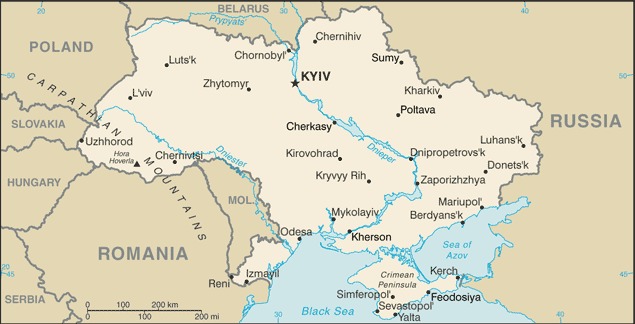
Any live in Belgium on here? I’m sure I’ve driven down some motorways there that have turbines sited along the edge of the roads. Seems like a good solution to me as the roads themselves have already cut a big chunk out of any natural beauty in the immediate area, and grid connections etc could be incorporated into the road system?
Belgium is, though, comparatively flat; it’s why Europe used it to hold most of its wars on.
Environmentally it’s got to be a lot worse putting them at sea, way more emissions, more materials needed and any spillage spreads fast. It’s got to be way more difficult to completely remove all traces as well compared to a land based turbine. Plus many locations at sea are highly environmental sensitive.
Eh? What on earth are you talking about? Emissions? More materials? Spillages? What ****ing emissions? They’re bloody wind turbines, there are no emissions, they just go round and round, you don’t get emissions from a sodding windmill! Spillages? Again, what are you talking about? And there are no traces left by a floating platform.
And most of them now are floating, those that aren’t still don’t really leave any significant traces behind once they’re decommissioned - not that any have been around anywhere near long enough to be decommissioned, and it’s only really deep waters which some people want to dredge mine that’s environmentally sensitive, not the North Sea and Doggerland which they’ve been drilling for oil and gas for decades - which is the environmentally sensitive out of the three options mentioned?
The biggest issue with wind turbines is getting ride of the blades once they’re removed from the turbines, but a company in, I believe Sweden, or possibly Denmark, I can’t remember exactly, but it’s come up with a way to recycle the blades, even those that have been buried in landfill, so there’s even less environmental impact from them.
What ****ing emissions? They’re bloody wind turbines, there are no emissions, they just go round and round, you don’t get emissions from a sodding windmill!
Well there's the embedded emissions in all the extra steelwork plus the shipping needed for ongoing maintenance.
Spillages?
Oils and greases used on the turbine itself. Granted that's going to be negligible but it's still a risk if you look at the shipping as well. At sea the risks from spillage are a lot greater, a drop of oil can disperse to a volume of water something like a million times the original volume. That's a lot harder to control than on land.
And there are no traces left by a floating platform.
They aren't just left to get on with it, they and the transmission lines are anchored to the sea bed. Just because you can't see it doesn't mean it's not there. Of course land based turbines have significant foundations in often environmentally sensitive areas as well.
@CountZero, there is a significant amount of emissions generated in making all the steel, composite and concrete materials required to manufacture turbines, certainly when compared to the volume of carbon saved by generating clean electricity over theirlifetime.
Also there's a sodding massive oil filled gearbox in them which is not immune to leaking into the sea. They also burn down and fall over sometimes.
(30 seconds after waiting 4 hours!)
Its Vestas that have found a way to break down the epoxy in the wings and use it to make new glue.
Thank you both for explaining in detail, I assumed everyone was bright enough to understand my post but obviously CountZ wasn't without having it explained. This is a major issue with a lot of environmental thinking, it's not just the operational impact that needs assessing. I think people still see the sea as some great wasteland rather than the rather fragile eco system we've over exploited in the last 100 years it actually is.
Ultimately cost of construction is a good indicator of the environmental impact, higher cost equals higher environmental impact, more materials, more transport, more mining more fuel burned more emissions and by products. Onshore is a lot cheaper to build, maintain and decommission. The big question is does the extra electricity from offshore offset all the additional issues?
And most of them now are floating
they really aren’t. Not yet.
We could have more local, micro-generation schemes but government policy in Westminster is biased in favour of the big-6 generators plus an energy price pegged to the price of gas.
And, as I was reading last week, energy storage is now a growing issue. Westminster is sat on things about the new proposed pump storage (yay, more flooded glens) schemes.
We're also struggling with the grid capacity, and need more local storage on houses etc.
I too have a significant issue with Scotland producing a really significant proportion of UK sustainable energy, yet having highest prices up here, yet the same KW is sold down south for less... 🤷
And I agree with @scotroutes - people will pay to have a turbine in Scotland and a sodding great line of pylons so that thier Oxfordshire village can remain unsullied by such crap.
But Ukraine is not, by any means, practically landlocked.
Its coastline is less than 1% of its border. The GB coastline alone is much, much bigger and a much smaller landmass.
And I agree with @scotroutes – people will pay to have a turbine in Scotland and a sodding great line of pylons so that thier Oxfordshire village can remain unsullied by such crap.
I love (hate) this shit.
It gets winged and moaned about how "London" sucks up investment, where's the Scottish Crossrail cutting through Glencoe, where's your HS2 tunneling through the Cairngorms, where's your M40 blasting though cuttings in the Trossachs, where's the inescapable humm of the M4* on the West Highland Way? And yet ultimately a huge chunk of the economic benefit of those projects then flows out of London as taxes and government spending.
And newsflash, we have pylons down here spoiling the view too, because even if that specific electron did travel all the way down from Skaw it still goes into our houses.
And if you're really nice, when there's a nice blocking high pressure system we'll send you back some nice nuclear electrons that the SNP has banned any new builds in it's backyard.
*Technically it's the M40 you can hear from the Ridgeway but I've already moaned about it.
Drac
Its coastline is less than 1% of its border.
Doesn't sound right, are you sure?
The UK's coastline is 11 times longer than Ukraine's.
Plus the Black Sea is basically just a very large lake.....it wasn't even slightly salty until 7000 years ago, it doesn't even have any tides! Not like proper British coastlines 😉
It's not unheard of for the blades to break and come down - I doubt the owners would want that happening in a built up area.
It's not common but it happened near to me and there was about a half mile debris field. The failure also caused damage to the tower which had to be replaced (it took about 18 months to be rebuilt).
I love (hate) this shit.
My comment was in response to "difficult decisions to be made". It'll not be a difficult decision for the vast majority, will it?
I think the vertical axis turbines are a partial answer to more urban/small scale microgeneration. It's a lot less juice but could also require less distribution infra and upfront expense.
I remember reading about trials to put VAWTs on lamp posts along motorway central reservations to harvest the wasted wind from passing vehicles, but my cursory search for the results hasn't turned up anything.
However, when you think about the scale you can only have pretty modest expectations. The Rampion visitor centre in Brighton is pretty good. They are 140 metres tall and 116 of them are still only enough for "half of the homes in Sussex" I think it said.
<p>I’m still flummoxed as to why we are so obsessed with wind generation when we could, and in my view should, be exploiting tidal power. We have some of the best sites in the world around our coastline. It also has the benefit of being entirely predicable at any point round the country for the rest of time.</p>
because wind is proven and scalable. floating wind will only expand that by opening up regions that weren't suitable. the planned developments of offshore wind over the next 10yrs globally is huge.
tidal is stuck in a proof of concept stage and other than a couple of small scale demonstrations hasn't ever crossed the valley of death to scaling and commercialisation. in my opinion, it never will.
I’m not yet convinced wind is proven. It’s still unpredictable which means it can never meet base load requirements without some form of battery to store the power for when it is required. It’s commercialisation is largely due to government subsidies and preferential pricing focused into that form of generation at the expense of any other method of generation
The International Renewable Energy Agency tracked some $634 billion in energy-sector subsidies in 2020, and found that around 70% were fossil fuel subsidies. About 20% went to renewable power generation, 6% to biofuels and just over 3% to nuclear.
[ energy subsidy ]
My comment was in response to “difficult decisions to be made”. It’ll not be a difficult decision for the vast majority, will it?
Won't it?
If it's genuinely not nimbyism where was the Scottish opposition to the M4 widening or Crossrail which contributes towards keeping the Barnett formula viable? Why not build some "Garden cities" and industrial parks in the Borders rather than concreting over Kent and Northamptonshire?
Why is infrastructure in the south seen as spending on the South, and infrastructure in the north seen as the south not wanting it in its own backyard.
By all means send all those well paid offshore jobs down from Aberdeen to Barrow in Furness and we'll stick more of the turbines in English waters and leave the Aberdeen economy to dry up with the oil.
tidal is stuck in a proof of concept stage
Also because underwater turbines and tidal barrages have the potential of not fully understood and researched catastrophic environmental consequences. Apart from affecting ocean levels along coastlines and noise pollution (potentially affecting sea mammals for example) electro-magnetic emissions could also drastically affect sea life.
Not only are natural magnetic fields used for migratory purposes by species such salmon and turtles but also for day to day hunting, navigation, feeding, etc. by dolphins, sharks, and other fish.
Its coastline is less than 1% of its border.
Drac - I admire your dedication to banging away at a horse that is not just dead but fossilised. A lesser poster would have abandoned the ludicrous suggestion that "Ukraine is practically landlocked" after glancing at a map and seeing the coastline. But not you! You're doubling down and introducing even more wacky metrics that you think prove your point. Thats true Big Hitting in action.
Unfortunately, you seem to be confusing yourself about what "landlocked" means and what the numbers are. Facts: Ukraine has 6,993 km of land borders. It has a coastline of 2,782 km along the Black Sea and Azov Sea. It has an exclusive economic zone of 147,318 sq km in the Black Sea. It is not landlocked or "practically landlocked" or anything like that.
https://en.m.wikipedia.org/wiki/Geography_of_Ukraine
I’m not yet convinced wind is proven.
I think we can safely say it is proven - there's decades wind data so the average wind speed for a given area is very well known and as such wind farms can be placed where they will be the most efficient.
Also because underwater turbines and tidal barrages have the potential of not fully understood and researched catastrophic environmental consequences.
Very much this - there are plenty of examples where man made structures have altered the geography of the local area for the worse. Plus the ocean is an incredibly hostile place for anything mechanical - it will always win in the end!
I’m still flummoxed as to why we are so obsessed with wind generation when we could, and in my view should, be exploiting tidal power.
Maintenance of a tidal system would be very expensive. Frankly if it was as straightforward as you think it would absolutely have been done by now.
Re Ukrainian waters, it's obvs not just about having a body of water to put the wind farm in but also having suitable wind conditions - some areas of the world simply don't get enough wind throughout the year to make it feasible.
It's the "coastline paradox" politecameraaction...... the smaller the ruler the bigger the coastline. What size ruler did you use?
Also because underwater turbines and tidal barrages have the potential of not fully understood and researched catastrophic environmental consequences.
They said all that when wind turbines were being tested. It was going to wipe out migratory birds as they would all get chopped up by the blades and confuse their navigation.
I get that turbines in the sea create noise that travels along way. But given the number of ships travelling the worlds oceans is it really going to add to the noise pollution that much? At least this noise source doesn’t move
Facts: Ukraine has 6,993 km of land borders. It has a coastline of 2,782 km along the Black Sea and Azov Sea. It has an exclusive economic zone of 147,318 sq km in the Black Sea. It is not landlocked or “practically landlocked” or anything like that.
I’ve obviously clearly misread some numbers then. I was under the impression its coastline was tiny in comparison to its border. Anyway it still has a huge landmass and the UK a huge coastline. Not forgetting the ban of course.
They said all that when wind turbines were being tested.
I don't think that the full effects of tidal barrages and underwater turbines has been "tested" in any significant way.
The oceans are the most sensitive environment on our planet and totally rely on stability, much of it is not fully understood. And it's not just about noise pollution btw, even if you want to compare turbines generating electricity for millions of people with the propellers on ships. IMHO.
It’s commercialisation is largely due to government subsidies and preferential pricing focused into that form of generation at the expense of any other method of generation
New wind receives no subsidy - hasn't done for ages. The bidding process for the right to build wind hits a strike price (last round of offshore at £37.35/mwh - far cheaper than any other form of generation). Dem's the actual facts, but there's no point in arguing about it if you disagree. The sky is green in some people's opinions and they're free to hold them.
Offshore wind is cheap cheap cheap. We should be building loads of it. But the problem is our antiquated and oversubscribed grid - which we should also be piling money into, but aren't. The Tories will leave that to Labour so they can hobble themselves financially, or do the wrong thing and not invest in that, which the Tories would love.
Offshore wind is cheaper than onshore, and doesn't come with perfectly valid NIMBY problems (you can hear Burbo Bank quite clearly from Caldy if the wind is blowing in the right direction - so having onshore wind next to your house would be horrible (better than a coal fire station, but still...).
The engineering required to put together a supergrid - linking up north Africa, Europe, UK, Scotland, The Nordics - so we can get around any intermittency issues, is trivial. It's political will that's lacking is all. We've a plan for a morrocco > devon cable that could provide 7%+ of the entire UK demand, but we just need to move on it.
The head of the UN's environment committee was devastated during the 2008 financial crash. The trillion-dollar bailout just to save our banks (when we could have let them and the shareholders go to the wall) was enough, in his opinion, to essentially fix the energy side of global warming with current tech. He'd have solared up the major deserts and made a power ring around the planet so we'd always have enough sun hitting enough solar.
Oil lobby will never let that happen though. Neither will the governments. Capitalism would fall apart.
They said all that when wind turbines were being tested. It was going to wipe out migratory birds as they would all get chopped up by the blades and confuse their navigation.
Well it was extremely easy to survey that..... just wander around under a wind farm and see how many chopped up birds there are - 'cos they don't move.
It's wildly more tricky to do the same at a tidal site - you'd need to send divers down* to count the chopped up things - but the chopped up things are constantly being eaten by things that aren't chopped up.... oh, and they will be always be moving in the strong tide just to make it more 'fun'.
* not easy and very expensive in the strong tidal areas where the hardware would be located (obvs).
At least this noise source doesn’t move
No, it's comparatively close to shore in pretty shallow water.
lodger
I think the vertical axis turbines are a partial answer to more urban/small scale microgeneration. It’s a lot less juice but could also require less distribution infra and upfront expense.
I am not particularly clued up on the technology, but I don't really understand why there aren't more small scale wind turbines being used for micro-generation.
There is a new concept turbine installed at the end of Skegness pier, which consists of circular ducts/vanes to re-direct wind from any direction upwards through a vertical turbine.
I don't know what the power generation capabilities of the device is but it is quite small, reasonably unobtrusive (no more obtrusive than roof-mounted a/c or other ventilation systems) and I doubt it weighs a great deal - you could have a bunch of them installed on the roofs of buildings in all the business parks/industrial estates around the country feeding into the grid.
I can't find any information about how much energy they generate, so I suspect it's not massive amount.
I am not particularly clued up on the technology, but I don’t really understand why there aren’t more small scale wind turbines being used for micro-generation.
Because small units are quite inefficient and madly expensive for what they generate.
I am not particularly clued up on the technology, but I don’t really understand why there aren’t more small scale wind turbines being used for micro-generation.
A wind turbine big enough to boil your kettle on a windy day (2.5kW about the same power as a large detached house might make from solar), is a lot bigger that you'd imagine and really noisy. You wouldn't want it on or anywhere near your house, let alone one on every house in the street.
And there's awkward planning rules for them, you have to calculate the area that the blades cast a shadow over, because it can't be anywhere near any buildings or roads due to the strobing which is the big reason you don't see them in built up areas.
thisisnotaspoon
A wind turbine big enough to boil your kettle on a windy day (2.5kW about the same power as a large detached house might make from solar), is a lot bigger that you’d imagine and really noisy. You wouldn’t want it on or anywhere near your house, let alone one on every house in the street.
I get that perhaps it's not feasible for every house in surburbia to have a wind turbine in the back garden.
I was thinking more along the lines of installations on industrial estates/shopping centres & the like. There must be tons of areas around the country that are pretty bad industrial eye sores anyway, and so whacking a few of the vertical axis wind turbines on the roof, or some of those ducted turbines that I linked to above, wouldn't really make any more of an eyesore.
I had a look at that wind turbine on Skegness Pier last time we were there during the Easter break & apart from a slight swooshing noise, it was very discrete & you can't even see the blades through the ducting.
Business Parks/Industrial estates are often sited alongside busy roads (like the business part where I work), so I would be surprised if excessive noise was an issue.
I suspect one of the main reasons for not doing it is cost/unit energy generated. If they were economically viable, I guess they'd be popping up everywhere.
My daughter does her football training in the next village along by the primary school. They have a wind turbine installed on site that's been going since 2007 (according to the article I found online). I just looked it up & its a 6kw one. That's a fair few staff room kettles boiled, in 16 years!
It's a bit of a shame that there isn't more information about it on the schools website - how much it generates etc. I hope that the kids learn about this as part of their science/tech classes.
There are non-windmill ways to generate electricity from wind - spiral turbines that (apparently) don't make a noise, and the giant wobbling dildo concept. Probably far less effective than solar though I would imagine.
Probably far less effective than solar though I would imagine
except at night...
You wouldn’t want it on or anywhere near your house, let alone one on every house in the street.
I get that. Perhaps they could put them in noisy environments such as the central reservation of motorways
@cheychase New wind receives no subsidy – hasn’t done for ages.
I’m not so sure about. This scheme is less than 2 years old
Also because underwater turbines and tidal barrages have the potential of not fully understood and researched catastrophic environmental consequences.
Very much this – there are plenty of examples where man made structures have altered the geography of the local area for the worse. Plus the ocean is an incredibly hostile place for anything mechanical – it will always win in the end!
I’m still flummoxed as to why we are so obsessed with wind generation when we could, and in my view should, be exploiting tidal power.
Maintenance of a tidal system would be very expensive. Frankly if it was as straightforward as you think it would absolutely have been done by now.
There have been proposals to build a tidal barrage across the Bristol Channel, roughly from Brean Down to Cardiff. None have shown any signs of actually happening, because of all of the issues raised above. The Severn has a phenomenal tidal rise and fall, second highest in the world, and it’s fast flowing, but it’s also a busy river, the Port of Bristol, Gloucester, Newport all have commercial docks with a lot of trade in and out, as well as all of the civilian boats and marinas. Then there’s the fact that an enormous amount of silt that flows down the river, which would clog turbines very quickly, and would be very difficult and expensive to try to clear. At Brean the tide goes out about a mile, leaving huge mud flats, and those extend much of the way up past the Severn Bridges. It’s also fairly shallow, apart from a narrow navigable channel for the biggest ships, and any barriers would effectively destroy internationally protected and vitally important habitats crucial for migratory birds, fish, including salmon.
Anyone who’s in any way familiar with the region would realise that a tidal barrier would be horribly difficult and damaging, and hugely expensive to build, in such a challenging environment.
The most recent proposals were for tidal lagoons. Fill with the flood tide and then generate power by controlling flow on the ebb. It’d keep the dredgers happy as they’d fill up with mud in about two days flat.
Bristol Channel mud is amazing stuff, there is no defined seabed, they define the bottom as the nautical horizon, the density of liquid mud that a ship can drive through. ~250kg per cubic metre
I just looked it up & its a 6kw one. That’s a fair few staff room kettles boiled, in 16 years!
My old outdoor centre ran two 6kw turbines.
Remember that is peak output.
They averaged about 2kw each, sat on a windy Scottish hillside above the tree line.
Then you do the annual safety inspection and service - costing more than they generated in power.
🙁
Big wind is where is at.
And solar.
And more small run of river hydro.
And in my view, some tidal.
And battery / pumped / storage.
And better grid tie.
And more home batteries.
And, most of all, more energy efficiency and insulation.
I am not particularly clued up on the technology, but I don’t really understand why there aren’t more small scale wind turbines being used for micro-generation.
Because they're not commercially viable. The equation describing wind turbine power output is proportional to the square of the blade length and the cube of the wind speed. So large turbines in windy locations are many times more powerful than small turbines in urban environments.
Also electricity is pretty easy to move around so there is less benefit it having local generation
except at night…
i think the relevant metric is the amount of electricity generated though . .
The Welsh government? have allowed an experimental tidal thing in the South Stack tide race.
A travesty there are lots of breeding birds in that area. I look forward to being minced or crushed when I paddle the Stacks in my seakayak.
The thing is currently being constructed.
We’ve a plan for a morrocco > devon cable that could provide 7%+ of the entire UK demand, but we just need to move on it.
The factory for the cable just gained it's planning permission, everyone local (except the usual headbangers) is willing it into existence.
if you’re bothered by subsidy – maybe look at the Royal Family. 25% of the profit of any sales of contracts for offshore wind goes to the crown.
Does it? Or does it go to Crown Estates?
jam-bo
Full MemberThe most recent proposals were for tidal lagoons. Fill with the flood tide and then generate power by controlling flow on the ebb. It’d keep the dredgers happy as they’d fill up with mud in about two days flat.
Is that definitely true? I know Bristol channel's basically just dilute land but tidal lagoons were used succesfully in ye olde days in some places to keep difficult channels navigable- hold water at high tide, let it out fast, let the water carry mud out. Just wondering if it's actually been demo'd at all.
I like the fact that a debate like this can happen around real world action rather than theoretic concepts. OK, not as much as we should be doing and maybe too later, but it's actually happening.
However, unless we can persuade Karen from Croydon to not have her outdoor sex pond sat at 40 degrees 24/7/365 just in case the pampas grass brings the boys to the yard, and millions of other wasteful uses, it's all for naught. We are a long way from unlimited sustainably* generated energy so reducing our consumption is still a really important part of the journey and I'm not convinced we are are focusing enough on that aspect.
*nothing is truly sustainable