 You don't need to be an 'investor' to invest in Singletrack: 6 days left: 95% of target - Find out more
Why are bombs still measured in imperial units?
Artillery shells seems an odd mix of weight in imperial or caliber in metric
Yep - I watched and immediately thought about how it must have felt when those damn things were raining down :o(
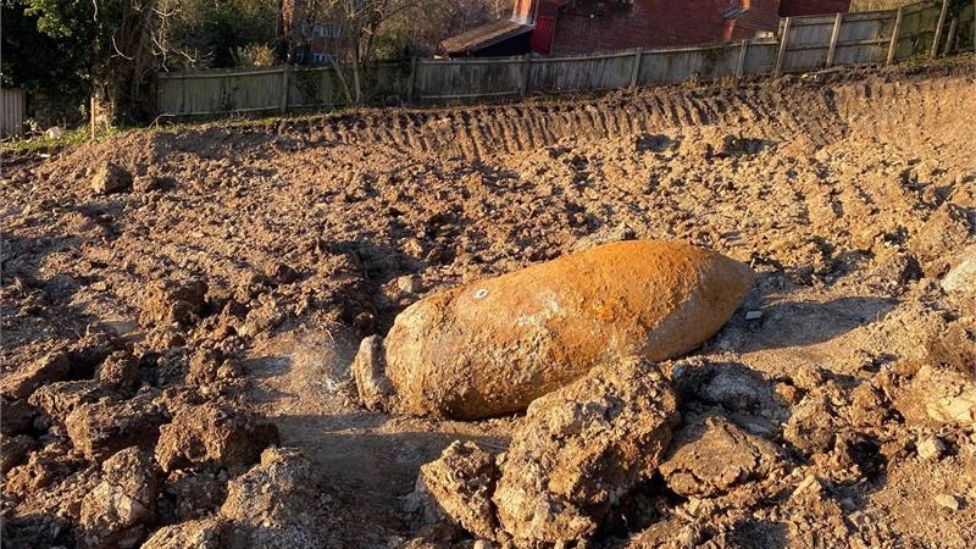
I read that yesterday but hadn't seen the footage. It's quite a big one, next to those fences!
One thing though. It was surrounded by a 400T box of sand. I'm not entirely sure on the density of sand but having moved some of it once to fill a sandpit in the garden for the kids, that's only about 8 bags isn't it?
Why are bombs still measured in imperial units?
Cause a 20 000 pound bomb sounds way more impressive than a 10 tonne bomb. Or maybe just because military types resent having to use French units of measurement.
https://twitter.com/PoliceDrones/status/1366083143195897859
Spent a year living next door to that bomb in the late 90s. Slightly unnerving given the damage it caused in the “controlled explosion”
Legacy innit. Pretty much everybody uses metric calibers now ie Challenger 2 has a 120mm main gun. Foreigners have always used this ie the Germans had the 88mm anti tank gun, but the Brits used the 17 pounder, based on weight of shell. To confuse matters further the Brits also had the 5.5 inch howitzer...
Artillery shells seems an odd mix of weight in imperial or caliber in metric
A lot of firearms stuff is just old conventions. For example, the "gauge" system used for shotguns is based on a 1 pound ball of lead. That would be 1 gauge. A 12 gauge shotgun has a nominal calibre equal to a ball of lead weighing 1/12 of a pound. Calibers are nominal though, especially with shotguns, so they are just called by traditional names.
Particularly odd to quote that one in imperial, since it was actually 1000kg.
I'd be interested to know why it was fully detonated. I thought there were techniques to blow off the detonator, or cut the casing open with water jets, etc, to avoid full detonation. Maybe it was too unstable, or maybe they were trying some remote disarming technique inside the sand 'box' and it didn't work.
I’d be interested to know why it was fully detonated.
My thoughts too.
2000lbs sounds more impressive than 1000kg.
or maybe they were trying some remote disarming technique inside the sand ‘box’ and it didn’t work.
Given the shout at the beginning seems like it was deliberate. I assume the size and location of it meant that if disarming it did go wrong the damage would be extremely high. Better to just cover it up and detonate.
My old man worked in bomb disposal. His one bit of life advice to me? Never ever bloody volunteer for anything.😀
Remnance of the Baekdeker raids. Germans bombed cities based upon a famous German travel guide. Exeter was the first city to be hit.
I’d be interested to know why it was fully detonated. I thought there were techniques to blow off the detonator, or cut the casing open with water jets, etc, to avoid full detonation. Maybe it was too unstable, or maybe they were trying some remote disarming technique inside the sand ‘box’ and it didn’t work.
Yes previous ones they've drilled and steamed the explosive out (which was a technique used in WW2).
London 2008
In early June 2008 an SC 1000 bomb was dredged from the River Lea near Three Mills Island in London, the largest bomb found in 30 years. The explosive charge was liquefied and pumped out using steam by bomb disposal experts from the Royal Engineers, exposing the detonator, which was made safe with a small detonation after five days. The always-present risk of a full detonation was avoided.
A good book on the race to disarm bombs in WW2 is...

The germans knew we disarmed the time delay ones, so there was a continual battle with the Germans trying to kill the disarming crews by changing the fuses and the Brits developing new techniques to overcome the new fuses. Bloody scary stuff.
It was surrounded by a 400T box of sand
I guess the sand was to stop the shock waves blowing out all the windows nearby?
I've seen the clip from a few diff angles on social media, I'd have thought with that much noise a lot of birds would have flown away like it was a huge crow scarer
I guess the sand was to stop the shock waves blowing out all the windows nearby?
It'll have absorbed some of the energy, but i'd be surprised if the buildings nearby aren't a write off.
Why are bombs still measured in imperial units?
1000kg Herman bomb https://en.wikipedia.org/wiki/SC1000_bomb. Similar dredged in the Thames a few years ago. Evidently a decision must be made between disarm and detonate. Not enough sand, apparently with some windows blown and some cracked walls. Plus a crater the size of a double decker bus
Sand must have a lower shrapnel potential than other forms of absorbing ballast.
The four storey u shaped building above and to the left of the explosion (from the angle of the drone footage above) was my halls of residence. It was dilapidated in 98 but they only got round to refurbishing it last year I think. Wonder what state it’s in today...
The bombs found in the London rivers have an interesting background. They find far more of them than they should, since they rarely meant for any of them to go in the river (unless specifically attacking docks) and there are pretty complete risk/heat maps built up over the years from ARP reports, UXO strikes, Luftwaffe photos etc showing where they should be found - but they find less on land than the data suggests and more in the rivers. Apparently in the 50s it was not unknown to shut a building site for UXO, send the men to the pub, then after dark some oiled-up navvies appear out of the shadows with a barrow and hey presto! I was all a hilarious big mistake. What bomb?
Not sure what I thought how big a 2000lb bomb would be but if that’s a normal sized outhouse in the background, it’s pretty bloody big…
Sand must have a lower shrapnel potential than other forms of absorbing ballast.
Glass is very good if you have thick enough stuff very close to the charge. rather surprised me first time I saw it used. Best of all though is foam, build a structure around it and fill it with foam and its incredible how much energy is absorbed.
The sand "tamping" and hesco bastion containment structure is primarily there to intercept projected high velocity fragments of the bomb casing not the shock wave. It will attenuate the blast quite significantly, but no realistic amount of tamping and containment will completely mitigate the blast effects of that amount of high explosive (500 to 600 kg of TNT) in an urban area. A few broken windows are all but inevitable and a small price to pay. People unfamiliar with high explosive events are "surprised" by the magnitude of the explosion but an untamped 1000 kg bomb would have flattened nearby houses and created serious structural damage over 100m away and damaged other properties and broken glass damage several hundred metres away.
The fuzes fitted to these bombs after 70+ years are now so badly corroded that attempts to remove them are highly likely to fail and come with a reasonably high risk of causing an "uncontrolled" explosion. Attempts to trepan or use water jet cutting techniques still leave the problem of half a ton of high explosive to deal with. "Steaming it out" is expensive, time consuming, comes with a risk of contaminating the environment and still has a risk of causing an uncontrolled explosion. Better in many instances to have a controlled explosion at a time of your choosing having carried out effective evacuation, cordon and blast mitigation.
andrewh
Free MemberWhy are bombs still measured in imperial units?
When it's an old bomb it seems only polite to refer to it as it is used to tbh
Not sure what I thought how big a 2000lb bomb would be but if that’s a normal sized outhouse in the background, it’s pretty bloody big…

What Luftwaffe plane would have been delivering a device like that?
Here's a better image to judge the scale.

People unfamiliar with high explosive events are “surprised” by the magnitude of the explosion but an untamped 1000 kg bomb would have flattened nearby houses
Perhaps they never wondered at the architecture of Exeter city centre. There wasn't much left after WW2.
When it’s an old bomb it seems only polite to refer to it as it is used to tbh
KG then, as i'm assuming it's a German one! They haven't used lbs for quite a while....
In a past life I used to regularly get involved in exploding a few pounds of high explosive, that used to wobble stuff on my desk when it went off despite it being in a bomb chamber! 1000kg is a lot.
Can't decide if it's a testament to German engineering that it still exploded* or a failure that it didn't go off in the first place.
* admittedly I imagine they detonated a charge next to it to get it to properly go.
Local newspaper report
Numerous broken windows & a woman trying to pull a huge lump of shrapnel from her garden!
It's a shame such a bomb hasn't yet been found in many UK city centres...
It’s a shame such a bomb hasn’t yet been found in many UK city centres…
I'd say that 1950s town planning did far greater harm to Exeter than was ever managed by the Luftwaffe.
Ewan
Free MemberKG then, as i’m assuming it’s a German one!
That's a fairly brexiteer point of view- it may have been born in Germany but it did all of its life's work in the UK and it's lived here for 75 years
Yup...... I live 900 metres across the river. Shook our windows a wee bit. Felt like "the good old days" back in Belfast. Mind you, King Billy was here in Exeter in 1690 so i'm blaming him and those bloody Loyalist ejits.
Beamers.....
Junkers 88's.
There were 49 of them that began the bombing on 23rd April 1942.
Here’s a better image to judge the scale.
If that’s a normal sized plane that guy is huge.
What Luftwaffe plane would have been delivering a device like that?
Quite likely one like that in the photo below your question; a Heinkel He 111, which was the Luftwaffe’s most often used bomber, but it was a medium, I don’t think they had anything as big as a Lancaster, which could carry a 20,000lb Grand Slam - although not to the altitude originally conceived for that size of bomb.
In fact, the He 111 was a medium bomber, they had the He 177 Greif (Griffon) and the Dornier 217, but they came late in the war, and Ju88’s were only used as escorts to drop incendiary and marker flares, the Luftwaffe stopped using bombers and turned to producing fighters for defence.
Why are bombs still measured in imperial units?
Why are bike tyres and wheels and gearing measured in inches?
Only a matter of time:
It was a Junkers 88 that delivered that bomb on 23rd April 1942.
[url= https://i.postimg.cc/tJQVTKLp/Capture.pn g" target="_blank">https://i.postimg.cc/tJQVTKLp/Capture.pn g"/> [/img][/url]
She'll do her back in lifting like that!...and she could do with some gloves. Does the newspaper not have a H&S dept...
Why are bike tyres and wheels and gearing measured in inches?
Only for MTB...
Car wheels - diameter in Imperial, width in metric.
Unless it's some daft 80's French thing.
This Exeter Hermann bomb will be a drop in the ocean compared to what could happen with the S.S. Richard Montgomery. That's scary stuff if you live nearby.
That's car tyres. Car wheel diameter and width are both inches
I’d say that 1950s town planning did far greater harm to Exeter than was ever managed by the Luftwaffe.
It's not the only place...
Come, friendly bombs, and fall on Slough
It isn't fit for humans now,
There isn't grass to graze a cow
Swarm over, Death!