 You don't need to be an 'investor' to invest in Singletrack: 6 days left: 95% of target - Find out more
I’m not against progress. I am against marketing bullshit dressed up as progress.
Is there any other kind of marketing?
Not convinced. A 148mm hub fits into recesses in the dropout, making the whole thing stiffer (and marginally easier to fit/line up) than a 150mm hub
I've never heard anyone complain that DH hubs aren't stiff enough before but if you say so.
Not sure that's a good enough reason to introduce yet another hub standard but whatever sells, I guess.
I’m not against progress. I am against marketing bullshit dressed up as progress
You might struggle but just ignore the marketing and judge a product for its merits then, simples. 15mm, 148 and 27.5 have proved to be good progress for me, all things being equal (repeating the same thing doesn't change the fact that I am well aware that things are not equal - it actually means that I am able to isolate different factors or focus on factors where other changes don't interfere). Despite the marketing.
As for 20mm I am pretty sure that you haven't invented it. But I still don't see how you know I went from 20 to 15. Mostly because I didn't.
I am sorry if you're feeling insulted and that reinforces the impression that you're emotionally fragile. I stil think you're weird but I appreciate that it's subjective and just my opinion.
I am sorry if you’re feeling insulted and that reinforces the impression that you’re emotionally fragile. I stil think you’re weird but I appreciate that it’s subjective and just my opinion.
Ooh, we're at the 'seek professional help' stage of the debate.
I love talking about wheel sizes 🙂
“You’re the one who started this by suggesting 27.5 was a significant improvement over 26.”
I didn’t say that at all. I said we started out on 26” tyres for reasons of commercial convenience and it would seem bizarre to stick with them forever. When everything else on mountain bikes has changed in the last 50 years, why should the wheel diameter remain set in stone?
I didn’t say that at all. I said we started out on 26” tyres for reasons of commercial convenience and it would seem bizarre to stick with them forever. When everything else on mountain bikes has changed in the last 50 years, why should the wheel diameter remain set in stone?
And I didn't say that anything should be set in stone.
However, changes in standards, particularly changes in standards that mean the only practical way to move to the new standard is to buy an entirely new bike, should have an actual benefit and actually be different to what came before.
27.5 fails on every part of that test and the only reason it happened was because Giant and Specialized knew they could increase profits without any actual investment.
Moving to new standards for no reason just increases the price of mountain biking for everyone for no benefit.
Ooh, we’re at the ‘seek professional help’ stage of the debate.
Yes definitely. I didn't think of that but now that YOU mention it, that's probably a good move.
I think you might be taking a debate that happens on here roughly every 3 weeks a bit too seriously.
But hey, going the mental health route means you don't have to bother learning anything about the subject at hand so as a debating technique it has that going for it.
And for the record, I sought help. I got misdiagnosed with bipolar and carried on with medication for about 10 years. Then got correctly diagnosed with Borderline Personality Disorder and I've been sorting things out based on that ever since.
Stay classy out there.
Good to hear Bruce.
“27.5 fails on every part of that test and the only reason it happened was because Giant and Specialized knew they could increase profits without any actual investment.”
It doesn’t because it does work a bit better than 26 for most MTBing. And Specialized were nothing to do with the 27.5 movement, they only joined in when every other major manufacturer had jumped from 26.
As long as bikes have this very strange ratio of unsprung:sprung mass they’ll suffer from having suspension that doesn’t work like on basically every other vehicle, which means that a big tyre that can roll over bumps will be disproportionately beneficial.
I’m not seeing anyone riding a 29/26 mullet bike, even for DH. 27.5 is handily closer to 29 than 26 without being so close it negates the advantages of being smaller (more clearance, less rotating mass, etc).
Ironically the only three Strava (DH) KOM's that I still have on a leg powered bike stand from 2014/15 and we're on a 26" 🤷
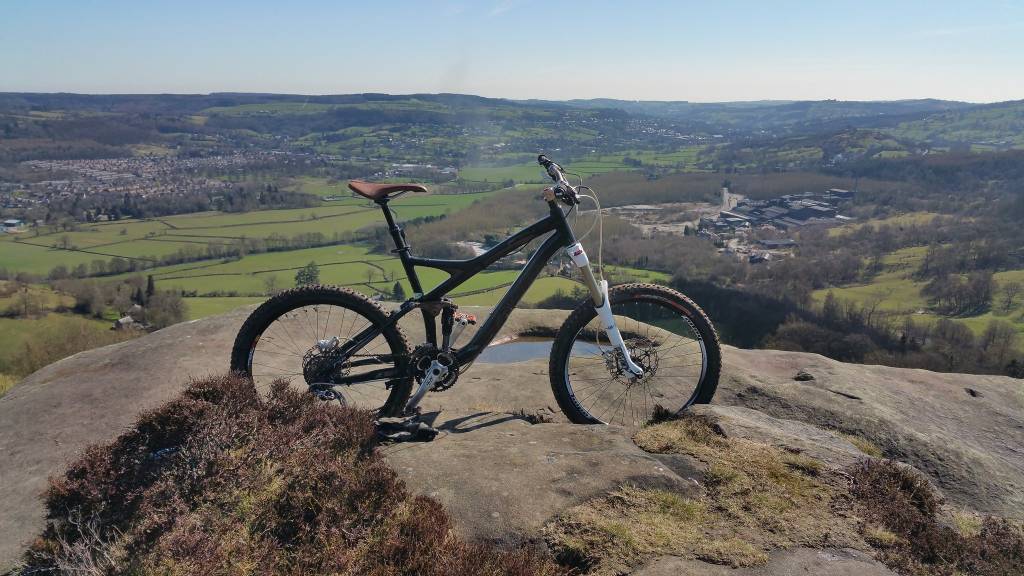
It doesn’t because it does work a bit better than 26 for most MTBing.
It doesn't. If it did we would have had proper tyre size specifications for aspect ratio by now. If 12.5mm were important for rim size it would be important for tyre size.
As long as bikes have this very strange ratio of unsprung:sprung mass they’ll suffer from having suspension that doesn’t work like on basically every other vehicle, which means that a big tyre that can roll over bumps will be disproportionately beneficial.
True, but did you notice how you said tyre and not rim.
I’m not seeing anyone riding a 29/26 mullet bike, even for DH.
Also true, but how can we know if they would run them or not given the fact that rims and tyres at the top end simply aren't available in 26"?
The trouble is this was never a question the market was allowed to decide. The big boys made the decision, the smaller boys had to run to catch up, and we as consumers all just had to suck it up.
Literally no one was asking for 27.5" and the only reason we are riding 27.5" is because we were given no choice other than 29". And now thanks to sunk cost fallacy and Stockholm Syndrome everyone is desperately trying to convince themselves this was a good thing.
I don’t understand why 27.5 wheels shouldn’t conform to the continuum where bigger wheels roll faster, grip better and handle the rough more smoothly, that we’ve all seen. Just as we’ve seen that despite trying skinnier and wider tyres we keep coming back to ~60mm width for most use. And the inherent shape of tyres on two-wheeled off-road vehicles mean you can’t add much height without adding width.
But whatever I say you’ll ignore the facts and make some more random points that don’t add up so I’ll stop here.
rims and tyres at the top end simply aren’t available in 26″?
There's certainly top end rims and tyres available in 26". Or is trials riding and dirt jumping too far removed from mountain biking so their rims and tyres don't count?
I don’t understand why 27.5 wheels shouldn’t conform to the continuum where bigger wheels roll faster, grip better and handle the rough more smoothly, that we’ve all seen. Just as we’ve seen that despite trying skinnier and wider tyres we keep coming back to ~60mm width for most use. And the inherent shape of tyres on two-wheeled off-road vehicles mean you can’t add much height without adding width.
You forgot to say, 'It's basic physics.' Unfortunately, bikes are engineering. Every design choice has an inherent compromise and if you decide to change everything at once, trying to pin all the improvements down to probably the most insignificant change in design shows a lack of understanding of not only engineering but also basic physics. You can't draw any conclusions from your experiment if you change multiple variables at once.
I know people like simple explanations and bigger rims = better is a nice simple explanation and it makes them feel better about spending all their spare money on a hobby that decided to perform a very cynical piece of marketing that provided a clear line of demarcation between what was 'new and good' and what was 'old and worthless' for no significant performance benefit. Significant was the key word in that sentence.
Since you like simple things, let me explain it as simply as I can.
The extra 12.5mm provided no significant benefit. The 12.5mm along with wider rims, increased wheelbase, slacker head angles, changes in front and rear mechanical trail, front centre, rear centre and all the other changes made a significant difference. Guess what, all these other changes could have been made without the extra 12.5mm.
But then the marketers wouldn't have their clear line of 'old and crap' and 'new and awesome'.
But hey, if bigger wheels = better is your mantra then stick with that. I'm sure 32" will be along before too long and all the design changes that will have to made to accommodate the new wheel size will confirm to you that this is awesome.
Shall we all chill out a bit? Had anyone ridden the Airdrop Filter? 27.5 trail bike seems perhaps more of a controversial choice than a big fun smash things bike?
Not sure that’s a good enough reason to introduce yet another hub standard but whatever sells, I guess.
Apart from a couple of manufacturers (Pivot and Cannondale) everyone who sells a FS 29" is now on a Boost hub, it's entirely replaced 135 as the current "standard" (until it's replaced), and as I've said, these bikes are only possible because of the work done in 2013/14 by Trek and SRAM working together. Just to wind you up, as of about 3 years ago, Boost chainlines are moving from 48-53mm to a 55mm because; more room, wider BB shell area, all without changing the rear hub again, and also original Boost was designed around "older" groupsets (11x2, and 12x1), and not SRAM Transmission
The thing is "standards" have never been set in stone, there's never such a thing* ever. bike designers, group-set engineers, they're all working at a different pace trying to solve different things. working only in constraints when they can.
* the reason it's hard to restore Raleigh bikes is that for ages in the 1970-80s they used their own BB design that was different from every other bikes manufacturer.
And of course, all these 'advances' are much easier that the actual solution to the problem which is a cassette in a box around the bottom bracket.
What you're talking about is extreme turd polishing.
Derailleurs have no place on a mountain bike and yet here we are, in 2023, paying £400 for a single cassette.
Fit for purpose solutions hard and require significant investment. Repackaging a solution for road bikes and selling it to people at a huge mark-up is easy and requires far less investment.
Here's a 100mm rear hub. As far as I know it hasn't killed anyone yet:
Not all advances are anything other than cynical new standards BUT....
As much as the retro crowd like to romanticise about them, my 90's Kona is a bag of turds to ride. Bottom bracket was super easy to change the other week though
I feel like maybe there's (another) thread in here. I've enjoyed a good whinge about standards in the past (I foolishly brought up Discs on Road bikes the other day, sorry).
But eventually you have to get things in perspective. Tweener wheels and boost happened and continue to, can't be changed now.
Over the weekend some Mercenaries tried to march on Moscow. There are definitely more important things to get animated over...
@BruceWee what the hell is wrong with you? Step away from the computer.
Oh, just another day arguing about wheel sizes on the internet!
That finished a while ago, now BruceWee is trying to tell us how stupid and gullible we are, how we aren't able to make rational assessments of bike gear, and only he can separate genuine progress from cynical maketing moves.
Which, and I'm sure we will all agree on this, makes for a beautiful, inspiring and truly life-affirming thread that I'm thankful to have been a part of.
There are performance driven improvements and then there are marketing driven improvements.
Often, but not always, if an improvement means a new standard it's a marketing driven improvement.
27.5 is just the most obvious example of a truly cynical marketing driven 'improvement' we've seen so far in the industry. And I'm saying that as someone whose main bike is a 27.5 trail bike with boost spacing.
Principles are one thing but 66% off is 66% off 🙂
@BruceWee what the hell is wrong with you? Step away from the computer.
Other threads are available if this one is upsetting you so much.
I reckon the extra 25mm in diameter makes little difference when stationary or over a couple of rotations. Over 20 miles however the effect is significant because of the number of rotations. And that's in isolation from other factors. And has little to do with marketing. A great improvement.
Derailleurs have no place on a mountain bike
So you're annoyed by the lack of standards, but you want millions of folks who're perfectly happy with their derailleur set-up to ditch them and replace their transmission with gearboxes...Cool.
And I’m saying that as someone whose main bike is a 27.5 trail bike with boost spacing.
🤯 suggestion: read & answer op.
So you’re annoyed by the lack of standards, but you want millions of folks who’re perfectly happy with their derailleur set-up to ditch them and replace their transmission with gearboxes…Cool.
Yes, now you are finally getting it.
Advancements are great. If a new standard is needed for a genuine advancement then that's what is needed.
If a new standard is not needed then don't introduce a new standard just to sell more stuff. It results in more expensive bikes for little or no performance gain and it makes life very difficult for smaller manufacturers.
I'd say listen to podcasts and interviews with Cy Turner (Cotic) and Joe McEwan (Starling) to get an idea just how many problems these 'improvements' can cause for small manufacturers.
Not withstanding the difference in travel, has anyone noticed how the new Yeti SB135 has spookily similar geometry to the Mk3 2018 SC Bronson?
The reason bigger wheels have caught on is the same reason gearboxes haven’t - bikes are very efficient vehicles so anything that increases or reduces losses by even a small amount feels significant to many riders. Bigger wheels roll better in the real world. Gearboxes transfer power worse than mechs and sprockets in the real world. It would be nice if the latter wasn’t the case.
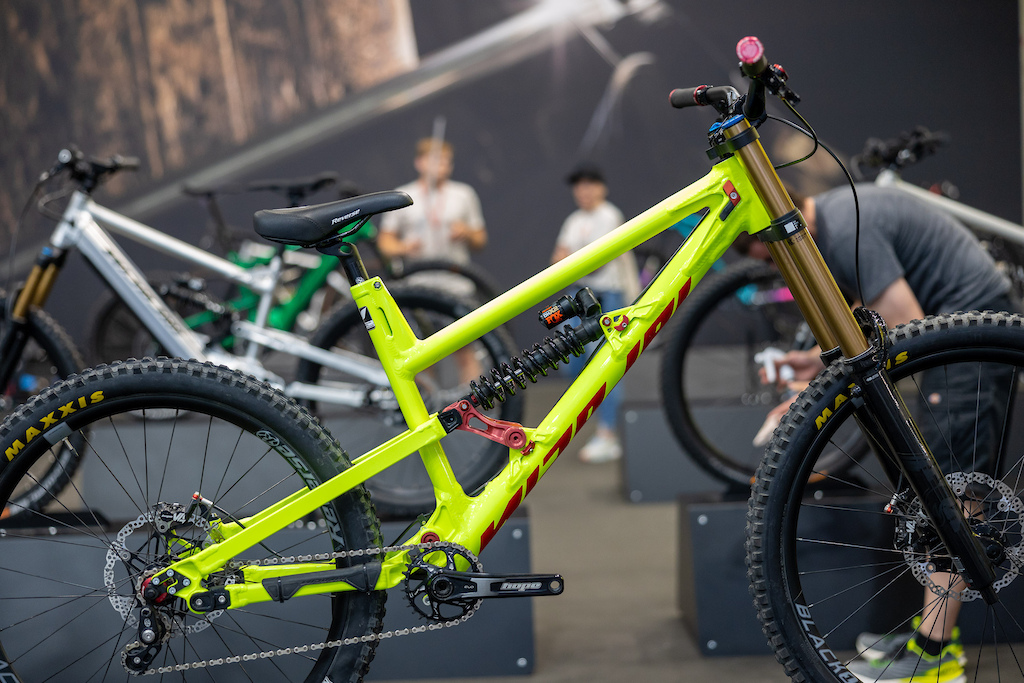
<Cough> The G18 Hammer was not designed to be a DH bike, but rather one to send big jumps. It's a "mini-mullet" with a 27.5" front wheel and 26" rear wheel.
If a new standard is needed for a genuine advancement then that’s what is needed.
I don't think that gearboxes offer genuine advancement, fundamentally it's just different way to change gear, and has as many drawbacks as improvements over derailleurs. The shift to larger wheels tells you that as that change happens - and I think we're all forgetting just how un-sure the industry was about 29" wheels outside of XC hardtails where they were evangelically adopted, everything is up for grabs for a couple of years before settling again, so although there's gearboxes on the market now, there's no guarantee that those will become the standard, and I don't see how that helps the small manufacturers you want to champion. The fact remains that small manufacturers in any market will be at the mercy of the larger ones, that's just how it goes.
I think it's also worth remembering that there isn't "big" cycling all sitting around a table deciding what they'll make the suckers buy next, it's convenient but not true, Plus also; buying a frame and parts separately is not the normal way that most people buy a bike, so changing standards don't affect the vast majority of buyers in any way.
The reason bigger wheels have caught on is the same reason gearboxes haven’t – bikes are very efficient vehicles so anything that increases or reduces losses by even a small amount feels significant to many riders. Bigger wheels roll better in the real world. Gearboxes transfer power worse than mechs and sprockets in the real world. It would be nice if the latter wasn’t the case.
29ers caught on.
27.5 didn't 'catch on'. Consumers were simply never given the choice.
And I didn't say gearbox, I said cassette in a box. A cassette in a box with a high pivot jack-drive makes a lot more sense in terms of efficiency than some of the ridiculous chainline issues we are seeing with current set-ups.
In addition to solving the chainline (and hence efficiency issue) it also solves the chain growth issue that has been haunting full suspension designs since the beginning.
But yes, it's a radical change and one that will take investment to get right. There are easier ways to sell 'improvements' to the mountain bike buying public.
makes a lot more sense in terms of efficiency than some of the ridiculous chainline issues
Chainline isn't that much of an issue and 55mm chainlines solves that anyway. Derailleurs and chains are already super efficient (some of those lube testing web-sites cite up to 95-99% even when they're dirty) so 'radical' changes to bike designs for teeny gains doesn't seem hugely worthwhile?
29ers caught on.
Only when the packaging issues were solved - by Boost hubs.
If a new standard is not needed then don’t introduce a new standard just to sell more stuff.
I don't think that's what happens. It looks like it, to you, because you're cynical and not aware of how things actually happened. This leads you to assume everyone's a total bastard.
What probably happens, in my opinion, is that some bike engineer thinks 'hmm, based on engineering principles this is not ideal. (For example) I'd really like to make the chainstays even shorter, but I still want big tyres. But if I make the cranks slightly wider I can do that. So let's try that". End result is the bigger tyres and decent handling 29ers we all enjoy, but the down-side is a new standard of crank width. I think with the wheels, engineers went 'oh these 29 wheels do roll much better than 26, but they handle worse. Maybe we can compromise half-way'.
AFTER that happened, the marketers were told 'sell this stuff' and then they produced all the marketing blurb that said.. well, I have no idea actually I don't pay attention to it. Then the accountants said 'look there's no point in making 26ers any more because they aren't selling as well, we can increase our company viability if we cut our 26 product line'.
The industry is not as cynical as a whole as grumpy old farts like to make out. They don't just sit there thinking 'how can we **** people over this year?' Hyperglide cassettes are a good example. The freehub bodies stayed the same for thirty years or more? They made them wider for 8sp, because they had to, but the spline pattern was the same so you could fit 7sp onto 8sp hubs with a spacer. This meant you didn't need a whole new drivetrain if you wanted new hubs. Then SRAM adopted the same standard so you could interchange SRAM and Shimano. They could have changed the freehub body every year, but they didn't. Tbh it's not even that good, so they had excuses. They only changed it to enable them to fit a smaller small sprocket to give the range people wanted with 1x.
the chain growth issue that has been haunting full suspension designs since the beginning.
The nonnest of non-issues.
Chainline isn’t that much of an issue and 55mm chainlines solves that anyway. Derailleurs and chains are already super efficient (some of those lube testing web-sites cite up to 95-99% even when they’re dirty) so ‘radical’ changes to bike designs for teeny gains doesn’t seem hugely worthwhile?
There's efficiency tends to drop by quite a bit when they are dangling off the bike after being hit by a rock/dragged into the rear wheel.
Only when the packaging issues were solved – by Boost hubs.
No matter how many times you repeat something it doesn't make it true.
No matter how many times you repeat something it doesn’t make it true.
A lesson you could do with learning.
I'm with BruceWee 27.5" on its own is minimal difference.
I say this as someone who rides a 27.5" bike because it was the style/ travel / size bike that I wanted that was available when I was searching.
“No matter how many times you repeat something it doesn’t make it true.”
Pot. Kettle. Ha!
Nice rewriting of history there molgrips but we were there and can actually remember it.
It's worth listening to Cy Turner talking about how 27.5 almost put Cotic out of business because virtually overnight the big boys had decided 26" was obsolete.
It's obvious why Cotic got surprised. If you think about it from an engineering point of view 27.5 makes no sense. Or at least, not enough sense to consign the standard most bikes had been built around up until that point to history.
However, if you think about it from a cynical marketing point of view it makes perfect sense.
Cotic and the rest of us learned a valuable lesson that year.
@BruceWee Go and do some reading on the history of 29" development. Start by looking up Dylan Howes of Trek and what he was doing in 2013/14. I've no dog in this game, I ride a 27.5 bike after all. But there's no doubt about the role that the Boost hub played, it was fundamental to the wider acceptance /development of the 29" mountain-bike I can't help it if that doesn't fit your narrative. Sorry.
cookeaa
I feel like maybe there’s (another) thread in here. I’ve enjoyed a good whinge about standards in the past (I foolishly brought up Discs on Road bikes the other day, sorry).
But eventually you have to get things in perspective. Tweener wheels and boost happened and continue to, can’t be changed now.
This "get over it" is part of the issue... the other part is every time a new "standard" is brought in and we are told "but you'll still be able to buy ...." it's a lie or deliberately misleading.
It's the two together that cause the main issues around planned obsolescence...
You might struggle but just ignore the marketing and judge a product for its merits then, simples. 15mm, 148 and 27.5 have proved to be good progress for me, all things being equal (repeating the same thing doesn’t change the fact that I am well aware that things are not equal – it actually means that I am able to isolate different factors or focus on factors where other changes don’t interfere). Despite the marketing.
As for 20mm I am pretty sure that you haven’t invented it. But I still don’t see how you know I went from 20 to 15. Mostly because I didn’t.
We can't just ignore the marketing due to your lack of understanding of what is/was available.
Whether you personally knew about 150/110 DH hub spacing or not you buying into 148 affects all of us.
Those of us for whom the most expensive thing we own is/are our bike(s) or care about the environment or both regularly point out "but no-one is taking away your ability to buy" but they are, time and time again so no wonder they/we get passionate and exasperated by it.
Boost was not introduced because up until that point 29ers didn't work.
29ers didn't suddenly achieve mass adoption because Boost fixed all the problems.
Boost succeeded because people are demanding it. And people are demanding it because the big boys are telling them it's the defacto standard and are producing enough nice looking marketing material to convince people.
Same as they did with 27.5.
If it comes down to a choice between listening to your Cy Turners, Joe McEwans, Chris Porters, etc or listening to a bunch of forumites who are trying to justify spending several months wages on a bike to play in the woods on, regurgitating Giant and Specialized marketing pamphlets I think I'll go with the bike builders, thanks.
because virtually overnight the big boys had decided 26″ was obsolete.
But also once the larger manufacturers realised that the public didn't want bikes with 26" wheels when new wheel sizes became available; it made them obsolete overnight. There's as much push as there is pull in every discretionary market like bikes, it doesn't all come from just one direction.
listening to a bunch of forumites who are trying to justify spending several months wages on a bike to play in the woods on, regurgitating Giant and Specialized marketing pamphlets
Was that aimed at me?
2 weeks ago I replaced my last 26er that I bought in 2007 with my first new MTB since then - and even then they were insurance replacements. The new bike was £1650. My first 29er was in 2015 that I bought as a £400 frame and put most of the bits on from a 26er, it has second hand wheels and drivetrain (no idea how old they are) and the brakes are still from 2007. My second was a £200 used frame on which I did the same in about 2018. I'm not a bike tart.
Also, my new 29er trail bike is worse descending on my local tight tech trails than the 26er it replaces.
nickc
But also once the larger manufacturers realised that the public didn’t want bikes with 26″ wheels when new wheel sizes became available; it made them obsolete overnight. There’s as much push as there is pull in every discretionary market like bikes, it doesn’t all come from just one direction.
I think that's backwards ..
once the larger manufacturers convinced the public they needed bikes with 650B wheels; it made them obsolete overnight
110/150 already existed... as did 650B and 29 had any major bike manufacturer wanted to use them... whilst Bontrager and Specialised could have made the tyres...
once the larger manufacturers convinced the public they needed bikes with 650B wheels; it made them obsolete overnight
I think that's a simplistic and cynical view.
I think stevextc is making the points I'm trying to make far better than I can. Basically the same design (with perhaps some marginal improvements) but compatible with nothing that came before it is what I object to.
Was that aimed at me?
It wasn't aimed at anyone specifically.
Also, my new 29er trail bike is worse descending on my local tight tech trails than the 26er it replaces.
Be very careful saying that kind of thing on here 😉
Boost was not introduced because up until that point 29ers didn’t work.
29" worked fine on XC hardtails where wheel strength wasn't a massive issue and there are fewer packaging issues around the BB, but was rubbish as LT suss (one talking head at the time was convinced that 26" bikes was going to stay for that segment, and offered that DH might move to 27.5) It was the work that Trek did with SRAM to get rid of the front mech, the extra 3mm that Boost offered was just enough to cram it all in, retain a normal Q factor, allowed for stronger wheels, and shorter chain stays.
29ers didn’t suddenly achieve mass adoption because Boost fixed all the problems.
Yeah, they pretty much did, becasue Boost pretty much fixed enough of the problems about packaging to allow designers to iron out the other issues, making them viable all round FS bikes
When 29ers appeared in XC they were considered gates and slow handling. But perhaps worth it for the speed. Then over time they were refined. When Enduro bikes became available in 29 there was a lot of "whatever is the world coming to?" But they work for that format because all of the slight tweaks made it so.
It was the work that Trek did with SRAM to get rid of the front mech, the extra 3mm that Boost offered was just enough to cram it all in, retain a normal Q factor, allowed for stronger wheels, and shorter chain stays.
Ah well if Trek says it...
And as a happy coincidence they were able to make a new wheel standard that was completely incompatible with 142mm even with adapters or with the 150/157mm DH hubs that were already available.
Everyone wins!
once the larger manufacturers convinced the public they needed bikes with 650B wheels
Sure, but as you and @BruceWee show, just becasue the companies offer something, doesn't mean we'll all just blindly go ahead and buy it. Look at Air Lines, look at Hydro callipers, look at Shimano Rapid Rise, Thud busters and on and on. For everything that catches on, there's things that arrive with a fanfare and disappear just as quickly when the public say "Mleh"
26" bikes didn't disappear overnight because the larger wheels sizes didn't work in every segment (DH have still only really adopted them in the couple of years)
Ah well if Trek says it…
Go ahead, look up Dylan Hawes, he did all the work with it after all. He doesn't work in Sales and Marketing either.
29″ worked fine on XC hardtails where wheel strength wasn’t a massive issue and there are fewer packaging issues around the BB, but was rubbish as LT suss
So how did adopting 148 over the pre-existing 150 change that ?
It was the work that Trek did with SRAM to get rid of the front mech, the extra 3mm that Boost offered was just enough to cram it all in, retain a normal Q factor, allowed for stronger wheels, and shorter chain stays.
^^ again how was 4mm so bad they didn't bother to try yet 3mm so Goldilocks ???
So how did adopting 148 over the pre-existing 150 change that ?
Becasue with 150mm you need to change the design of the drop-out and the brake mount as well to accommodate them, don't need to do that with 148mm
Becasue with 150mm you need to change the design of the drop-out and the brake mount as well to accommodate them, don’t need to do that with 148mm
So on one hand change a dropout and brake mount (both add on parts from a frame POV) vs develop a whole new incompatible system and frame ??
And yet you want us all on totally backwards-incompatible bikes? Kettle Pot Black etc etc
IF THERE IS AN ACTUAL BENEFIT!
Not pushing home because the derailleur had an interaction with the terrain we ride over is a pretty large benefit.
And that's before we start getting into the suspension compromises that have to be made to accommodate the derailleur system.
Did I mention the 400 pound cassettes that are that price because they are unsprung mass and have to be as light as humanly possible whilst being exposed to all the crap the trail can throw at it?
vs develop a whole new incompatible system and frame ??
Because the 150mm axle standard isn't 19mm, doesn't fit into existing 3.5 mm recessed dropouts doesn't add anything to wheel strength, and puts the brake mounts in the wrong place. and is actually 157mm wide and widens Q factor, which is fine when you're not pedalling on a DH bike, but a pain in the knees for lots of folk.
Becasue with 150mm you need to change the design of the drop-out and the brake mount as well to accommodate them, don’t need to do that with 148mm
With Boost the brake mount is in a different place.
You can use an adapter to shift the rotor to the correct position but that still begs the question what was wrong with 150mm/157mm?
IF THERE IS AN ACTUAL BENEFIT!
[clears throat] Ahem: Just because you keep saying something, doesn't make it true.
I thang yuu, I thang yuu, I thang yuu...Here all week folks, try the fish
[clears throat] Ahem: Just because you keep saying something, doesn’t make it true.
I knew I shouldn't have used caps for only part of the post.
You completely missed the part where I listed the benefits I can think of off the top of my head.
I'm lost on what the relevance of all this is to choosing between 27.5" or 29".
molgrips
I think that’s a simplistic and cynical view.
Is it cynical to think that in a corporate office somewhere a major investor/shareholder is expressing "I'm rather cynical that you have done everything possible to drive new bike sales"
I’m lost on what the relevance of all this is to choosing between 27.5″ or 29″.
There isn't.
3 or 4 pages ago someone suggested 27.5 was a significant improvement over 26" and then it was party time.
Anyway, all things being equal 27.5" is going to be cheaper than 29". Also, it's going to be easier to store which isn't a consideration for many but for some of us it is.
I don't think there's anything particularly contentious in that last statement but no doubt someone will be along to correct me soon.
I’m lost on what the relevance of all this is to choosing between 27.5″ or 29″.
27.5 is (I'm told) already agreed to be discontinued...
You completely missed the part where I listed the benefits I can think of off the top of my head.
There are loads of benefits to gearboxes and cassette-in-a-box designs, I totally agree with you. Whether there will ever be a mass movement from derailleurs to them (like the shift to different wheel sizes) I dunno. With my magic ball fired up, I can't see it happening in the next few years, There's loads of options available, but apart from their evangelists, I don't feel like everyone is soo fed up with mechs that they feel that they have to go immediately.
I reckon that outside of a text book, chain line is non issue, efficiency is a non issue, and the impact of chains on suss performance is a non-issue, 'solving' those will have minimal tangible benefit for 99% of MTBers
I’m lost on what the relevance of all this is to choosing between 27.5″ or 29″.
I think what we've learnt is that the only reason anyone would choose 27.5" is that they are gullible fools, hoodwinked by "big bike". The idea that folk might ride a few bikes and decide by themselves what their preference is? Absolute nonsense.
This thread has become a classic example of a conspiracy theory. It's both hilarious and drastically sad at the same time.
Is it cynical to think that in a corporate office somewhere a major investor/shareholder is expressing “I’m rather cynical that you have done everything possible to drive new bike sales”
People still bought new bikes when 26 was the only size. Point is that there are other ways to do this. It's entirely possible that they did market research and customers went 'well, I do want bigger wheels because of the better rollover, I tried at 29er but it was too slow so can we have a medium ground?'
I still think it's overly cynical to assume it was ONLY a way to force people to buy new bikes. And let's face it, small wheels weren't the only outdated standard on my old bike. It also had a straight steerer.
It also had a straight steerer.
let's not get deviate the thread into the way that "Big Rolled Steel" force us into buying already obsolete CSU standards, the bastards.
Also, intended ask what this cassette-in-a-box business is all about? Difficult to search for given Box Components.
The idea that folk might ride a few bikes and decide by themselves what their preference is? Absolute nonsense.
I know. You only have to look at the huge choice of 26" bikes that were available in 2014 to see that consumers freely chose to convert to 27.5 and it was in no way simply forced on them from one year to the next in a cynical move of planned obsolesence.
Planned obsolesence?! You'll be trying to tell me climate change is real next!
Also, intended ask what this cassette-in-a-box business is all about? Difficult to search for given Box Components.
Also, intended ask what this cassette-in-a-box business is all about? Difficult to search for given Box Components.
Have a look at Williams Racing Products on instagram.
It's still at a very Heath Robinson stage but it's promising. Particularly if you go the route of a jack shaft with a high pivot (like the Starling Sturn).
Williams is also working with Trinity MTB,
https://instagram.com/trinity_mtb?igshid=MzRlODBiNWFlZA==
https://singletrackmag.com/wp-content/uploads/2022/12/internet-rummagings-toms-christmas-baubles/
Bike buyers forced the change to a large degree. Cotic kept making 26” wheeled frames ‘till absolutely no one was buying them.
From my viewpoint, for a normal sized person (0n a large frame) 650/27.5 mountain bikes look well-proportioned where 26ers looked too small/BMX-like and 29ers look a tad too large.
Plus the fact that 29ers roll over stuff more easily, combined with slacker angles, means that you need to seek out ever more technical/steeper terrain to get the same 'adrenaline rush - which reduces the amount of accessible riding areas.
You only have to look at the huge choice of 26″ bikes that were available in 2014 to see that consumers freely chose to convert to 27.5 and it was in no way simply forced on them from one year to the next in a cynical move of planned obsolesence.
29ers were one of the last real MTB innovations, at least before e-bikes. It was a really slow burn thing before it took off. When it did it caught a few brands out, some predicted it'd never take off over 26" while others were seeing where it worked well. When 27.5 came along (after being pushed a few niche brands for 5+ years) brands moved onto it much faster out of fear of being left behind again for a model year or two more than anything else.
Take a look at the state of the bike industry at the moment, it's a mess. It's all come from a lack of co-ordination and planning and the need to compete over a stagnant market where there's little real innovation left to be had. The bike industry being a co-ordinated coercion and influencing machine is so far off the mark imo. It's a bunch of (mainly) blokes running around trying to figure out when to jump on a trend or trying to create trends (dependant on brand size). Then trying to get it all done with contract manufacturers who work for loads of other brands and might not want to change what they do, or might have so much business tied up with one brand that it influences things for better or worse.