 You don't need to be an 'investor' to invest in Singletrack: 6 days left: 95% of target - Find out more
While everyone's clicking on random YouTube links:
'It is better in my opinion to hit a tree at 20-30 kph than at 30-40...'
🙂
Rather than provide the Tube poster with more clicks, can we have a brief synopsis OP?
What @wheelsonfire1 said.
At least the gist...
Wheelsize?
Too many standards?
Pricing?
Marketing 35mm bars are being flexible/comfortable after telling us we need need them because they're stiffer?
The opener on forks is the same old crap abut carbon fibre that used be around 10-15 years ago. All he's really saying though is that he's not very good at repairing modern bicycles. If you get mineral oil on the pads when you're bleeding brakes (for instance) then you should've followed the instructions to remove the pads before starting bleeding. It's not the industry's fault that he's slapdash.
25 minutes? I'm not watching that!
Started watching, got bored and fast forwarded to various bits and rapidly concluded that it was yet another died-in-the-wool old fart who thinks bike technology should have stopped in about 1987.
Also, he's not a very good mechanic.
All he’s really saying though is that he’s not very good at repairing modern bicycles.
Must be the fourtyeleventh video i've seen on the subject of modern being rubbish since youtube was started. Amazed these guys even stay in business.
Edit:- Further digging through his website seems to show he's pretty poor at repairing/looking after/understanding ancient bicycles too!
Amazed these guys even stay in business.
They earn YouTube revenue from people posting "I agree with everything this guy says" with a link to a video and no further explanation on a cycling forum and just waiting for people to click through to find out that actually the entire video is a load of waffle and shite.
There's a special place in hell for people that post that kind of clickbait without even a summary of what we're about to click through to. A simple "here's some bloke who reckons he's a mechanic complaining about modern technology" would have sufficed, I could have guessed all the arguments I bothered to listen to before I closed the video without going any further!
The opener on forks is the same old crap abut carbon fibre that used be around 10-15 years ago.
... that carbon fibre failure points are often unseen until a major failure happens which is likely to be a nasty crash, it's responsible for a high proportion of recalls in the industry and you can cause a fair bit of damage if you're not really careful with headset bearing rings, compression bungs, stem bolt torque etc.
Amazing that 10-15 or more years on, it seems we're still there. But as long as riders are weight weenies and bike companies buy forks from companies in Asia and think ISO EN test passes are all you need to be safe, little will change.
I didn't listen to the rest as I suspect it's Grant Petersen-ist views of current bike tech. But tbh.. through headset routings, digital-only groupsets above 105, 13s Red AXS and some things I know are coming down the line .. yeah Grant, I'm more with you than not. There's a point where there are no gains worth having, where that point is is highly subjective but from where I am it looks like more and more of us will draw a line as things progress. Bikes are inherently simple things with beauty in that simplicity and the main benefit of complexity is to either very demanding specialist riders/racers or the brands who make money out of this type of progress.
There we go, my own little rant.
All he’s really saying though is that he’s not very good at repairing modern bicycles
There's a valid point sort of buried away in there, I *used* to be a relatively competent mechanic, servicing my own forks, bleeding my own brakes, building my own wheels etc.
But in the intervening period life has got in the way and tech seems to have accelerated, the old workshop where I used to work now looks like something from the matrix with wires and laptops everywhere!
As you run out of time to work on bikes you also run out of time and/or inclination to start learning new tech and buying new tools. Anything that requires an app to set it up can get in the sea as far as I'm concerned!
Increasing numbers of sprockets, 1x, 29" wheels is all fine, just requires adapting existing knowledge. I wouldn't even mind disc brakes if it weren't for the black voodoo magic required to keep them quiet on road bikes, I think it's a different use case for an existing technology and much more difficult to keep them bedded in properly when you're not hard braking all the time like you would on an MTB.
TLDR: for a time crunched home mechanic of a certain vintage, new tech is the work of the devil! <insert shaking fist at sky emojji>
As you run out of time to work on bikes you also run out of time and/or inclination to start learning new tech and buying new tools. Anything that requires an app to set it up can get in the sea as far as I’m concerned!
Yeah, that is a less of a line to me and more of a chasm. Now this is an old fart type of comment - but when I got into bikes, home servicing and mechanical aptitude was part of bike culture (or it seemed that way). MTB was about self-sufficiency and the more you learned about repairs and maintenance the better off you felt you'd be. A few spanners and you could strip down your MTB once a year. The way things have progressed, that doesn't really happen as much now and with E-MTBs it's almost a dead concept. Cars are the same. It's just how it is. I loved Zen and the Art of Motorcycle Maintenance for how he talked about that point, not taking a 'progress is bad' attitude, just a celebration of the full experience of understanding the product and feeling able to work on it and be invested in it. It's a nail-on-head expression of what I like about simpler bikes.
Bikes are inherently simple things with beauty in that simplicity and the main benefit of complexity is to either very demanding specialist riders/racers or the brands who make money out of this type of progress.
Yes and no. Bikes are very simple things to use - even a 5 year old can ride one without knowing anything about any aspect of mechanics or physics!
However, even a basic 80's/90's bike could be pretty complicated when you get down into it. Specialist tools for headsets and BBs and hubs, the mysteries of indexing a cable... Delve into the innards of a shifter and you need a degree in watchmaking!
It's undoubtedly got worse with the proliferation of "standards" and the issues of compatibility but in some respects things are actually at least as simple to use now as they ever have been.
You can index your gears with an app! Most people can't manage that with a supposedly simple cable - in fact many of the worst problems I saw in bike shops were from people going "oh my gears weren't working so I just turned this screw a bit..." and then they're wondering why the rear mech took out half their wheel.
You can index your gears with an app!
Smart point about how that makes it easier for many people, a point that also doesn't undermine or go against the Zen and the Art of.. point about how we can become more removed or detached from a process by a product dictating a reliance on tech rather than simpler mechanical function. It's about the willingness to engage with something perhaps. And I can see how things have flipped, people like me are less willing to engage with apps yet will pull apart a hub dynamo quite happily Vs most people being ok with spending time in front of a screen. The physical repair process Vs a digital interface. And you can't solve every problem with one or the other anyway.
new tech is the work of the devil!
It's not really changed that much, and I don't know any part on a even a modern bike that doesn't have a YouTube video of some-one taking it apart and messing about with it. Dimensions change and perhaps you'll need some different tools with new interfaces*, but it's still mostly unbolting things, greasing/lubing them/replacing them, and doing it all back up again.
* I think this is probably the thing that scuppers most folks, the right tool makes everything about a billion times easier. For the longest time, like everyone else I just whacked in star-nuts with a screw driver and hammer, and said "Yeah, near enough" and then I bought a £10.00 setter of the 'Bay, and it so ridiculously better it's silly. multiply that by all the other stuff you need, and faffing about with the tool that not quite the right thing is most of the time you spend servicing your bike.
I'm old enough to remember seized quill stems and wacking cottar pins out to remove cranks. And chrome rims, and tyres that puncture if you sneeze on them, and a whole load of other dreadful things.
Can't be bothered to watch a 25 minute video though
I’m old enough to remember seized quill stems and wacking cottar pins out to remove cranks. And chrome rims, and tyres that puncture if you sneeze on them, and a whole load of other dreadful things.
Same. But still have no issues with composites, gears that require a laptop or app to program, integrated headsets (and the internal routing that goes along with them), funny spokes, clutched hubs and all that stuff and it's not a lot of work to keep up to date, if you're up to speed with whatever is the outgoing standard is, the new one is (generally) only incremental.
Only thing i avoid is stuff where you need a bespoke interface to service stuff. I've got my little cable for Di2, but beyond that, no thanks!
Old tech was a massive pain in the arse.
I can pretty much strip a modern bike down completely with a multi tool, BB tool and cassette tool.
In fact I could probably get that done in the time it took to replace a square taper BB. Assuming the crank arm didn’t have to be cut off.
Also this-
I’m old enough to remember seized quill stems and wacking cottar pins out to remove cranks. And chrome rims, and tyres that puncture if you sneeze on them, and a whole load of other dreadful things.
Can’t be bothered to watch a 25 minute video though
In fact I could probably get that done in the time it took to replace a square taper BB. Assuming the crank arm didn’t have to be cut off.
Not if the modern bike was built and ridden by the same person who installed and rode the square taper...
I can pretty much strip a modern bike down completely with a multi tool, BB tool and cassette tool.
Yep - can also fit a wireless groupset in a fraction of the time it'd take to cable up even an external-routed set-up. Cutting cables to just the right length, ferrules, indexing...
Now you just bolt a mech on and pair it with the shifter!
I'm with 13thflormonk on this one.
I don't really disagree that electronic groupsets are better than mechanical. But it's the shear cost of spares and lack of cross compatibility that's putting me off. My Dura Ace 10s is almost 20 years old, and I can still keep it going with generic cables, any (old) 10/9/8speed mechs etc. Once Shimano swaps to an integrated battery how many years do you think you'll be able to buy the seat tube mounted one for?
At least the L-twoo version lets you (in an app, which maybe makes it's own future problems with the inevitable march of OS updates) configure the number/spacing of the sprockets so it's completely agnostic of any future cassette spacing.
Dropper posts I'll begrudgingly accept even though they don't seem all that durable.
But it's incrementally reaching the point where it seems like the average MTB needs more TLC post ride than a motorbike. Maybe more durable than a decade ago, but the mid-to-late 2010's were IME an low point for crap half developed products that didn't last, which is a close run race with Fox's 2000's pre Kashima stanchion coatings. 20+ years ago I could spend time nursing a cheap bike with unsealed bearings, soft rims, v-brakes, front mech, etc, through the winter. Now my bike has less derailleurs, the rims / brakes are durable, the hub bearings last forever with zero maintenance, yet every weekend there always seems to be something that needs a strip down or a service or some sort of tinkering.
Yep – can also fit a wireless groupset in a fraction of the time it’d take to cable up even an external-routed set-up. Cutting cables to just the right length, ferrules, indexing…
This is true, we can put it alongside PF BBs with 'things that make bike factories more efficient' because time is £..
Oh, and Aheadsets although they certainly were a step fwd from threaded for riders and factories alike.
digital-only groupsets above 105
So buy 105 - I don't see a problem there.
Cars are the same.
No, they're not. Cars tune themselves as they drive, and if there's a fault you plug the widget in and it tells you what's wrong. The widget is as important as a socket set these days, and probably no more expensive. I wouldn't know where to start adjusting a carburettor or trying to diagnose a rough idle in a pre-electronic car. I once had a vacuum timing advance actuator seize up on an old car - a squirt of WD40 sorted it but I needed someone else to suggest it as the car couldn't tell me anything. Without a large body of arcane knowledge delivered through word of mouth by someone else, I was stuck. I think the people who hold that body of knowledge are a bit upset that it's now no longer relevant, but since I work in IT I am used to it...
‘things that make bike factories more efficient’
They also make your bike cheaper, or a higher end bike with the same gear.
My 2007 Kona Zing Deluxe was £2,000 RRP back then. It had rim brakes, but was broadly similar in spec to my 2020 Cube which was also £2,000. However the Cube is far better all round, has discs, and the drivetrain is Ultegra vs 105 on the Kona. So yeah, no problem with more efficient factories.
Now my bike has less derailleurs, the rims / brakes are durable, the hub bearings last forever with zero maintenance, yet every weekend there always seems to be something that needs a strip down or a service or some sort of tinkering.
I think you're unlucky there - I've barely touched my Nukeproof, in terms of things going wrong. I've fettled the forks though.
And you know what, you don't have to buy any of this stuff. You can ride around quite happily on a rigid bike with cable gears.
So buy 105 – I don’t see a problem there.
Neither do I. The point is Shimano filter down everything and I'd like the choice above Sora/Tiagra/Cues in future.
No, they’re not. Cars tune themselves as they drive, and if there’s a fault you plug the widget in and it tells you what’s wrong. The widget is as important as a socket set these days, and probably no more expensive.
They are on the same path. I used to service my old car and now I don't service a more recent car. The reason is complexity, access and diagnostics that certainly are expensive. E-bikes have diagnostics anyway so maybe they are the same.
They also make your bike cheaper, or a higher end bike with the same gear.
If only it were that directly related. Your Cube is better value because they make many times the number of bikes that Kona make. Different businesses and scale. That Cube model might be made in their Bangladesh facility now, they're that kind of scale and have been for some time.
I don’t service a more recent car.
Servicing is no harder than it used to be. Repairs aren't really harder either, just different - a new thing to learn just as you learned the old ways once. I saved tons of money on my Passat reading codes and replacing modules and sensors. Most of that work was a piece of piss. Car won't warm start? Check codes, camshaft position sensor faulty. Change, done.
You can index your gears with an app! Most people can’t manage that with a supposedly simple cable – in fact many of the worst problems I saw in bike shops were from people going “oh my gears weren’t working so I just turned this screw a bit…” and then they’re wondering why the rear mech took out half their wheel.
the latest one (transmission) as I understand it doesnt need indexing at all. direct mount means that annoying fiddly task has been removed. Not sure how the b-tension works and how the incompetent mechanic works out chainlength though.
First gen of anything is often the problem. my old road bike was one of the early disc bikes. QR wheels and cable pull, single sided brake calipers meant adjusting was needed for pad wear and sometimes even if you just removed a wheel. All issues resolved on a modern bike with hydros and thru-axles, and have now become easier than rim brakes to adjust/maintain.
modern (MTB) tubeless is now on time and cost parity to faffing with tubes.
yet every weekend there always seems to be something that needs a strip down or a service or some sort of tinkering.
That's most likely a you issue, or at least a "you not putting things together properly" issue.
My servicing/strip down tally of *my* bikes, or bikes i look after is about 4 hours this year. And that's mostly going over the second hand bikes we bought for the kids at easter.
All i've done other than that is lube chains, clean and pump tyres. Including the kids and ex doing 2 weeks at a bike park with her bloke and his kids, only thing that failed was her blokes freewheel. Which he serviced himself.
I'll have a couple of pairs of forks and a shock or two needing a service soon though.
modern (MTB) tubeless is now on time and cost parity to faffing with tubes.
My LBS used to dread internal cable routing - and certainly the early days of it, especially with actual cables, there were some really naff designs out there. Now, it's pretty sorted - partly that most bikes of that nature are Di2 or SRAM AXS anyway, partly the routing is just much better designed with split spacers, hose guides and so on.
He's done so many internal routings now that it's second nature, he knows all the tricks for getting cables and electronic wires around bends. As mentioned, it's simply a different set of skills.
Same with tubeless. Might take a bit longer to set up initially but then it saves hours of sitting by the trailside fixing punctures.
(car) Servicing is no harder than it used to be
Well the mechanical side no not necessarily, if you can get at the parts under covers and stuff like that. My point was that things generally are getting more digitised and less accessible. Overall the trend goes that way. There are exceptions and some of the things that make it faster for the people who are expected to do that work, we may all be able to tap into. And whatever the product the level of learning (and/or faff) the owner is prepared to take on to work on it will vary, my argument is just for products that encourage that relationship.
(edit to add, and how that is relationship is encouraged is not a catch-all solution - some won't want to work with apps, some think cable indexing is a faff - no-ones wrong it's just a different way of thinking and working).
things generally are getting more digitised and less accessible
Why do you say that more digitised means less accessible?
I said "more digitised and less accessible" which could be read as you say but I'm not saying one means the other. Less accessible = a design or layout that suggests 'You are not really supposed to do this, leave it to someone else', or 'just bin it and buy a new one'. Accessible is something made with ease of serviceability (or even adaptability) as part of the design brief.
As crazy-legs said and I agreed with, digital apps make some things more accessible for many. Someone might not want to work in that way but if the interface is good and open to all then it's accessible.
We've all got a cycle industry rant I guess, this was mine
Things i don’t miss from older standards.
Threaded steerers. I know I’m not the first to mention them. But anyone who goes on about the good old days needs to explain why these were great.
Down tube shifters
Cup and cone wheel bearings and bottom brackets
Coter pins
Brakes that use cables or destroy your rims
Bikes without dropper posts
7 speed rear hubs that snapped the rear axle
Horizontal drop outs
Wheel nuts
And you know what, you don’t <em style="box-sizing: border-box; --tw-border-spacing-x: 0; --tw-border-spacing-y: 0; --tw-translate-x: 0; --tw-translate-y: 0; --tw-rotate: 0; --tw-skew-x: 0; --tw-skew-y: 0; --tw-scale-x: 1; --tw-scale-y: 1; --tw-scroll-snap-strictness: proximity; --tw-ring-offset-width: 0px; --tw-ring-offset-color: #fff; --tw-ring-color: rgb(59 130 246/0.5); --tw-ring-offset-shadow: 0 0 #0000; --tw-ring-shadow: 0 0 #0000; --tw-shadow: 0 0 #0000; --tw-shadow-colored: 0 0 #0000; caret-color: #000000; color: #000000; font-family: Roboto, 'Helvetica Neue', Arial, 'Noto Sans', sans-serif, -apple-system, BlinkMacSystemFont, 'Segoe UI', 'Apple Color Emoji', 'Segoe UI Emoji', 'Segoe UI Symbol', 'Noto Color Emoji';">have to buy any of this stuff. You can ride around quite happily on a rigid bike with cable gears.
I do and I am just as happy as when riding newer bikes. Started with a 1996 MTB and missed road riding so now have a 1990 road bike. Both are as enjoyable to ride as any newer bikes I have had and where I ride they are not any slower.
I enjoy tinkering with bikes so am happy with dealing with ball bearings, cutting and fitting brake and gear cables etc,. And generally the parts are a lot cheaper (mainly based on them being 30 year old used but some NOS) with exception of Uniglide cassettes
Threaded steerers. I know I’m not the first to mention them. But anyone who goes on about the good old days needs to explain why these were great.
I have one and would never say they are functionally better than an headset because they are not. However on a skinny tubed old road bike the quill stem looks so great so the threaded headset is something I live with (and with something like a Stronglight A9 is no more maintenance than an headset.
Down tube shifters
Again, have those to and again while not functionally better and clearly takes more time to change gear I enjoy changing gear with them and the simplicity of them. I wouldn't use them if racing though...
The irony of this bloke ranting in YouTube about 'modern tech' and his clear lack of competence.
Maybe if he spent more time browsing the plethora of quality channels that provide really useful and insightful maintenance videos instead of boring us with his current stream of synaptic diarrhoea he'd be more competent.
In fairness, until through axles made them almost obsolete, both Shimano and Campag/Fulcrum had nailed cup and cone bearings in their higher end wheels by removing the need for multiple cone spanners and separating the lock nut from the preload cone.
I would argue cleaning and adjusting the bearings in both setups is now quicker and requires fewer tools than a cartridge bearing hub. Shimano edge it as all you require is two 5mm allen keys and you set the preload with your fingers using a wee indexed adjuster
I think i might be Kerley.
Ok maybe cup and cone moved on
I never had a set not score the cups
I think i might be Kerley.
Oh dear, I wouldn't wish that on anyone. Old bikes are great though.
but the mid-to-late 2010’s were IME an low point for crap half developed products that didn’t last,
It'd be interesting to look back through cycling magazines (yes, there's a magazine, who knew?!) and read the reviews stating that [thing] is amazing and then look back at it with the benefit of hindsight and go "what WERE we thinking of?!"
But then again, all those half-way-house improvements, all the "well it's a good product for 8 months then it'll fall to bits" items led to where we are now with products that do work better.
And I'm sure that 10 years from now, we'll look back at what we were riding in 2024 and the supposed top of the range [thing] and just sigh and admit that yes, it was actually a bit crap compared to the current tech.
Not really sure that is the typical STW member as most threads are about which new bike or part to buy. Don't see many topics about riding/mending or buying bikes and parts from the 90's.
Oh dear, I wouldn’t wish that on anyone. Old bikes are great though.
Agreed. All bikes are ace old, new fast slow aslong as they make me go... Weeeee!
The point about the pedal faces is really interesting. Tapering where the pedal face meets crank arm sounds logical. But then would it require a slightly thicker crank arm to keep the same amount of threads?
But imagine a world where a pedal was just an M14 clockwise thread on both sides!
Don’t see many topics about riding/mending or buying bikes and parts from the 90’s.
We all go to retrobike for that. I recognise 20+ of the regulars on here from there...
Don’t see many topics about riding/mending or buying bikes and parts from the 90’s.
Perhaps because everyone knows how to fix them already and don't need guidance on special tools and compatibility issues?
My commuter/touring/gravel bike is from the late 90s. There's something deeply satisfying about pulling a bike out of a skip and removing the parts you need to repair your bike.
This thread seems to lack anything in the way of actual ranting. Christ, even an AI can produce a better rant than anything I've seen in this thread.
The state of internet rants has seen a noticeable decline recently, and it’s becoming increasingly frustrating for those who once found them a source of genuine insight and entertainment. Here are a few key criticisms:
Lack of Substance: Many rants today are filled with vague complaints and lack the depth that makes a rant compelling. Instead of well-thought-out arguments, we often see superficial gripes that don’t add much value to the conversation.
Overuse of Hyperbole: While exaggeration can be effective, it’s being overused to the point where it diminishes the credibility of the rant. When everything is described as “the worst ever,” it becomes hard to take the rant seriously.
Echo Chambers: Rants are increasingly confined to echo chambers where they are only seen by like-minded individuals. This limits the potential for meaningful dialogue and reduces the impact of the rant.
Poor Structure: A good rant should have a clear structure, but many recent rants are disorganized and rambling. This makes them difficult to follow and less persuasive.
Lack of Humor: Humor and wit used to be hallmarks of a great rant, but many recent rants are devoid of these elements. This makes them less engaging and more of a chore to read.
Negativity Overload: While rants are inherently negative, there’s a difference between constructive criticism and relentless negativity. The latter can be draining and off-putting for readers.
Repetitiveness: Many rants today rehash the same points over and over without offering new perspectives or solutions. This repetition can make them feel stale and uninspired.
Personal Attacks: Instead of focusing on issues, some rants have devolved into personal attacks. This not only undermines the argument but also contributes to a toxic online environment.
Lack of Accountability: There’s a trend of ranting anonymously or without taking responsibility for one’s words. This can lead to more extreme and less thoughtful rants.
Short Attention Spans: With the rise of short-form content, many rants are now brief and lack the detailed analysis that made them interesting. This shift towards brevity often sacrifices depth and nuance.
In summary, the quality of internet rants has declined due to a combination of superficiality, poor structure, and a lack of engaging elements like humor and depth. It’s time for a revival of thoughtful, well-crafted rants that can truly resonate with and impact their audience.
How about a quick rant then:
The bike industry is a mess right now! What used to be a simple, straightforward market has become a labyrinth of overpriced gimmicks and constant “innovations” that no one asked for. Every year, it seems like there's a new “must-have” technology—whether it's electronic shifting, dropper posts on road bikes, or absurdly wide tires—that's more about squeezing extra money out of customers than actually improving the riding experience. And don't even get me started on the constant changes in standards. You buy a bike, and within a year, it's practically obsolete because they've decided to tweak the axle size or introduce yet another proprietary. The industry is alienating the very people who love it most.
I thought Chat GPT did reasonably well.
^ Rodeo Labs must've been having a very quiet day : )
Full bar-stem-headset integrated bikes are for folks who care about what the bike looks like and pay people to work on their bikes. John and Sylvias.
The bike industry and media are far too performance/ racing biased - and obviously new, expensive tech. Most average riders don't give a flying **** about racing, or going fast.......
Instead of channels like GCN/GMBN, Roadcc, BikeRadar et al constantly going on about the latest race bikes, how to improve your FTP, aero, etc - what about commuting, touring, active cycling?
More Jack Thurston, Russ from PLP, and Bike Farmer please.....
You can buy mechanical groupsets and they are better than the ones from the 80s and 90s. Disc brakes aren't hard to bleed and if you are getting mineral oil everywhere then thats on you. Disc brakes are occasionally noisey if you get them covered in crap in poor weather, but they work better than rim brakes in all weather conditions and you will never convince me otherwise.
I think the major issue for "these people" is that they want the "top of the range" to be exactly what they want and completely ignore the fact you can actually go out and buy exactly what they want elsewhere.
You could go out and buy this:
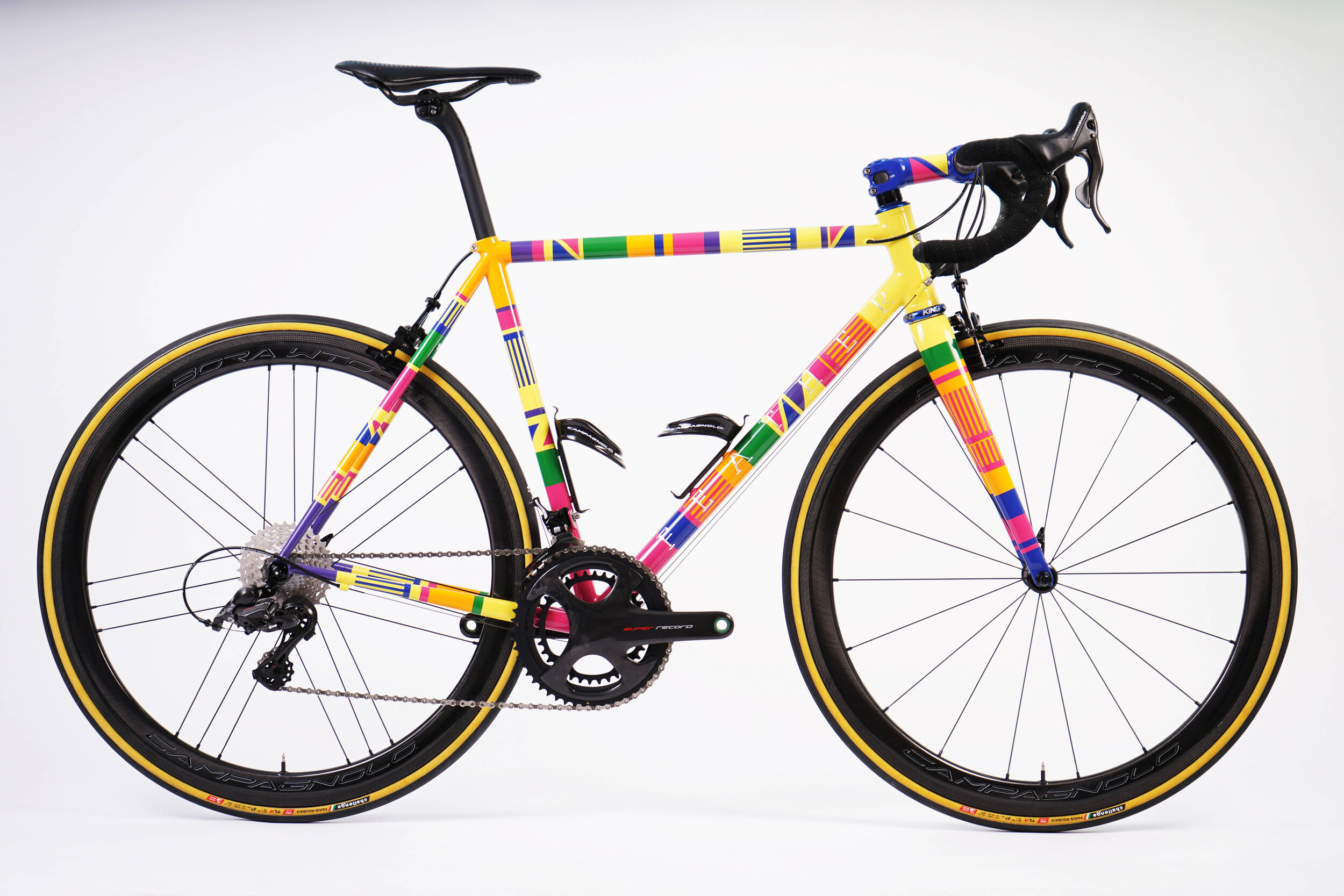
Russ from PLP
I like the guy's view of bikes but PLP seems to be anti-performance in a way that goes against the 'just ride' attitude the thing he does comes from. It's almost a cult in the same way the racers they put themselves opposite can be.
I do have time for Grant Petersen's take on things. Not so much the kooky and expensive end results but the ethos in general. The 'just ride' OG.
You could go out and buy this:
That's my take on bikes these days. I don't have a mainstream-modern taste so I can always go custom for a frame and forks, and have done in recent years. I think it's a shame or at least a point that much of the bike industry's march for progress in the end alienates or excludes riders who want mid- to higher-end quality parts but not battery / app driven (for ex). But if you know enough about what you like to have that opinion then you can find what you do want. Shimano and SRAM going the way they are creates space for other brands.
Quill stems give you a bit of height adjustment. Aheadset does not.
I wouldn’t even mind disc brakes if it weren’t for the black voodoo magic required to keep them quiet on road bikes
I didn't know this was a thing. My commuter has discs because I always found rim brakes work for about 10 minutes before they're screaming and rubbish!
Erm, you can move the stem up and down the steerer tube very easily.
As long as you leave a load of un-needed steerer sticking out.
Quill stems give you a bit of height adjustment. Aheadset does not.
About an inch. I've got that leeway on all my bikes plus, once the height is set, how many people actually go round adjusting it anyway?!
Like those pointless "adjustable stem" things which add a load of weight and bolts to create a stem that pivots up and down, the rider sets it to their preference and then leaves it. They're OK for bike fit purposes but for general use they're a terrible design.
Also, Ahead stems can be flipped - you've effectively got 2 stems in one.
As long as you leave a load of un-needed steerer sticking out.
I always cut steerers a couple of cm more than I need for adjustments plus you still have different stem / bar rise options.
Problems with quill stems.
They can seize like a seat post if not well greased.
The don't all tighten that well.
If your headset needs adjusting you need spanners which are less convenient to carry than a couple of allen keys.
They can seize like a seat post if not well greased.
Then grease it?
If your headset needs adjusting you need spanners which are less convenient to carry than a couple of allen keys.
Then adjust it probably to start with?
As a functional design an aheadset if far better than a threaded steerer but I don't have any problems with my threaded headset or quill stem bikes.
how many people actually go round adjusting it anyway?!
I do, I have a normal riding height and a bike park/Alps height, swapping a 15mm spacer from above to below the stem. Not very often but it is useful to be able to.
@kerley how many threads are there with seized seatposts.
Headsets can settle even when properly adjusted.
A couple of our bikes have quill stems and work fine but I would not fit one for preference.
how many threads are there with seized seatposts.
Is it 7 ?
Headsets can settle even when properly adjusted.
Settle? I adjust mine properly when fitted and it never 'settles', how can a cartridge bearing settle?
A couple of our bikes have quill stems and work fine but I would not fit one for preference.
Nor would I on a modern bike as they are harder work but not necessarily worse once fitted.
Just finally watched some of the original video - wow, that guy's utter twonk.
Hankering for the old days ..
https://singletrackmag.com/forum/topic/whatever-happened-to-chain-suck/